Concrete Sleeper Trials

Today was a day of experiment.

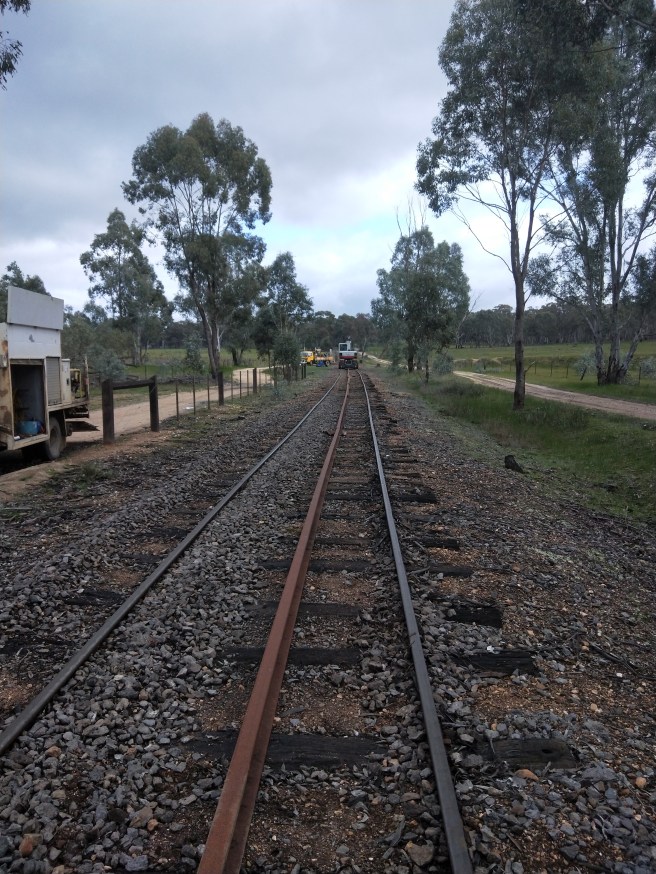
When inserted, a concrete sleeper looks very much as above (this is before tamping and boxing, but in terms of the fastening down etc… It’s complete), but getting it in our track which has very little ballast depth has been of concern, so we set about working out what we could do.

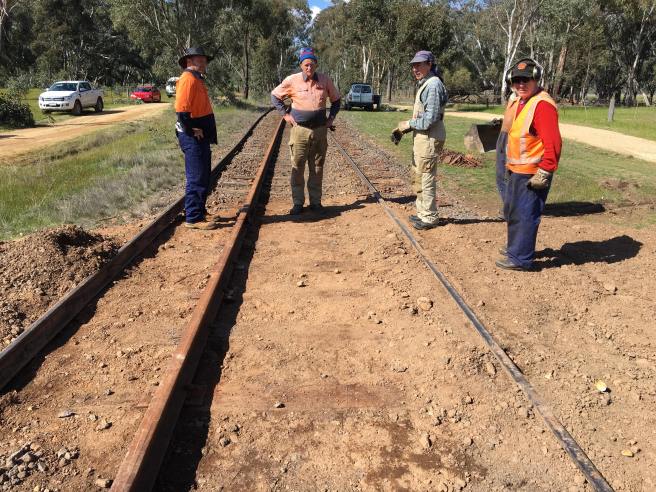
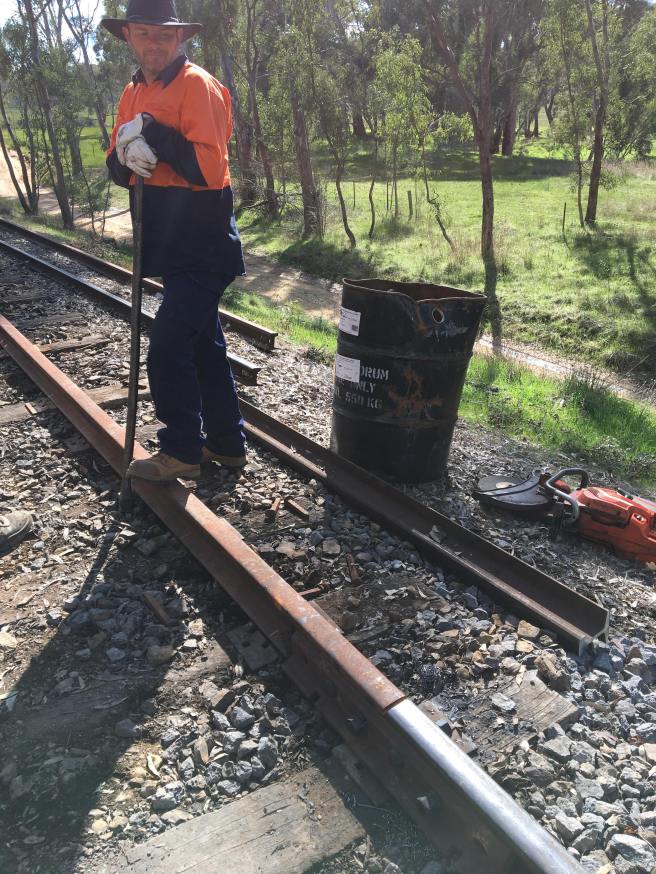
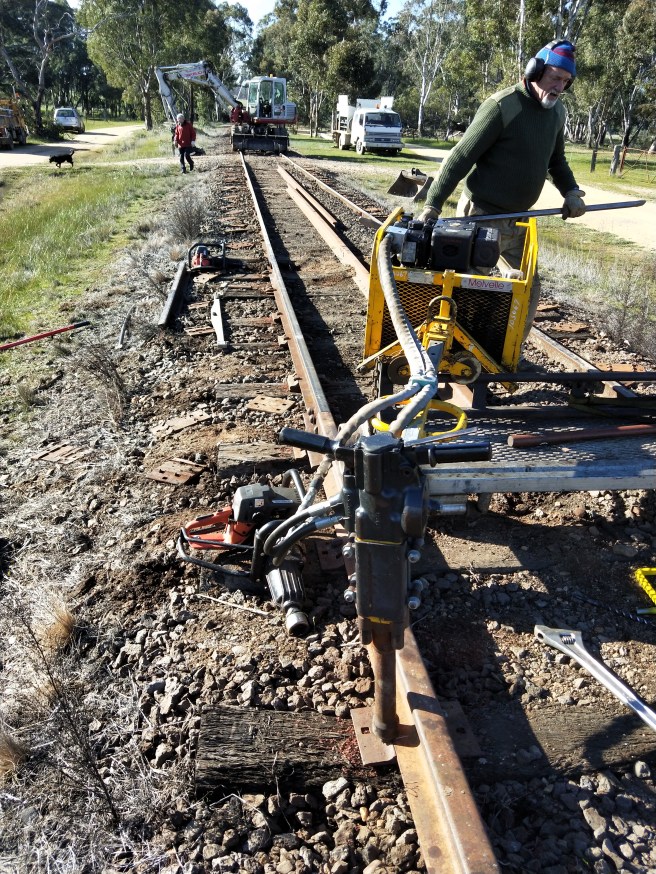
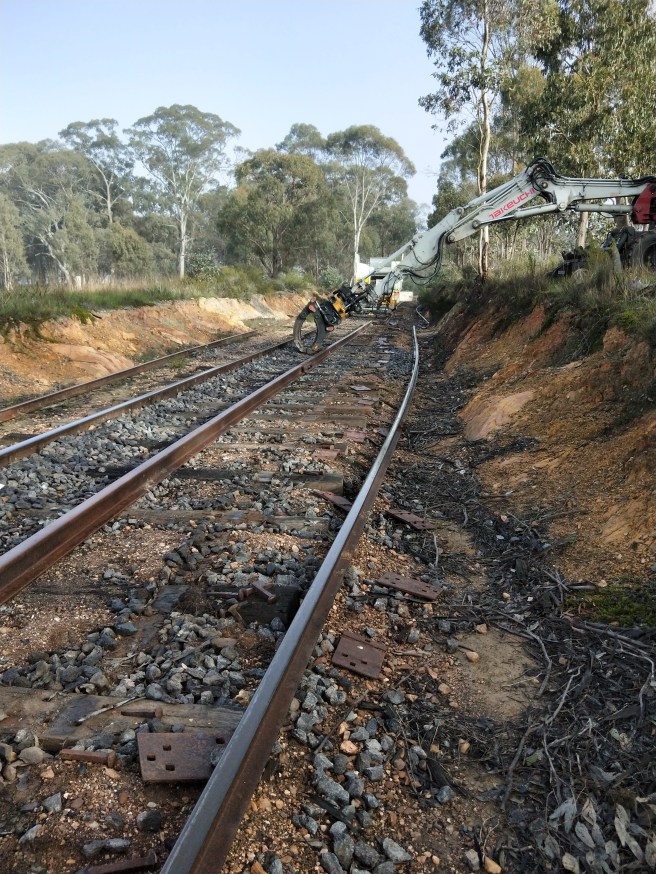
Initially we set about doing things as we would for timber, scarifying to the depth of a timber sleeper (as set on the scarifier).But, and we knew this would be the case, you can see by the pic above that the pandrol lugs pretude above the sleeper top, preventing the sleeper sliding in.

We had two basic options from here, lift the track or dig a deeper hole.

Option 1 worked, we did have to jack up the track quite far and we were lucky ballast didn’t find its way under the adjacent sleepers keeping them up, but this method does work quite well, but it’s fairly time and labour intensive.

Option 2 worked also. We adjusted the depth setting for the scarifier and found the right high to be able to insert the sleepers without destroying the base below.

We ended up running with option 2 for most of the holes, as it was much quicker and we wanted to see if we were likely to be digging into the sub-base if we used this method. We didn’t in any of our 18 holes find that we’d dug too deeply, however we may have just been fortunate here and time will tell for other sites.

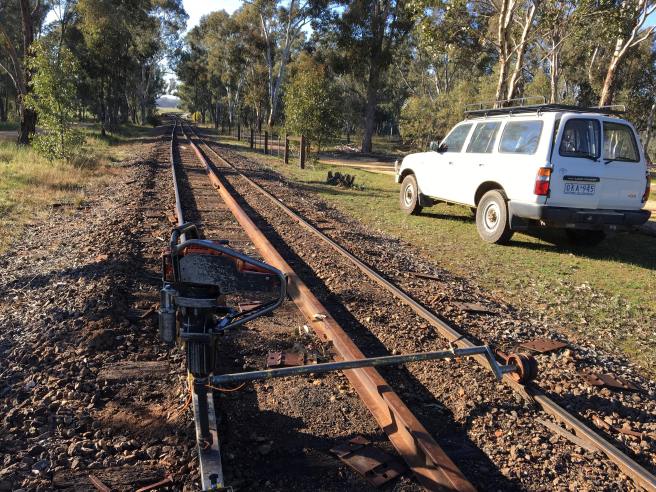
This beast, which gets talked about a bit here, really is essential to the resleepering process as it leaves a nice clean and square hole for the new sleeper.

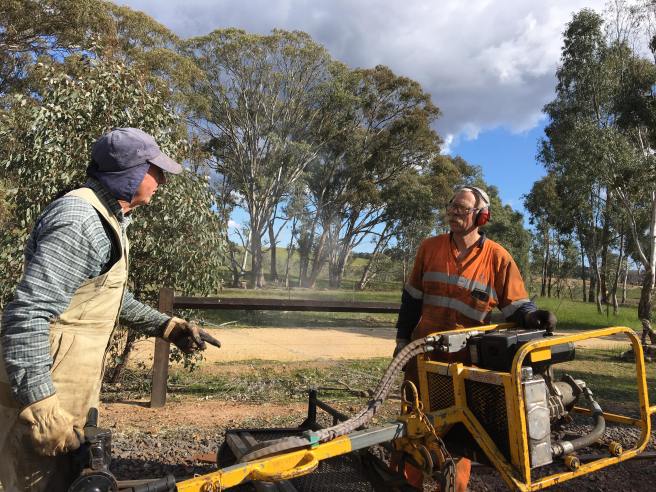
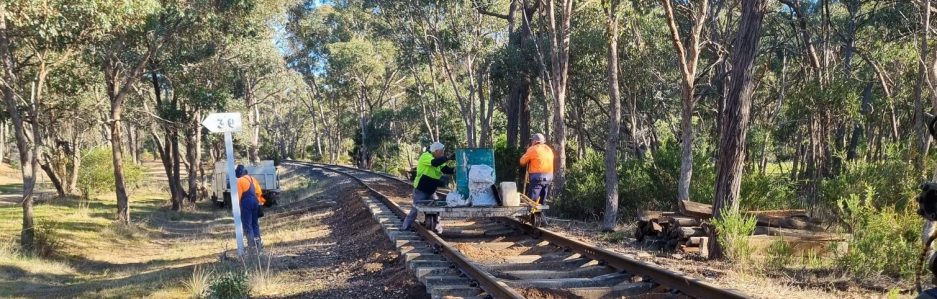
We already knew this trick but we had forgotten and were soon reminded… Install the plastic pad on the sleeper before putting it under the rails! Here John’s doing just that to make sure we didn’t forget again.

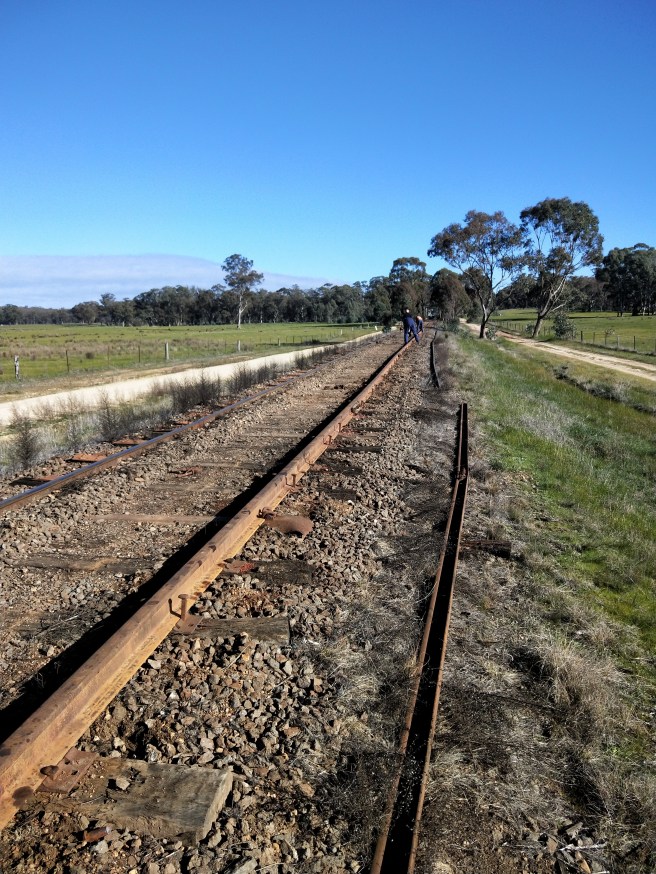
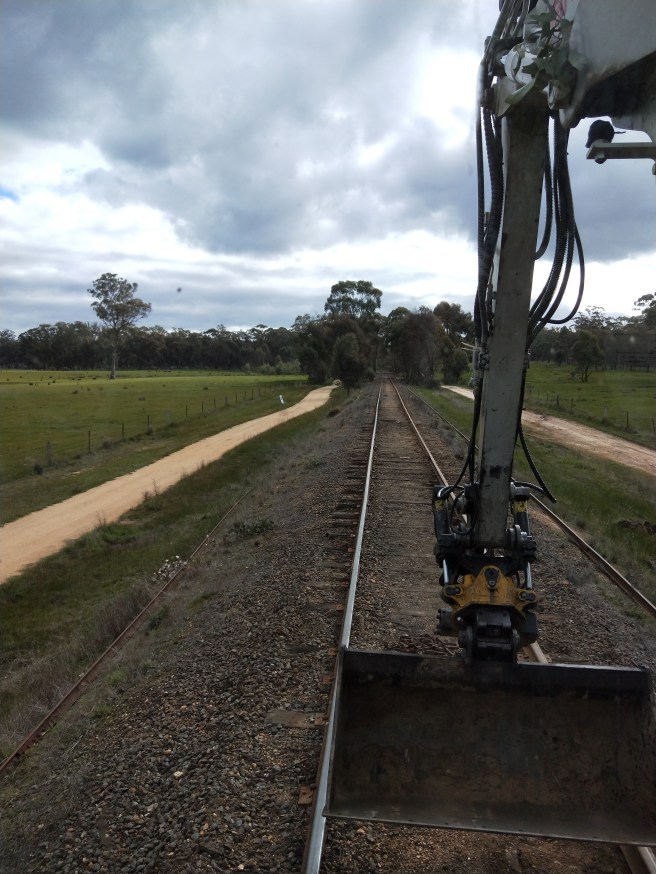
Once the hole was scarified, gentle insertion with the excavator was undertaken. Pics above show the process, doing it this way prevents the concrete sleeper from damage as well as only disturbing the already loose dirt in the hole.

Once in, the clipping up process is quite straight forward (we’ll post more pics when there’s more hands to hold cameras instead of tools)

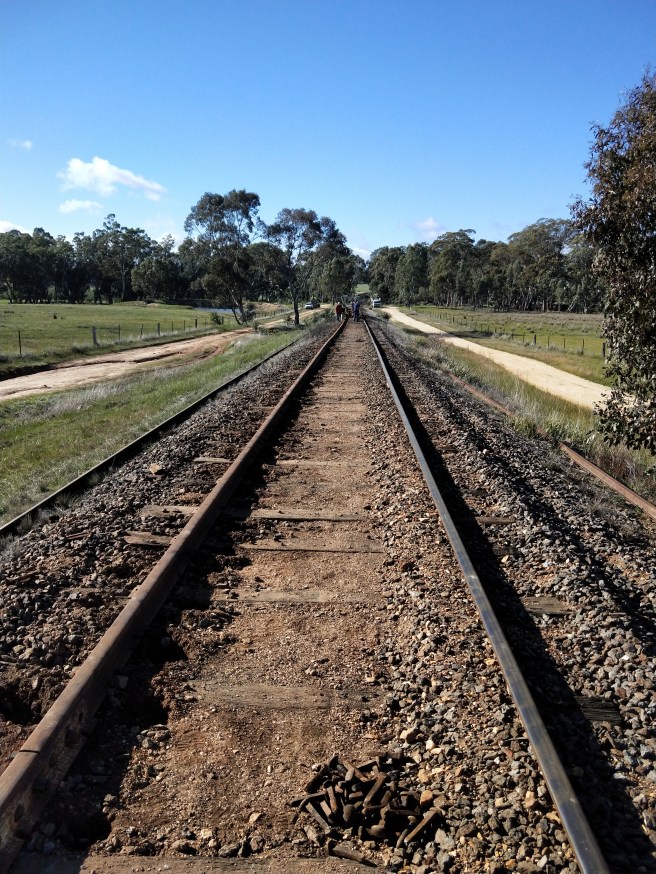
With the finished product (here freshly tamped and yet to be boxed up) looking very smart and secure, greatly reducing our ongoing maintenance of timber sleeper renewals!

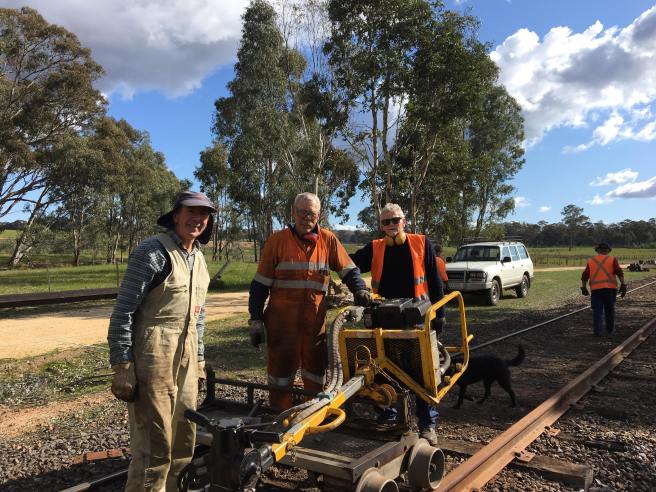
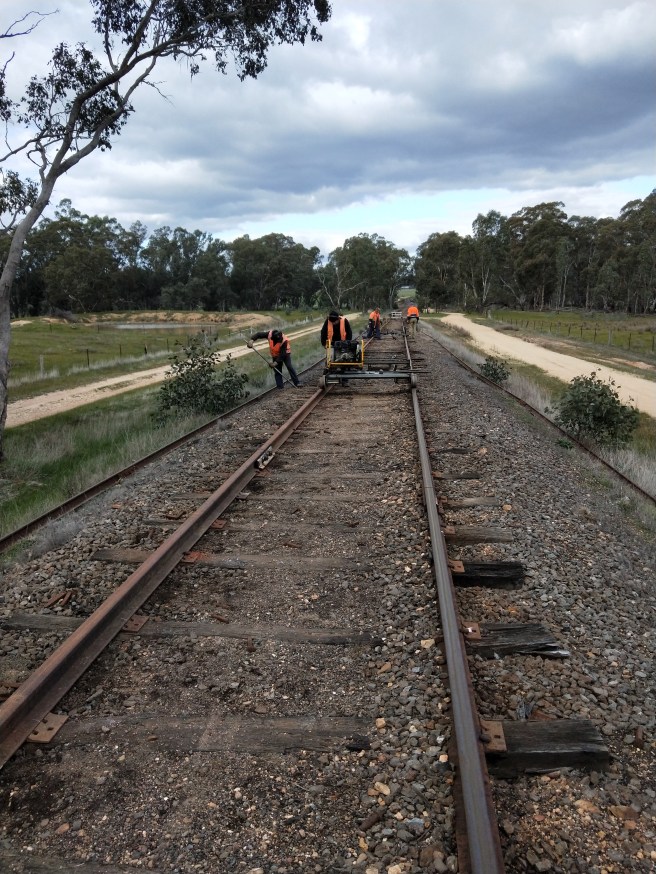
Today’s efforts were very encouraging, with only 3 people and no preparation we were able to completely install 18 sleepers and have time for quite a bit of experimenting.

It certainly gives hope to getting 100+ installed in a day’s work with more bodies and a bit more of a systematic approach.

We’ll be out again this Thursday and Friday, re-railing. So please come along and help out, it’s always a great day out in the bush and we would certainly appreciate the help.

Lifting and Tamping

We got back into some more lifting and tamping today, after our prison assistance had to cancel at short notice.

We started at Winters Flat Bridge and headed up the hill. This section had developed some significant settling issues, giving a very rough ride.

Here the team chips out enough rock for a Jack, then lifting to the required hight. The hight is largely determined by getting down on your hands, knees, back or belly (which ever is most comfortable on the rough ballast) and eyeing the dip, guiding the jacker when to stop lifting. It’s not a particularly hard or precise job but it very uncomfortable!

By the end of the day we reached the pedestrian crossing near Brown Street, which sees the worst of the dips in the Castlemaine area taken care of.

The view behind the excavator shows the finish we have been able to achieve, still not perfect but smooth with gentle undulations, rather than the rough and violent situation which had developed.

The afternoon sun made a welcome change from the winter weather, here highlighting a dip in the left leg which is about to be jacked and tamped.

Overall a very successful day.

We’re holding another civil workday on Tuesday (14th Aug.) where we are going to trial the insertion of concrete sleepers in a curve on the line. Any help would be greatly appreciated, it’s likely to be a very interesting exercise! Please contact Will if you’re free and able to help out – ganger@vgr.com.au

Drains

With all the rain we’ve had lately, the blocked drains along the line are becoming very obvious.

We set out to remove a kinked joint near Rowe Street crossing, which we had comfortably achieved by morning tea.

The kink is quite obvious here, with the image below showing the smoother joint and process of lining.

This has been on our list for a while, it’s nice to tick off these jobs that’ve been hanging over us for a while.

After the lining, the nearby drains came into our sights.

The culvert on the Down side of Rowe Street was well overgrown and heavily silted, some careful digging cleared the way for water.

While in the region we improved the side drains, which had also silted up, not allowing water to drain from around the sleepers.

We continued that right around the curve to near Maclise Street.

Around at Maclise street we tackled the UP side culvert, which turned out to be completely block for about half of its length.

The run away drain for the water was filled in some years ago and since then there hasn’t been any real drainage around the crossing.

Lots of prodding, poking and scrapping was needed to get any water flow!

But eventually flow it did. Quite an exciting moment after almost two hours of battling!

It’s never a real day on the track without at least one funny story, Tony’s turn this time.

This pic captures him in free fall on his way into the drain pit, after somehow loosing his footing (he was already kneeling so we’re not too how he did it). Thankfully he seemed to have a good laugh despite being soaking wet!

After lots of hard work and a cup of tea to celebrate we ended up with a functioning culvert. We still need to finish the away drain but that may need to wait until the ground dries out enough to get the digger in, at the moment there’s enough fall to drain near the track.

Half day

We managed to fit in just over half a day today, before the rain came.

We spent the morning preparing more 80lb rail, 29 lengths in fact, to complete tangent 14-15.

Here Rolf, Tony and Trevor are drilling rails, today was mainly drilling with only 2 cuts needed. It varies depending on the stacks, but overall there should be as much drilling as cutting required based on how the rails were cut for transport.

The camera isn’t quite showing the sky as dark as it was, however we knew by the dark sky from mid morning that the rain was coming.

The wagons with their rails loaded, the chance was also taken to stack the shorter lengths, now giving us room to stack and sort some turnouts we recently retrieved from Dynon.

The neat stack of short lengths (and odd bits). This is likely to become a fairly permanent fixture at Muckleford, our other piles are diminishing rapidly.

All the short rail should comfortably sit in one pile, being available as required over the next few years, likely to find its way into yards during upgrades and works.