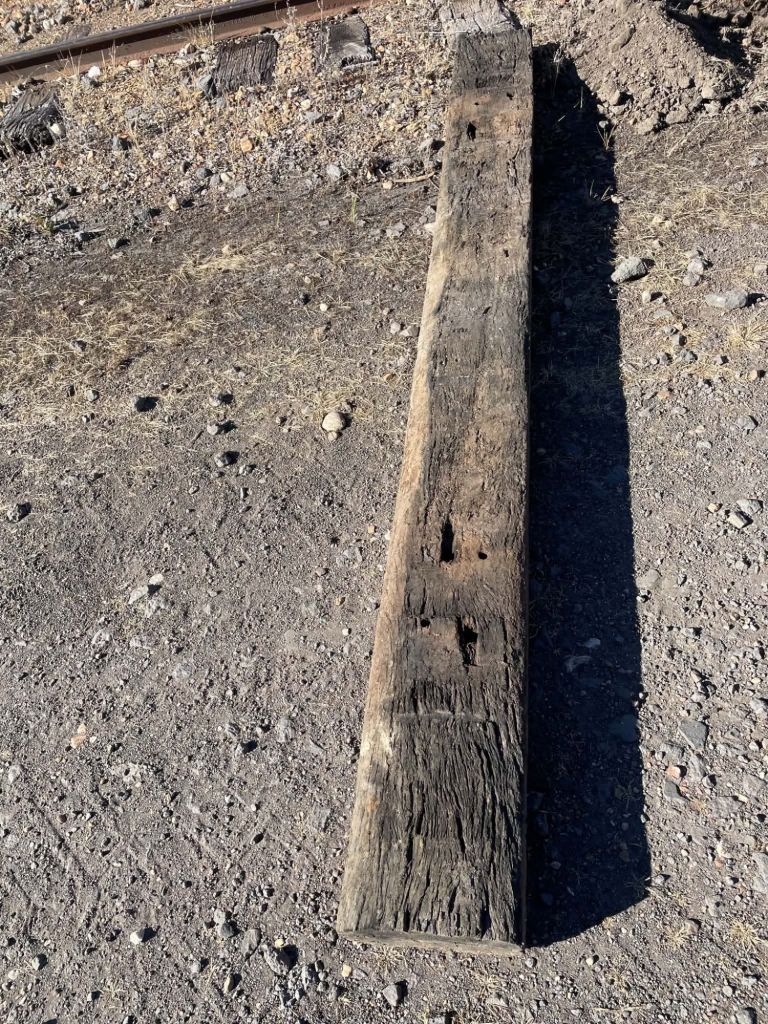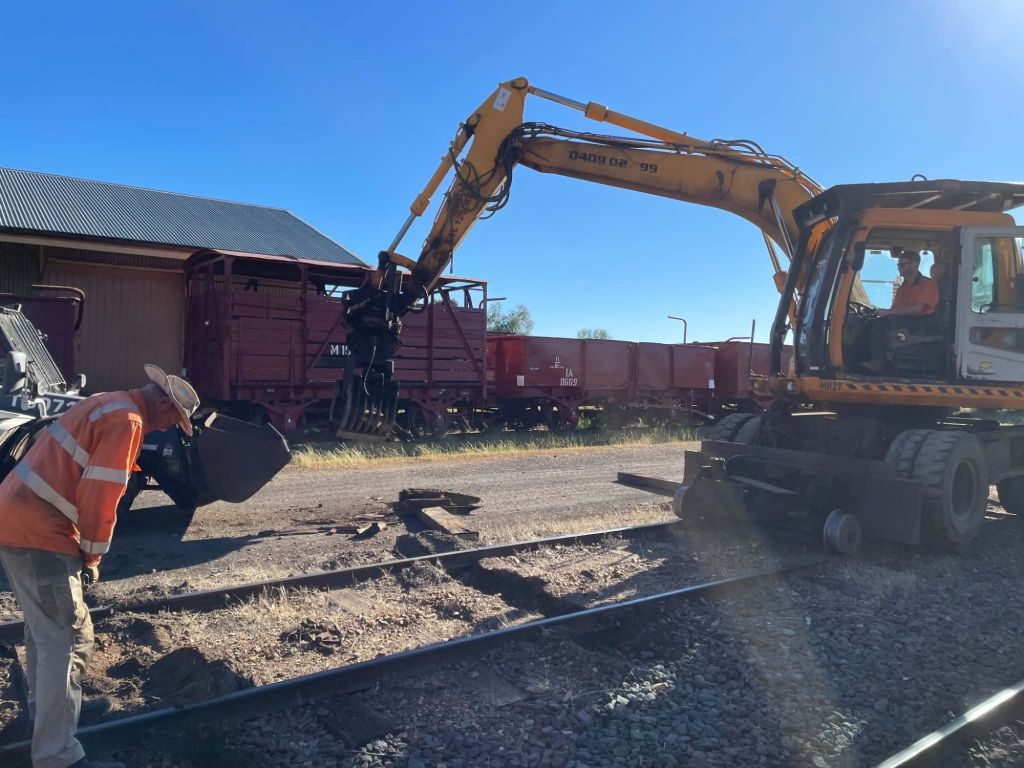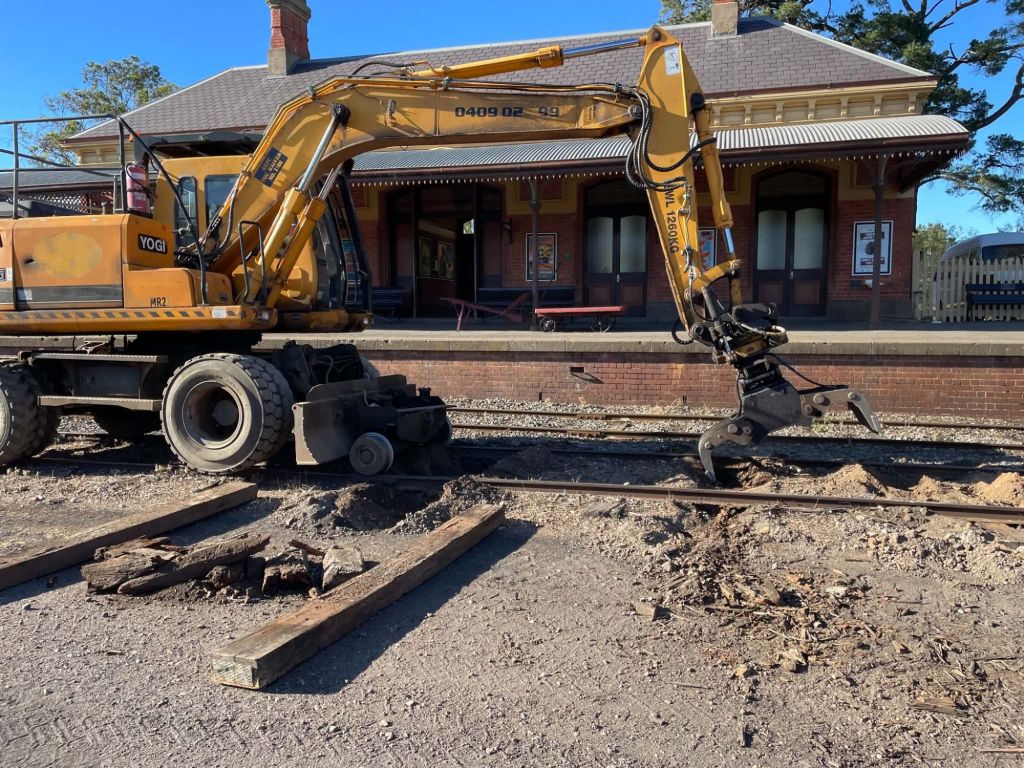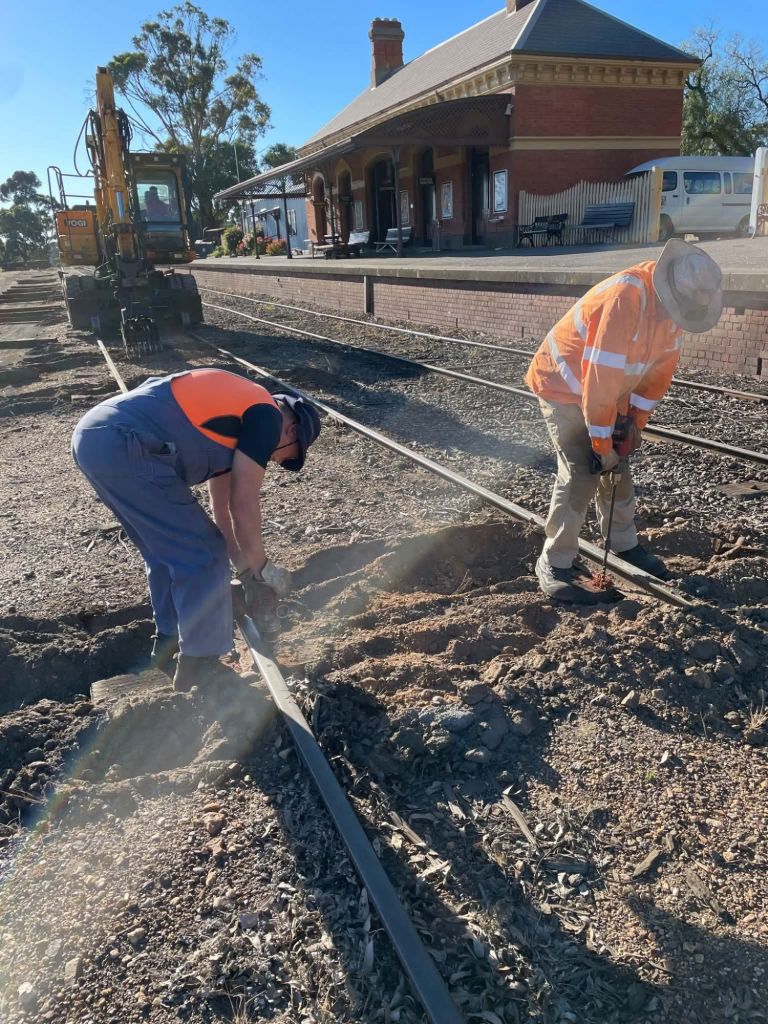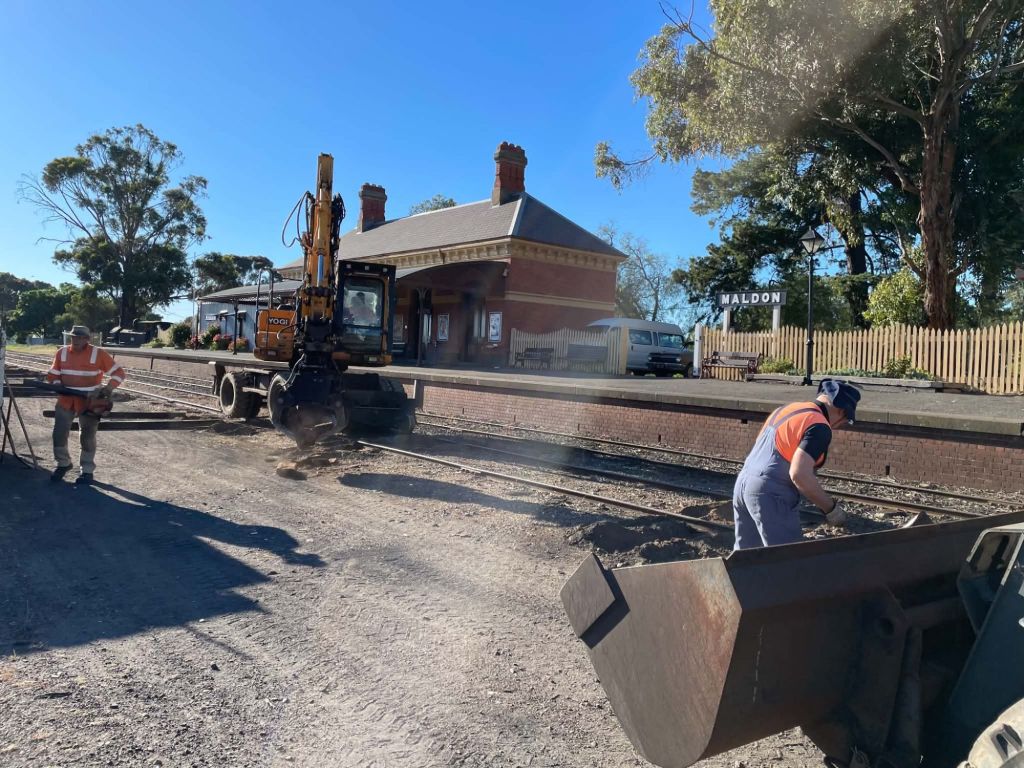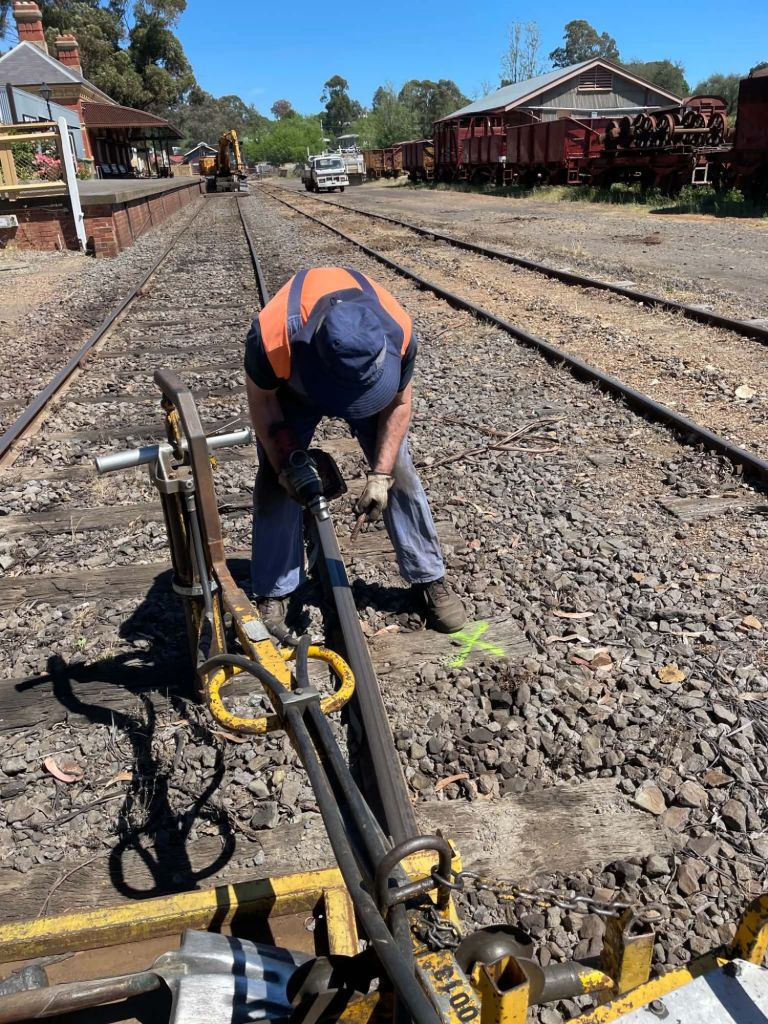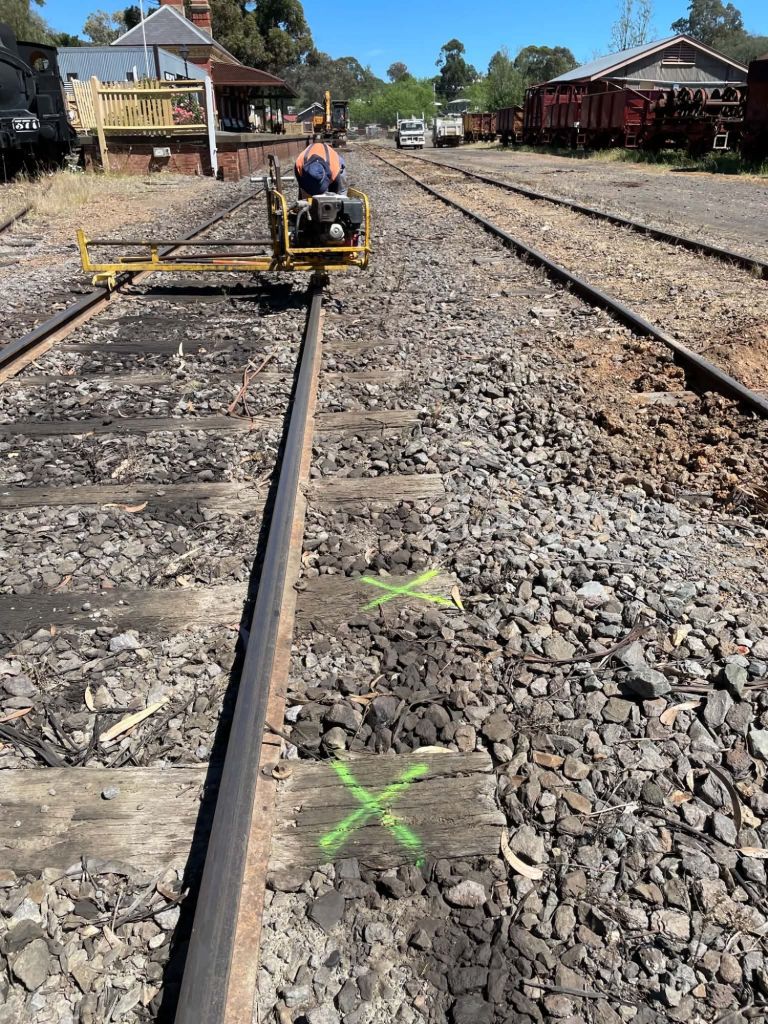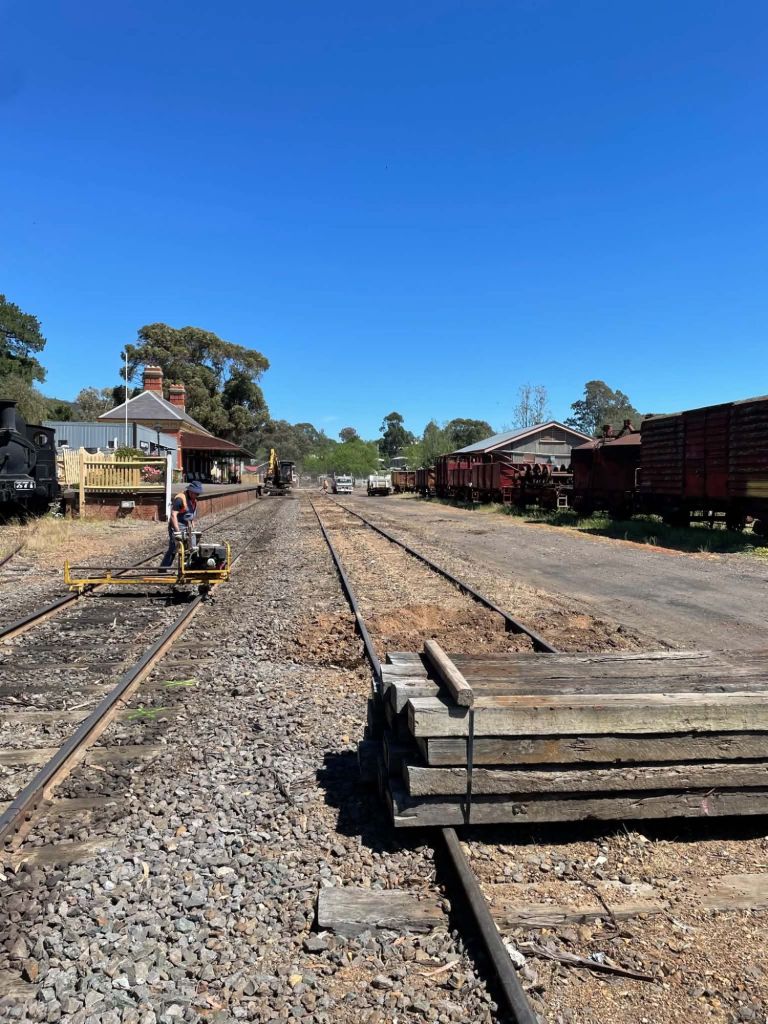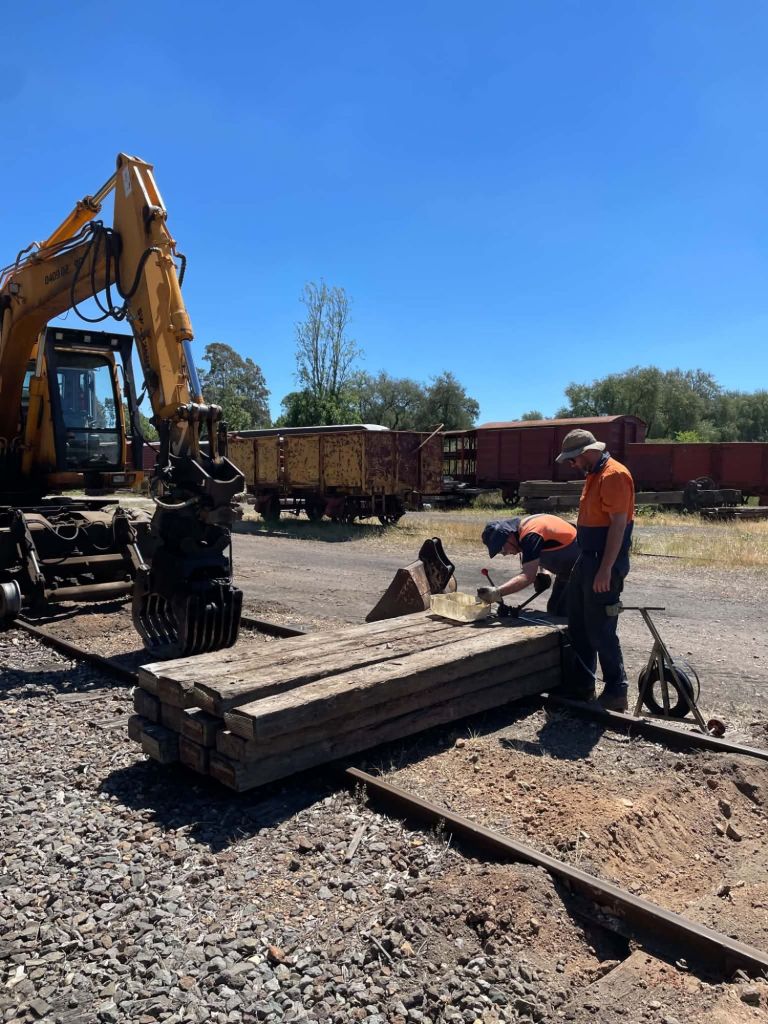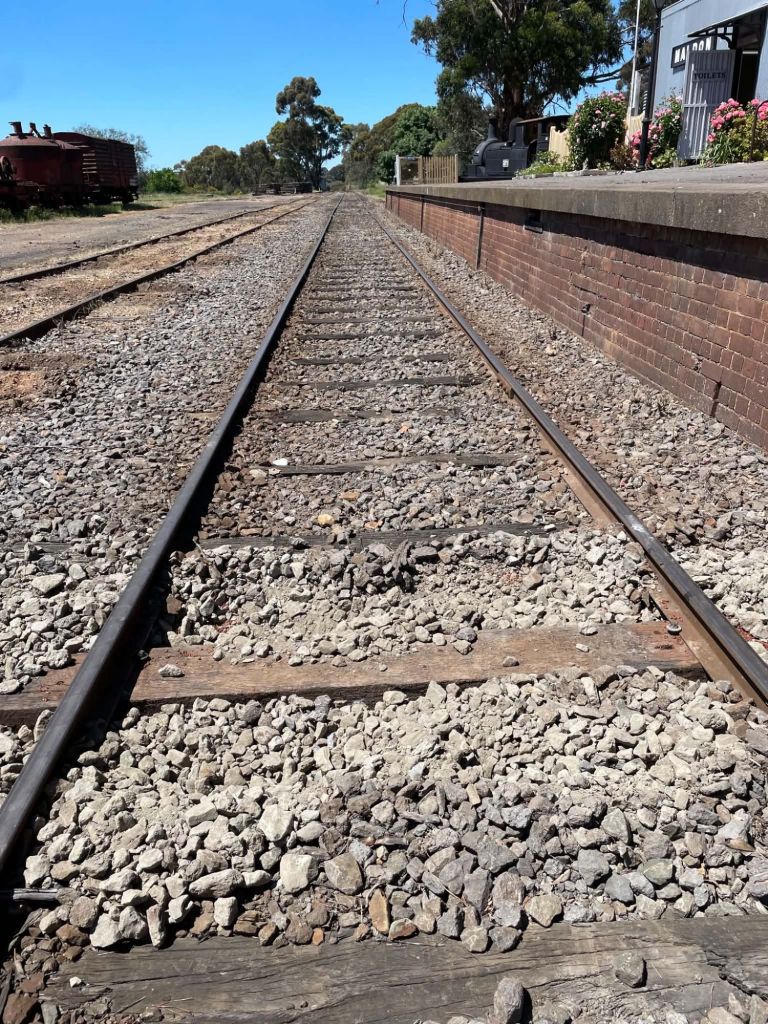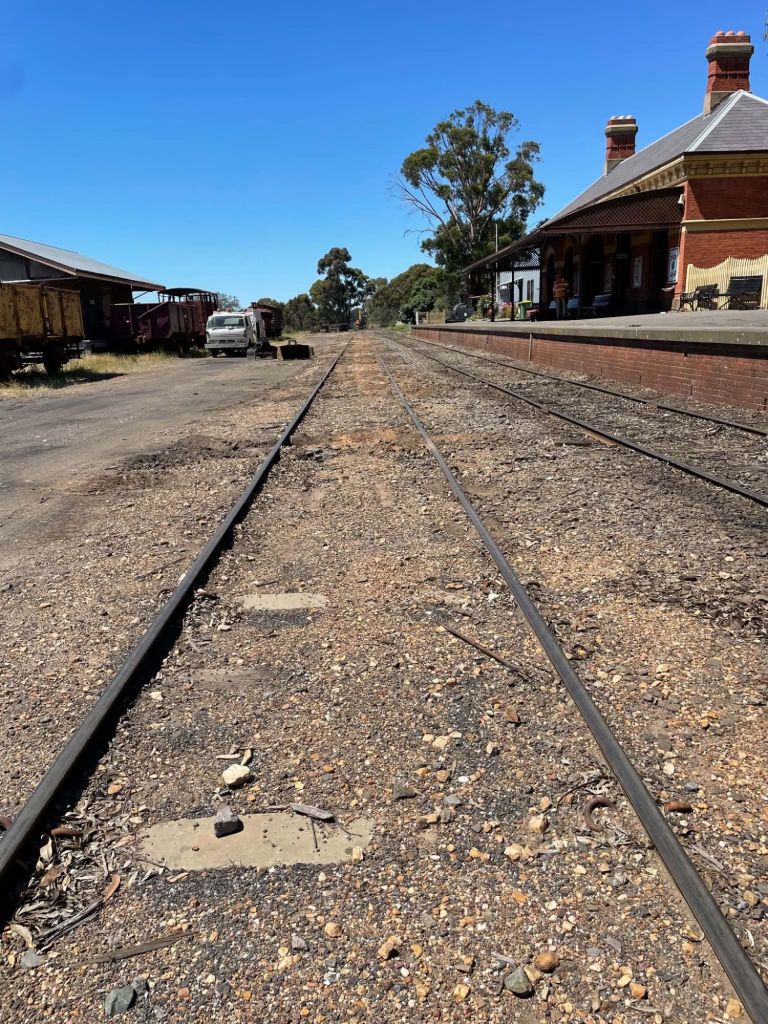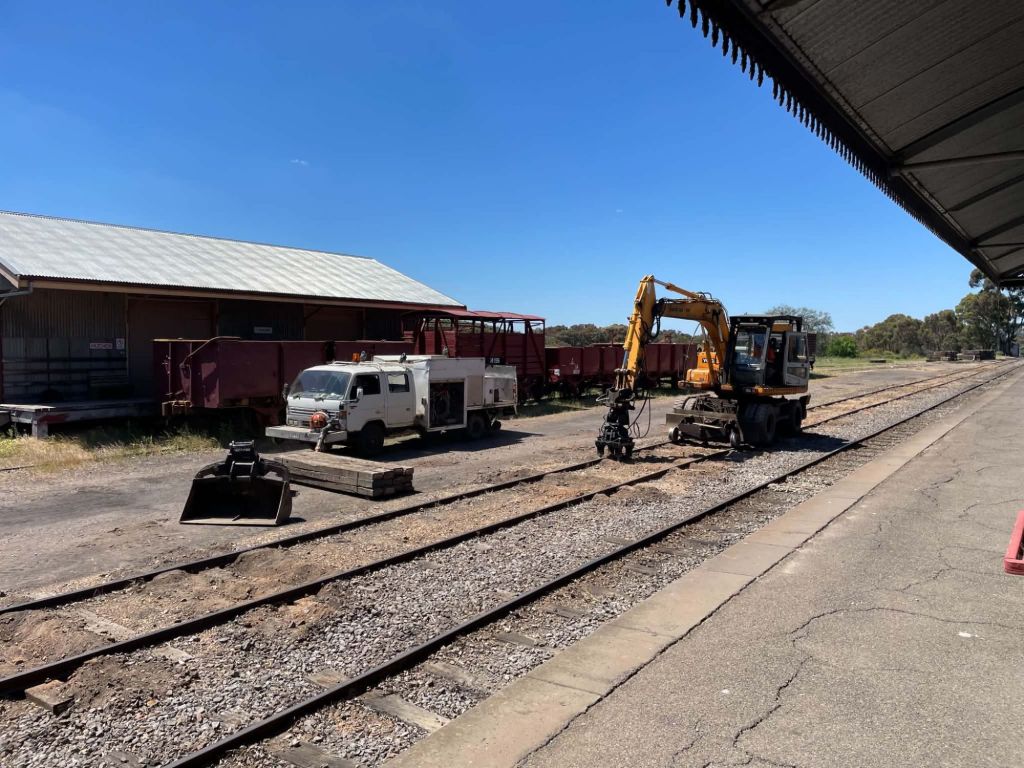
Well, after a few days of silence, we’re pleased to report this wasn’t due to any issues or problems, rather we just keep going and got even more achieved!

It took almost no time to install the second beam and get the bracing bolted in.


Although we did need to pack the adjoining spans to match the new steel beam height, this turned out to be a quite rapid process, with bolting up all the timber following promptly.

Tiny little bits of ballast that had fallen onto the tops of the beams took the longest to correct, and there were a few small bits we just couldn’t get to.

We used the weight of the digger to help encourage those to crush which was quite successful. Our load test train finished that off nicely too.


It’s a little hard to know the true history of all maintenance done on this bridge, however one pile shoulder did seem to be too high, the laser level confirmed this and it was suitably adjusted, reducing the issue and levelling up the deck nicely. We’ve got another that we’ll treat like this in due course, however it’s quiet adequate for now.
This is due to the timbers being very different in sizes compared with the very straight and uniform steel. Neither is better or worse, it’s only an issue when you need to try to marry the two.


The irony of welding a timber bridge wasn’t lost on us… however, these welds are just to hold the angle irons to the steel crossheads, as we had to cut the welds to do the beam replacement. They’re not a structural component. It’s just easier than trying to bore holes in steel in locations where we can’t get the magnetic drill.


The end result is really impressive, and looking from outside the bridge, you can’t even see the steelwork, so it very much looks like a timber bridge still. We’re very happy with this method, and given the relative cost of this to timber, it’ll almost definitely be our go-to from now on. (It’s currently about 1/3 the price. We expect that ratio to increase as timber gets more scarce).
We very impressively load tested the bridge and promptly managed to not get a single photo! A Y class and civil train loaded with concrete sleepers was passed over the new beams several times. Absolutely no movement could be observed. Typically, timber bridges do move a little – they are made of timber – but these steel beams sat perfectly. In reality, it’s obvious they are doing all the heavy lifting, with the outer timber being almost exclusively for looks and rigidity.
We’re very happy with this. It will now enter the more intense inspection phase as we confirm all is well, we don’t anticipate any issues.
Following all of this bridge work – which was promptly finished by morning tea on Thursday, we used our load testing train to discharge concrete sleepers between the Bridge and Donkey Farm Track (no photos of that either! Sorry).
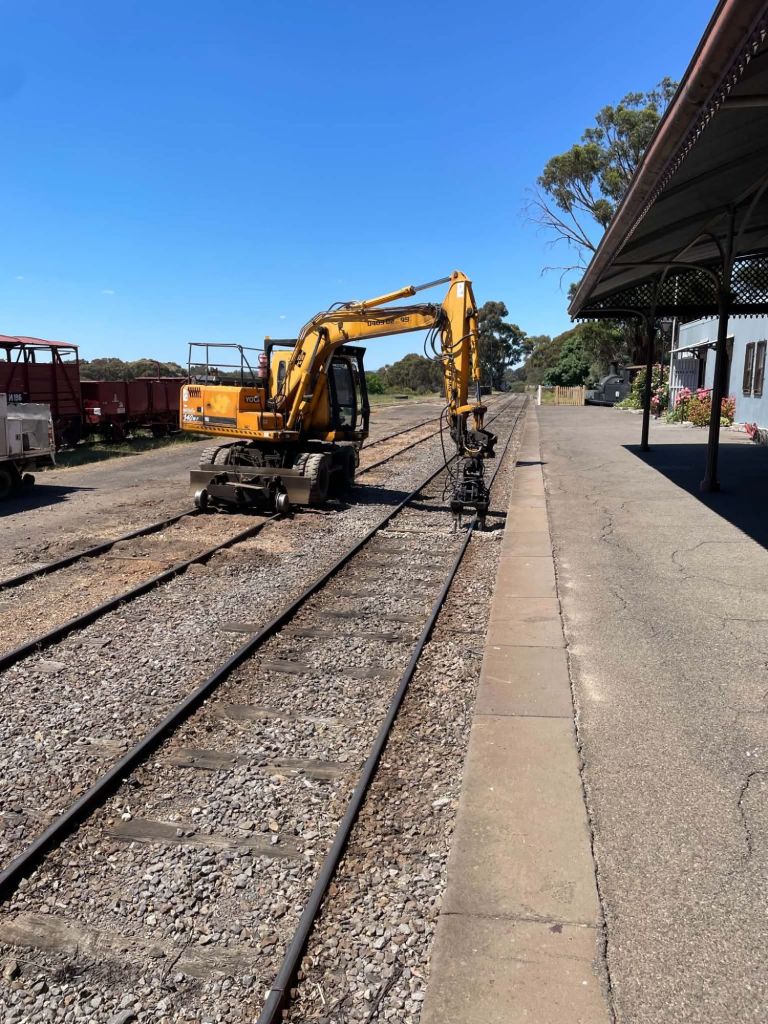
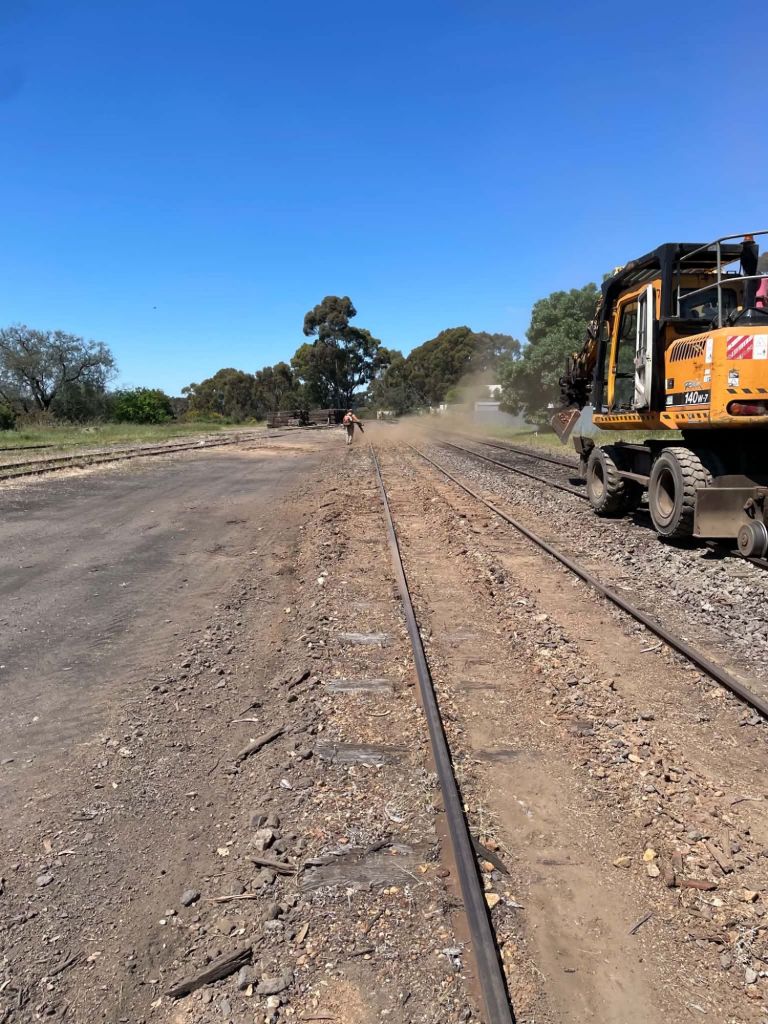
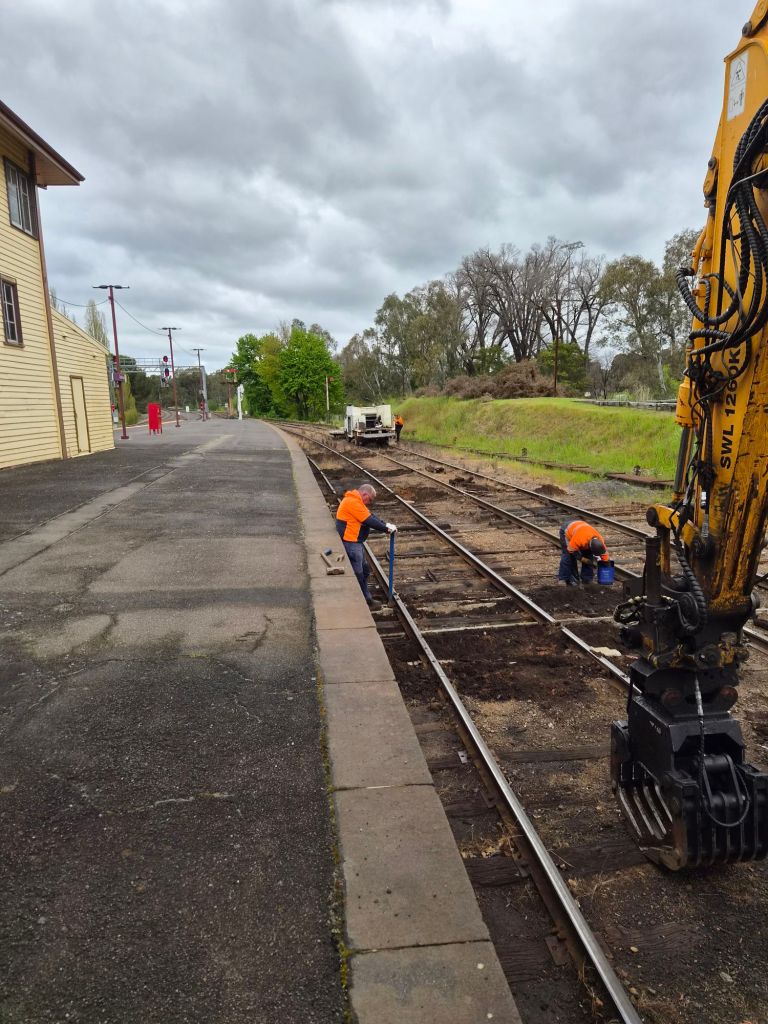
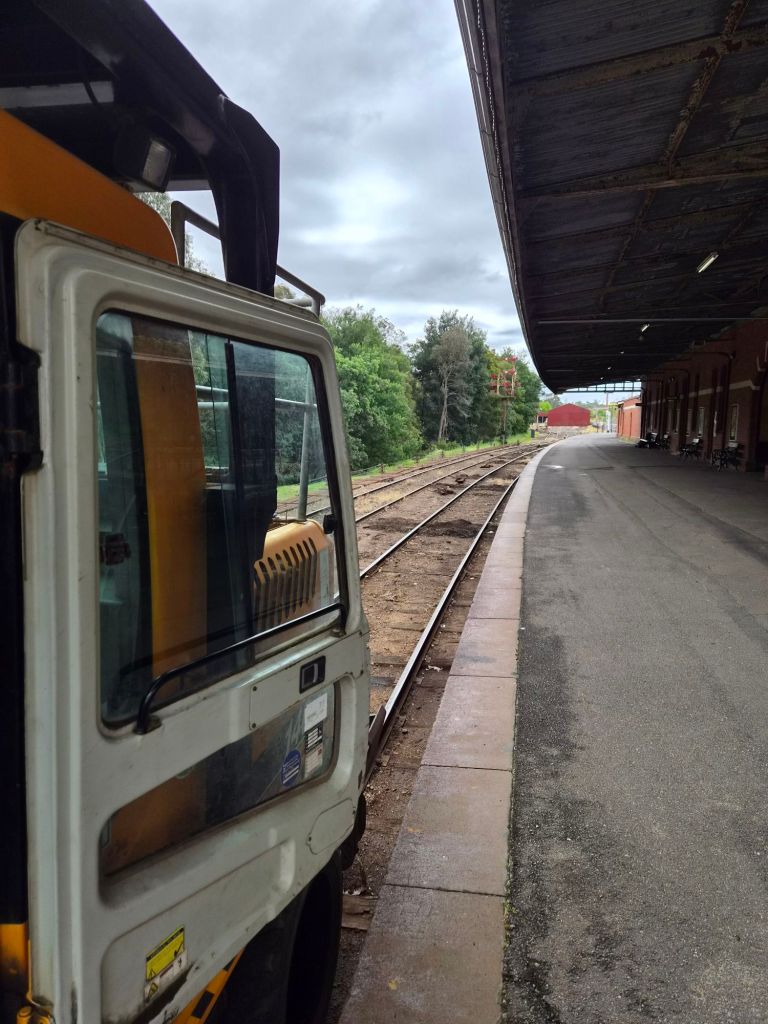
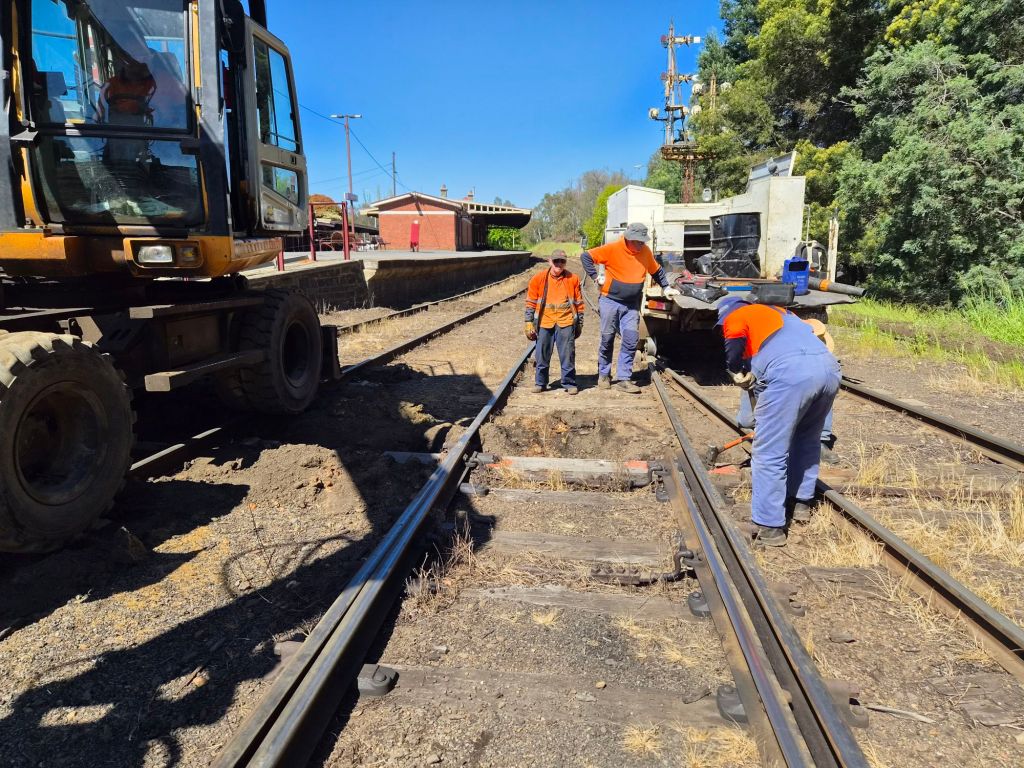
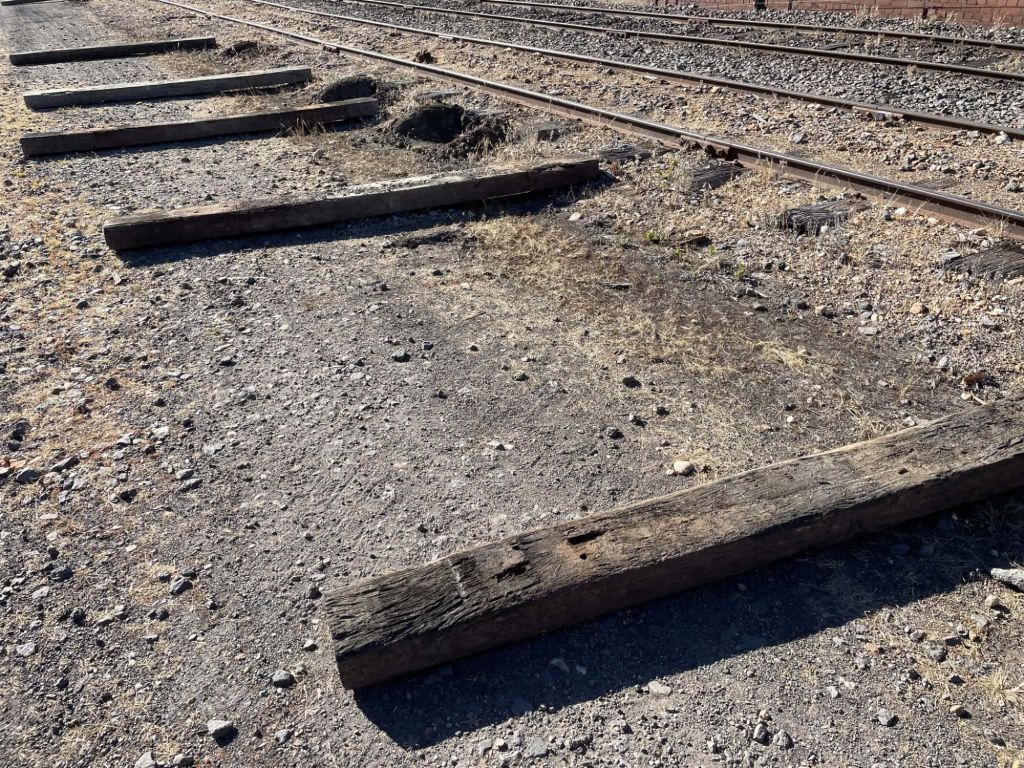
Thursday afternoon and Friday were dedicated to getting all of our equipment into Castlemaine, ready for 2 weeks of intense works adjacent to V/line track.
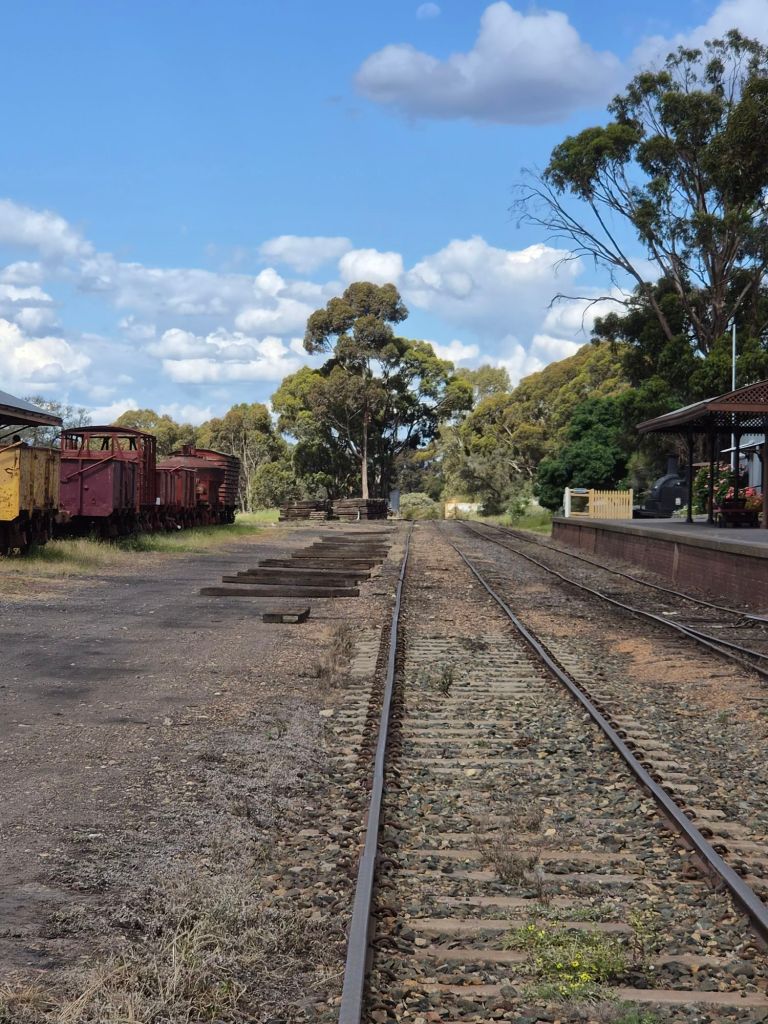
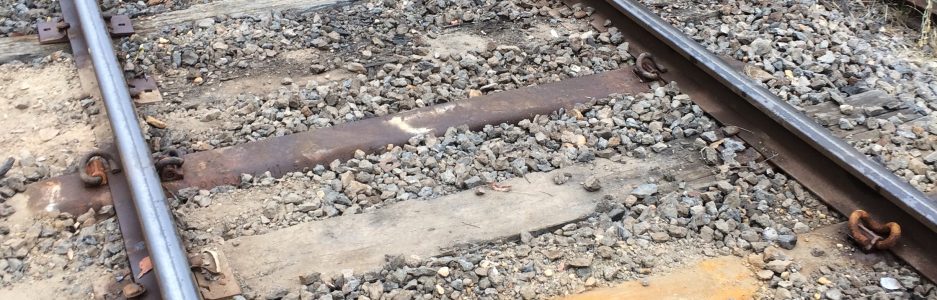
From Monday, all workdays will be starting at the Castlemaine Depot from 8am, we’re aiming to replace all remaining timber sleepers out to Forest Creek Bridge (approx 130). V/line are replacing the waterproofing over Johnstone Street Bridge, so we’ll not quite be able to replace all timber sleepers in the parallel section during this shutdown.