A week of sleepers

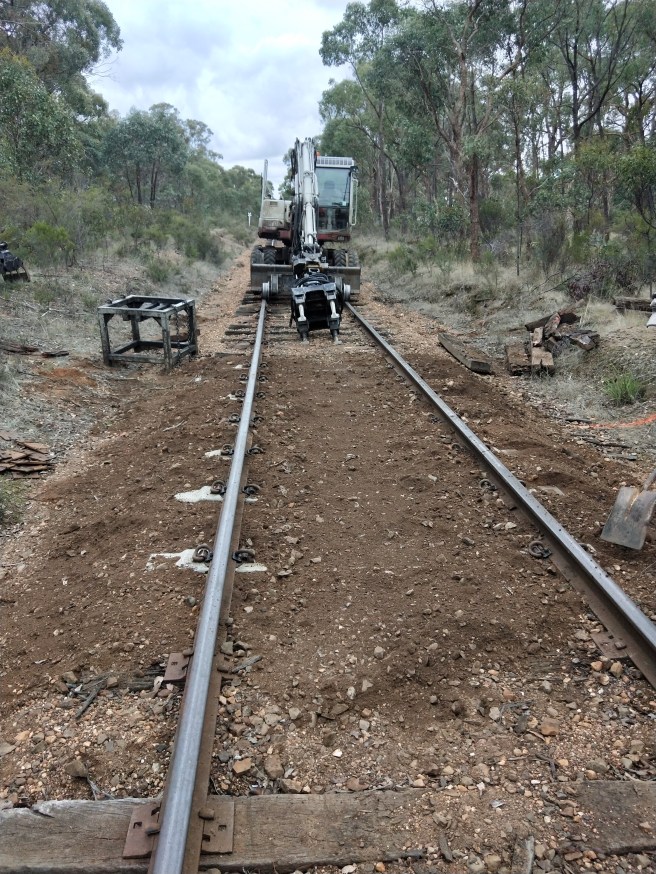
The week began by installing a few more concrete sleepers at what will become the approach blocks for Bendigo Rd. Some joint shifting was undertaken too to prevent conflicts with the flashing light circuits.

While technically not essential, it’ll make the next part of the work far easier, quicker and will overall be less work.

Today’s task was a bit of a trial, a very successful one too.

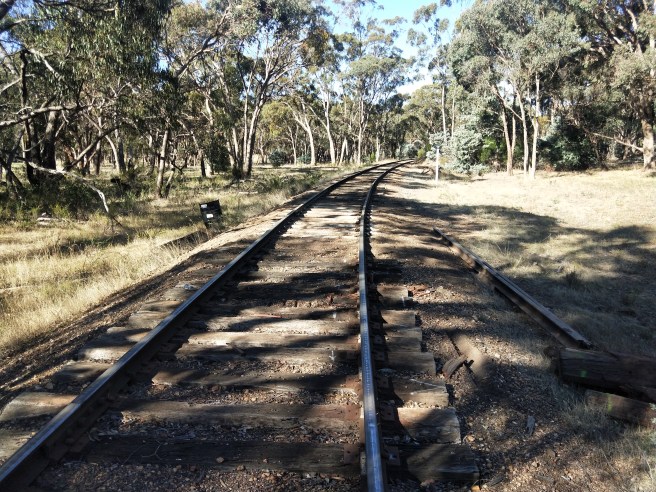
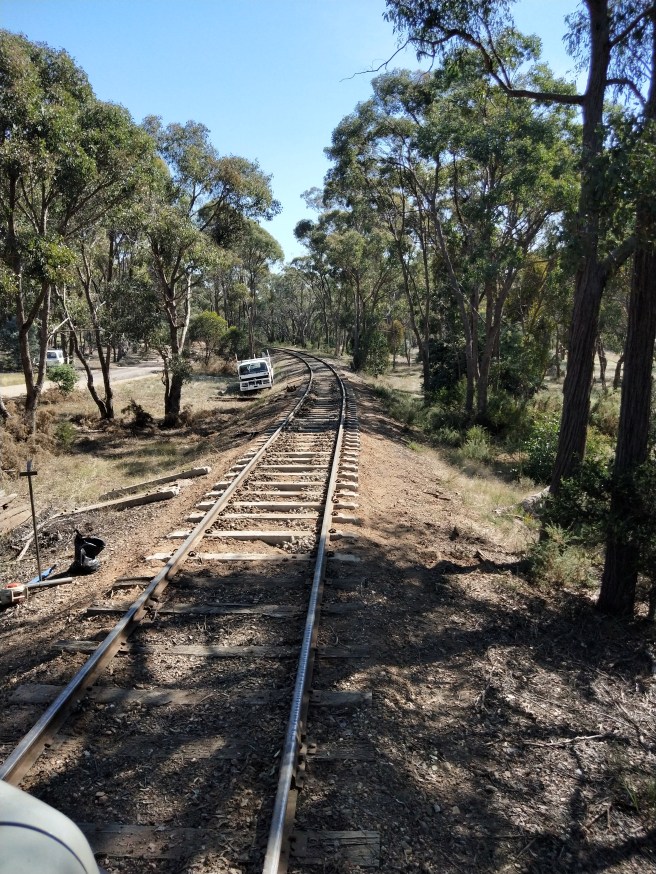
Curve 21 (the curve between Bendigo Rd and Woodlock’s Ln) is the only section of the track not to have received attention in the past 5 years.

The sleepers spacings in the curve are all over the place, which makes standard replacements a nightmare. So we decided we’d trial re-sleepering 100% with full profile concrete.

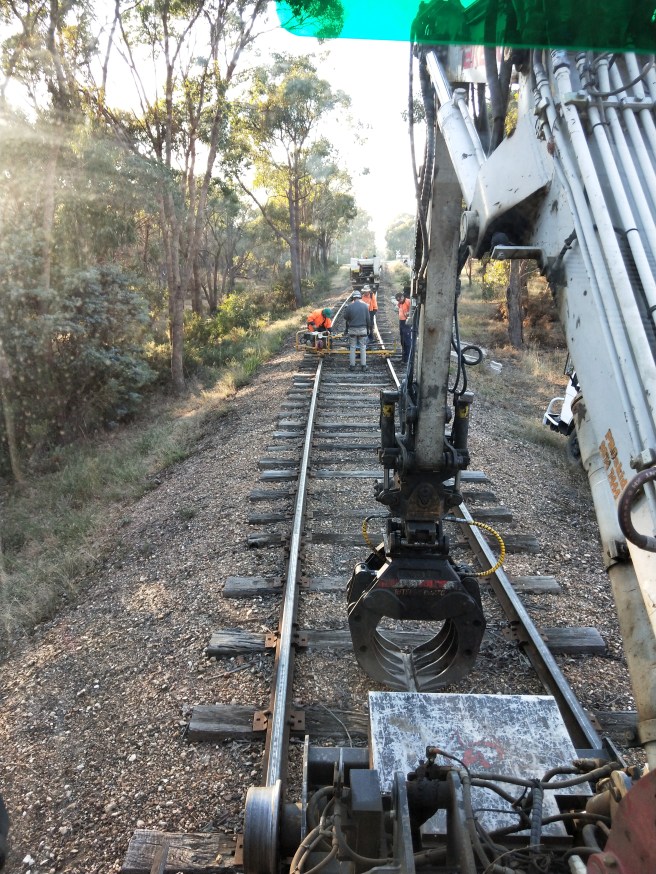
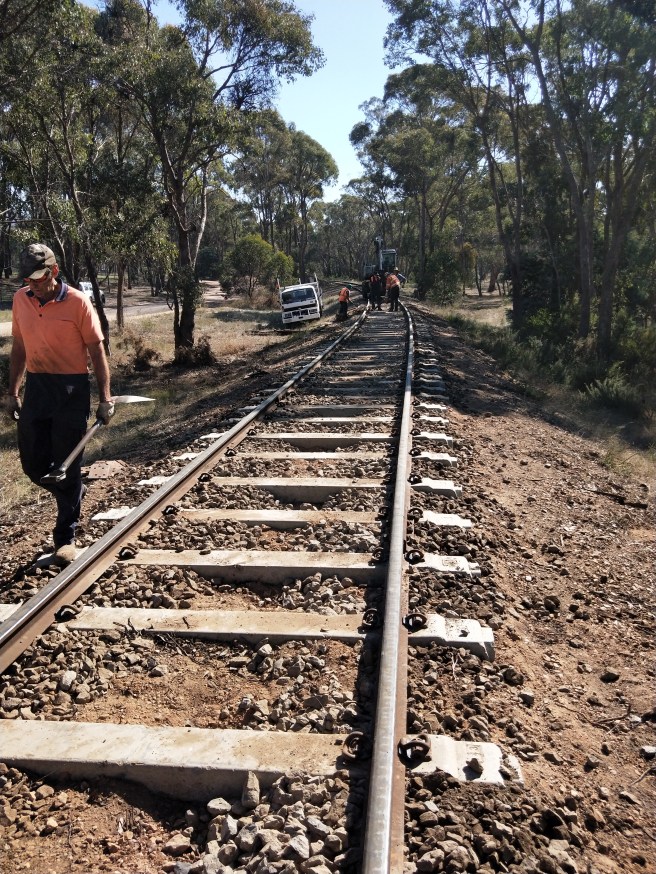
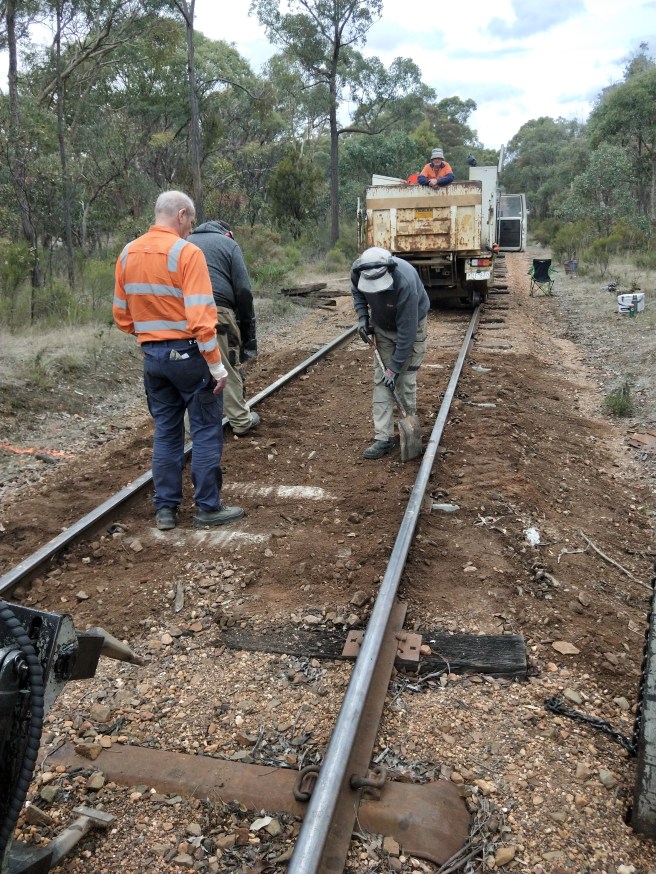
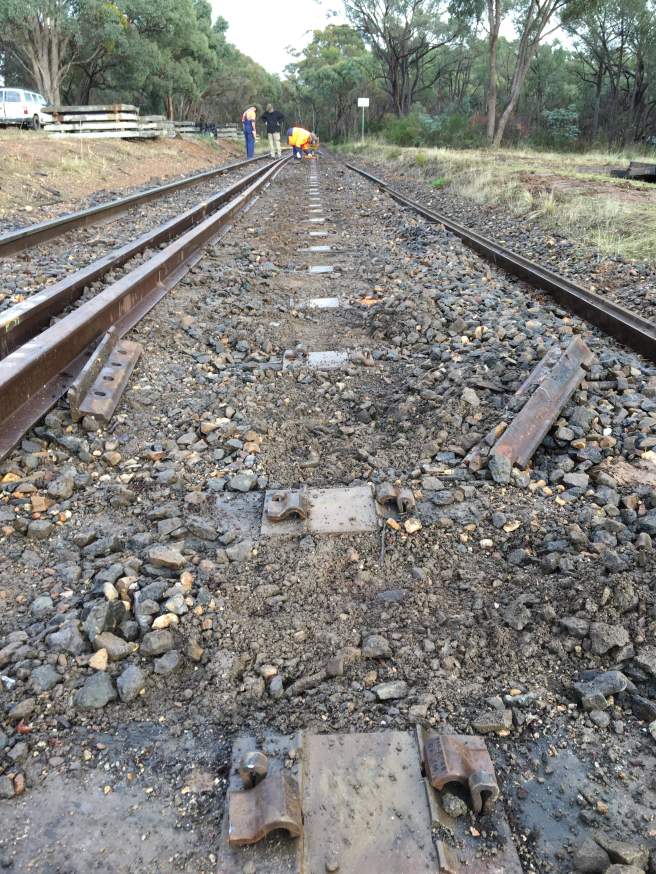
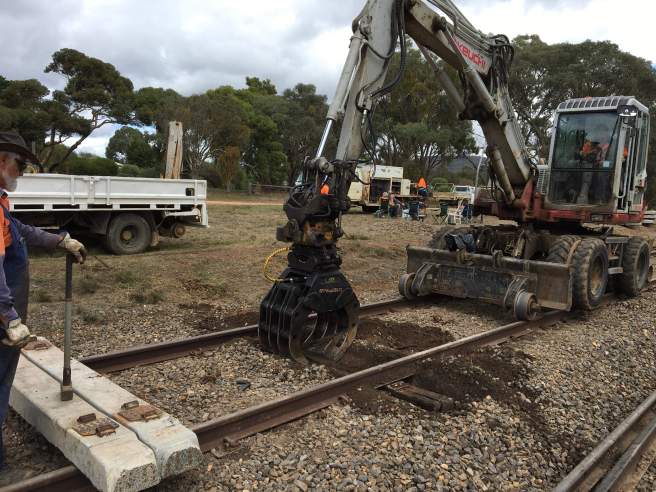
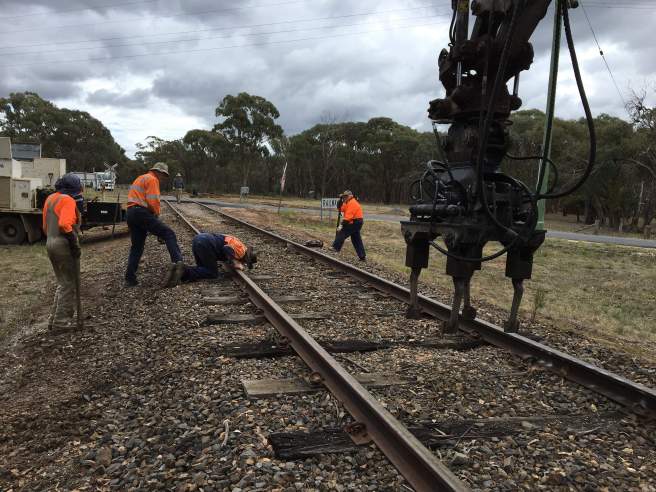
We went through and unfastened every 2nd timber sleeper (more if the spacings were wrong), followed by jacking the track to a suitable height (now nice and light due to few sleepers) and inserting ever second Concrete Sleepers without having to dig down and disturb the roadbed too much. Once done and clipped up, the rest of the old timber was replaced with concrete.

The method worked a treat and as the initial jacking was kept relatively uniform, only minor jacking was required once all the sleepers had been installed to achieve a good top.

By not completely releasing the track, the line of the curve wasn’t lost and very very little effort was required to gauge the rails for clipping up in the concretes (as the timber was still holding it).

It’s received a good tamp and a sprinkle of ballast. We’ll run a few train loads of rock out once we’ve done a bit more.

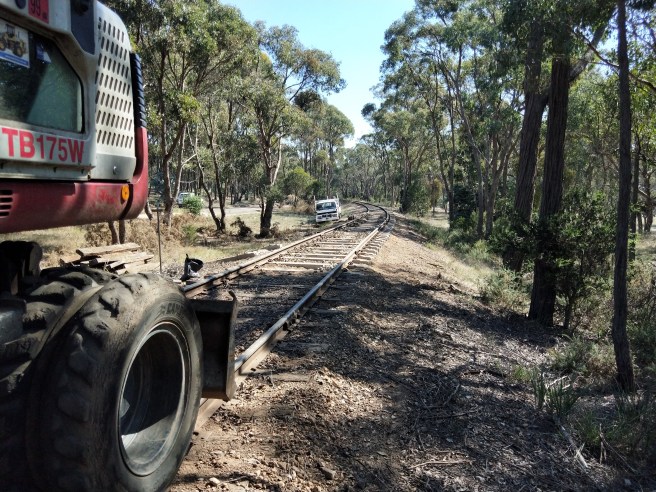
It’s come up a treat, although only 47 sleepers today, out of about 500 in the curve, have been installed, it was a very good test day and was comfortable without being rushed. If we had two clear days, we could easily expect to triple that number no worries.

Next week, Tuesday will see a start made at Rowe St. Crossing. We’ll be running a train load of sleepers out there ready for the rebuild and will hopefully begin installing a few. Meeting Maldon 8am or Rowe St. Crossing from around 9.30am.

Maldon Yard

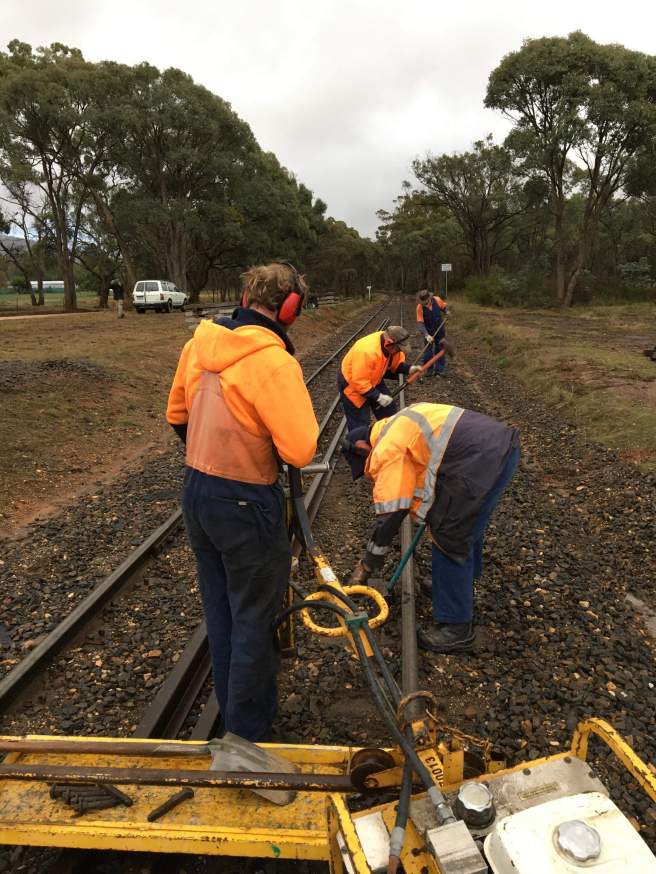
Today was largely dedicated to removing some serious settlement of track around Maldon Yard. 1, 2 and the turntable road all received a lot of attention, with almost every joint lifted and a significant amount of plain track brought back up to correct height also.

Maldon yard is almost exclusively made up of fouled ballast these days, so it holds water and inevitably settles every winter, hopefully our very thorough effort this time will buy us a few years, when we can look at seriously fixing the situation.

Anyone familiar with the loco road at Maldon would know it’s always been uneven and quite rough, well it’s still both of those things, but now only slightly so. Some sections were lifted up to two inches (50mm), which has made a significant difference.

We found ourselves with a bit of spare time at the end of the day, so set about installing concrete sleepers under the outer insulated joint location for the upcoming Bendigo Road Flashing Lights.

As prefabricated 7ish metre modern glued insulated joints will be cut in and welded in place here, it’ll save a lot of effort if all that needs to occur is the current rail be unclipped and the new clipped back up, better than wasting time drilling more holes into these now fairly old timber sleepers.

We’ve only installed 7 so far, another couple to go and a few steel sleepers need to come out, so that’ll be Tuesday’s job, we also need to juggle some rail here to enable the welding in of the insulated joints, so hopefully that’ll get done Tuesday too.

Meeting Tuesday 8am at Maldon or on the up side of Bendigo Rd from 8.15am.

Bendigo Rd

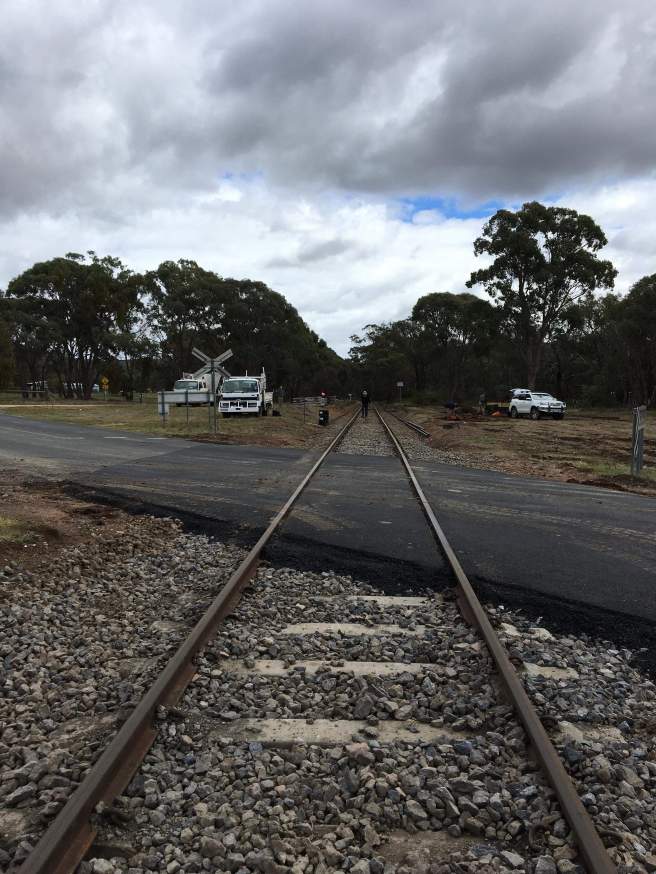
Well today has taken us to pretty well job done at Bendigo Road Crossing.

The recent rain, although small compared with other parts of the country, has certainly soaked the ground.

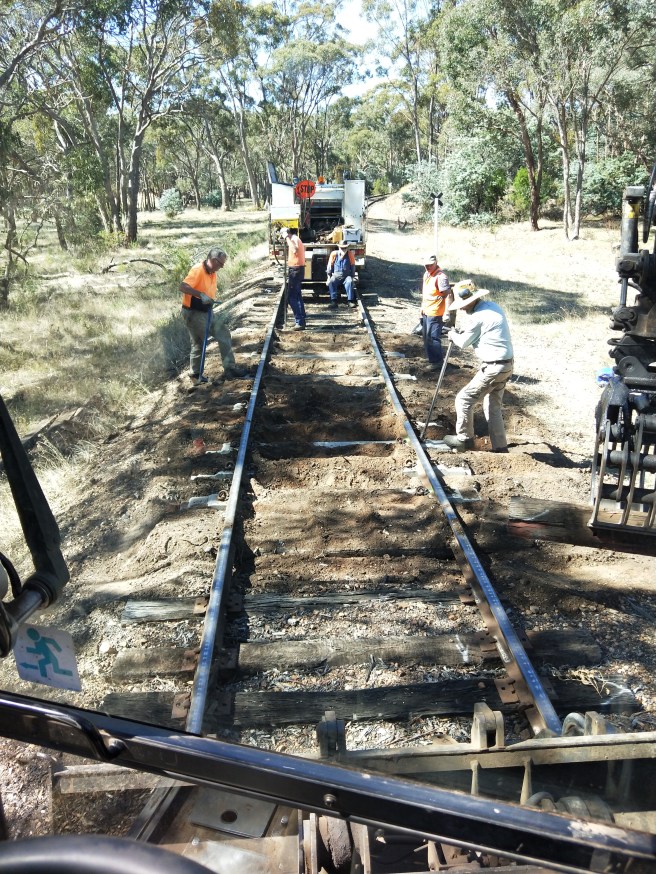
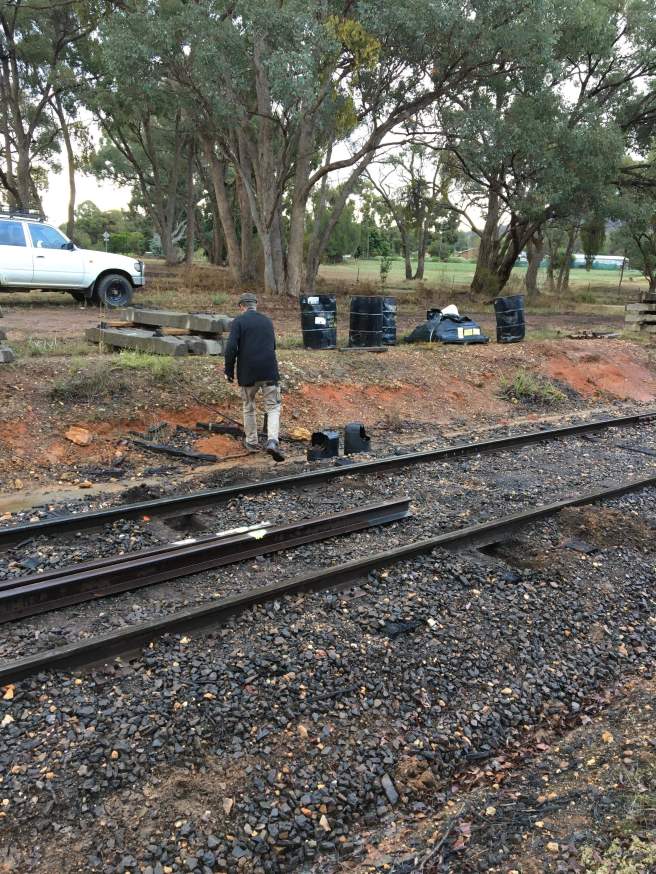
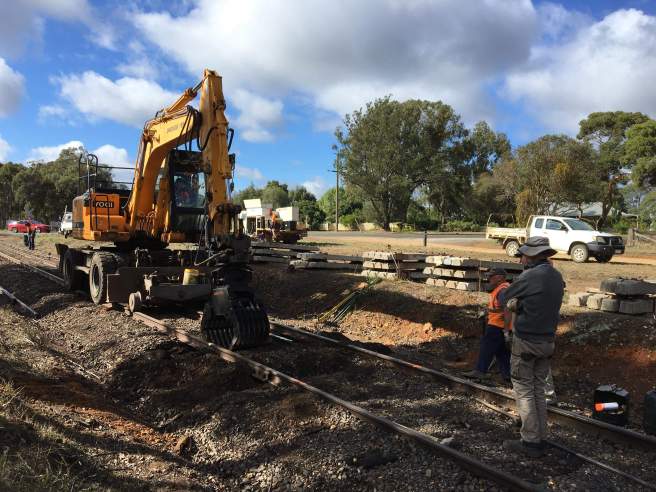
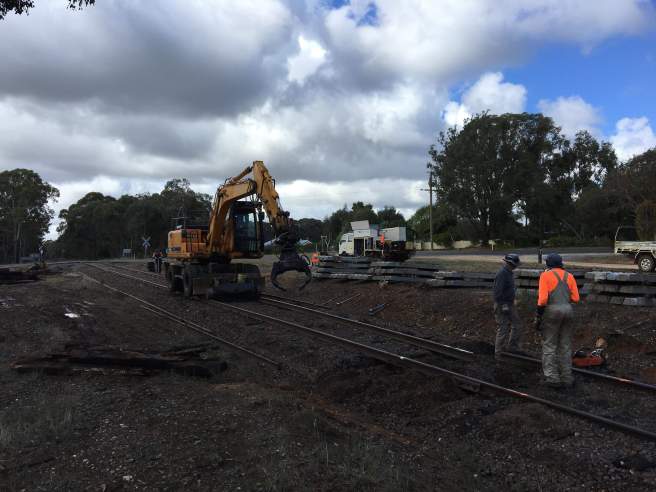
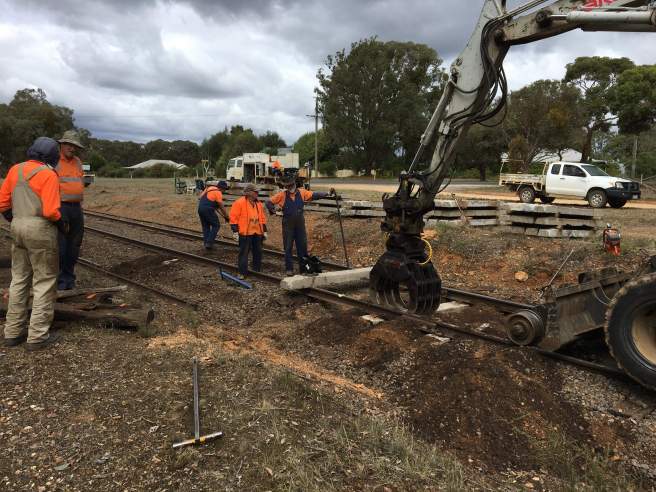
Today’s tasks involved installing the two remaining junction rails and replacing any failed sleepers. Here we’re removing the spikes.

The new rails, of course didn’t match up with existing joints, so we chose to cut the existing rail rather than the nice long ones.

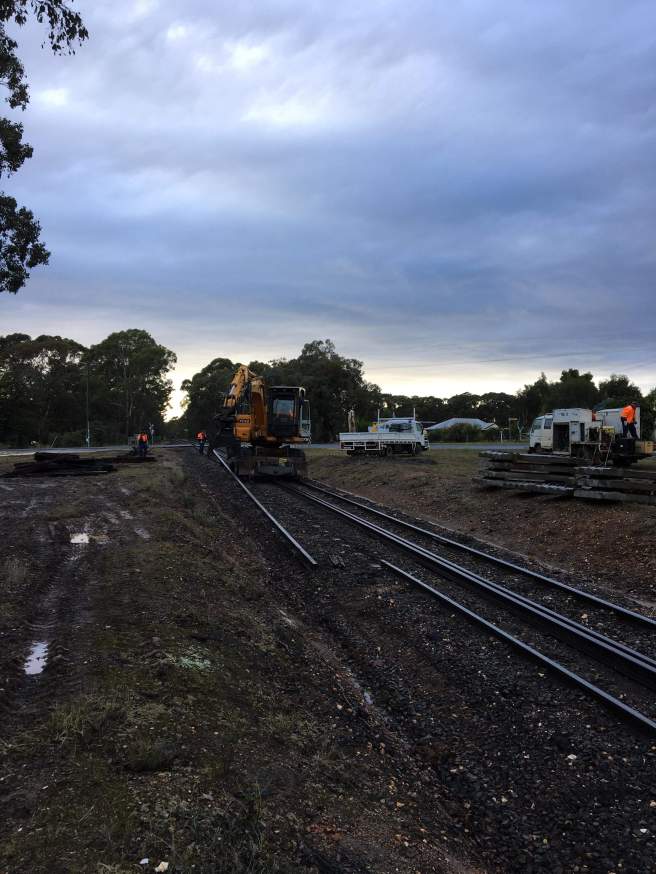
Last time we used the little digger for this job, which worked, but the big one made extremely light work of it.

The old rail was out in no time.

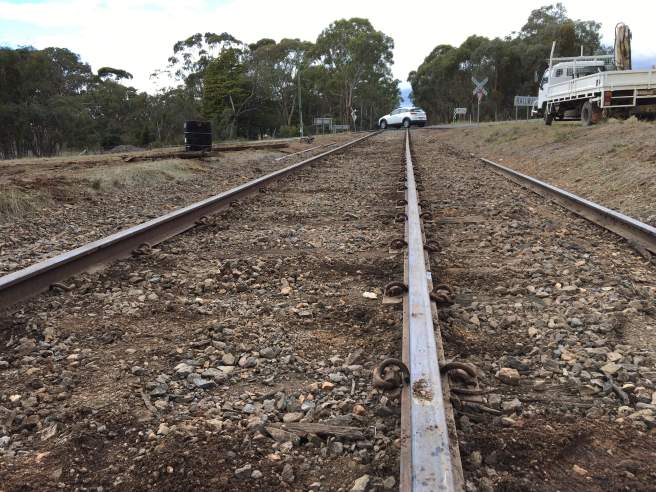
A good scrape away of the rock and with the pandrol adaptor’s installed, the new rail was about to go in.

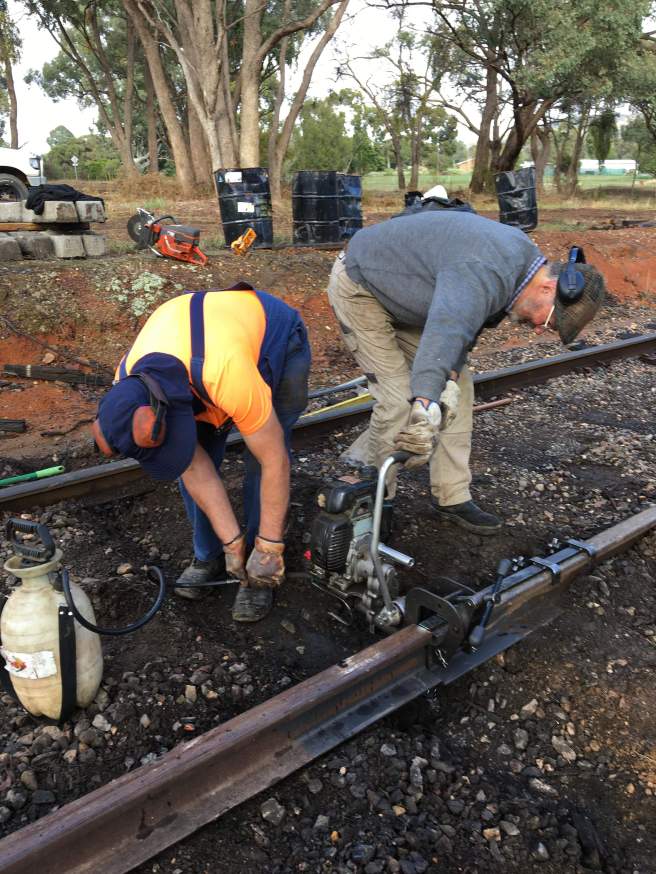
Once the new rail was in place, we knew exactly where to cut and drill the existing rail.

The pandrol adaptor’s have the added advantage that once installed, the gauge is correct and held, so the digger can travel along very safely without worrying about any fastening up while trying to feed the new rail in.

By lunch we’d managed to get both rails in, with no real hassles or headaches.

We spent some time correcting the line of the track on the immediate down side of the crossing, which makes it look significantly better.

After lunch 11 failed timber sleepers were replaced with concrete, which we’re now quite practised in doing, so it also went like clock work.

The remainder of the day was spent jacking and packing the approaches to give a very smart looking length of track. We could still tweak the line a little, but unless we start running at 80km/h it’s a bit academic.

Tomorrow we’ll be correcting some track faults around Maldon Yard, meeting there from 8am.

Bendigo Rd

Well we did it, at 4pm today, the roadway was reopened to cars, with the track ready at about 3.30pm.

It was a big job, we’ve learnt a lot.

The following is a brief photo diary of the works over the past two days:

The all important road closure, thankfully the detour route was some distance away so it mean we pretty much had the whole area to ourselves.

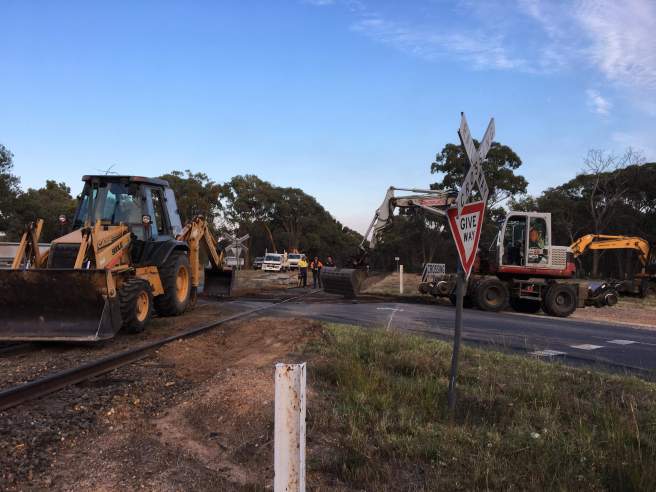
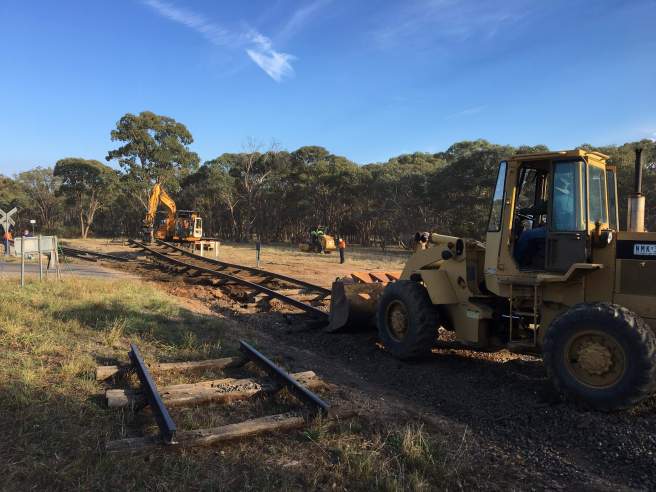
Ripping up the first bits of asphalt, to allow track removal.
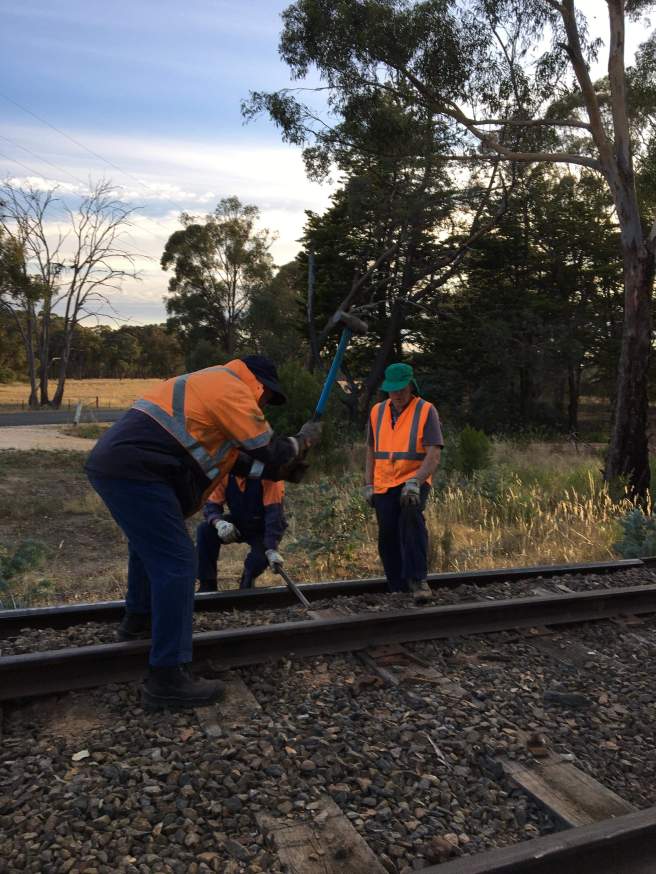
While the machinery was doing it’s thing, the finishing touches were placed on the junction rails installed on Tuesday.
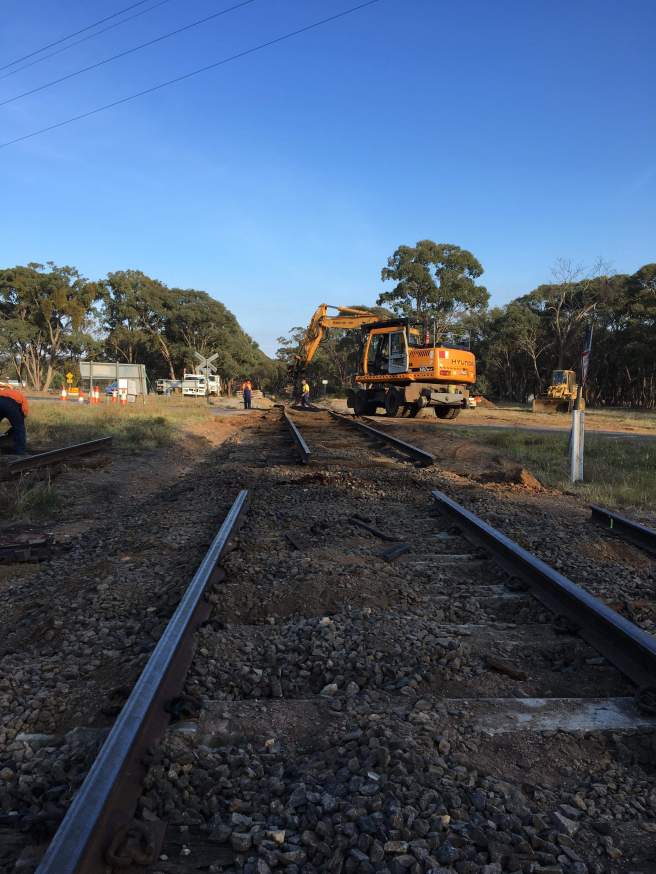
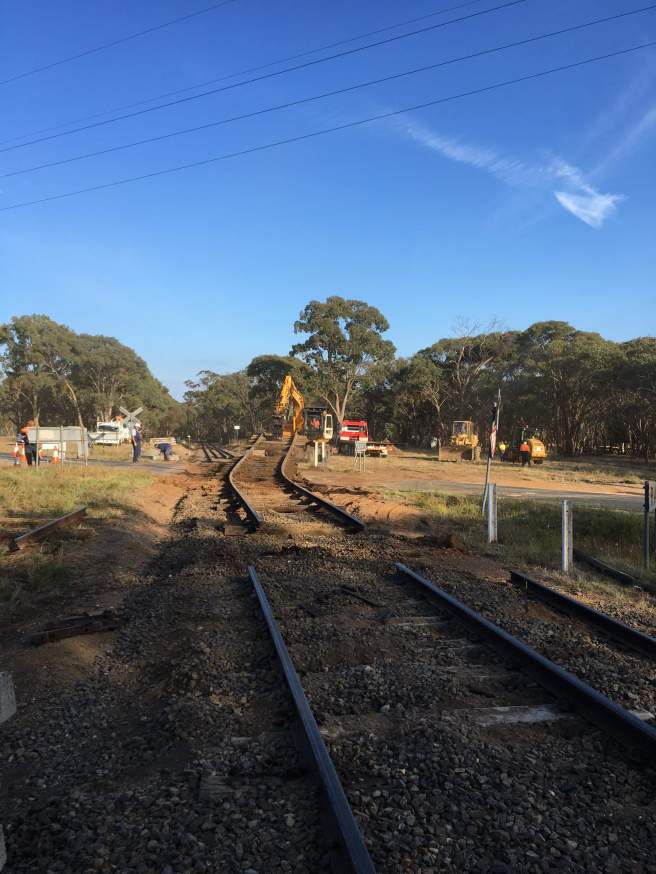
Two big machines made pretty light work of removing the old track panel, it was far quicker to pull the panel apart away from the site, allowing the excavation to get underway.

An appropriate trench was then dug to allow removal of the old material, interestingly, not as fouled and degraded as we expected it may have been, the water had obviously been draining fairly well.
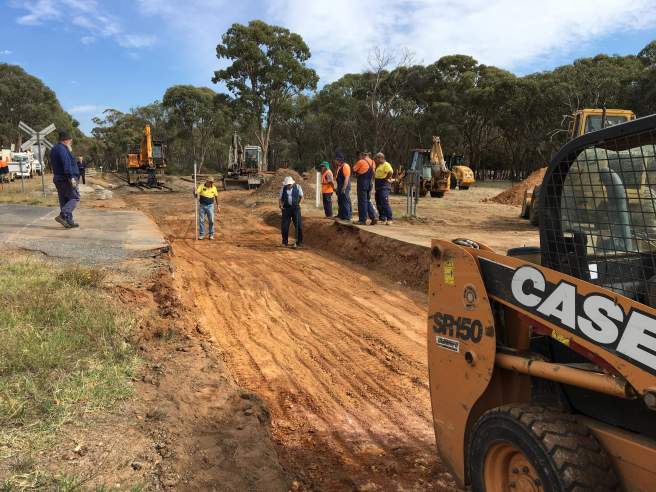
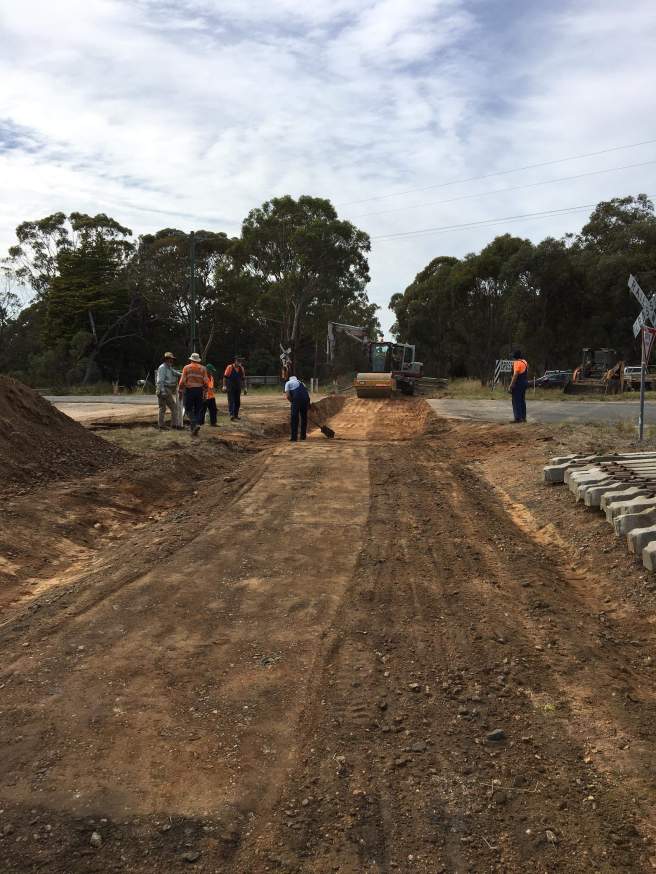
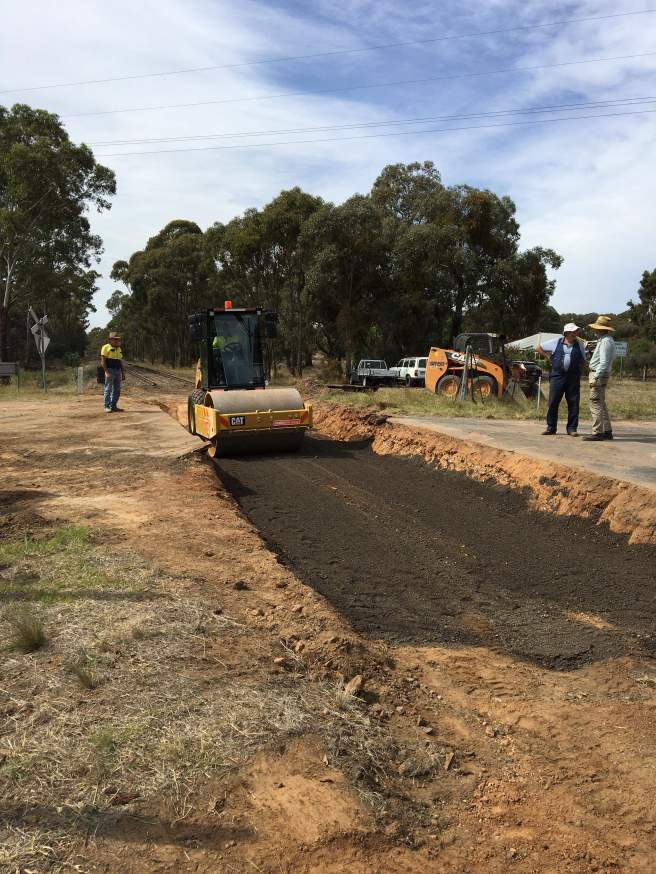
A quick roll to really firm up the ground, this was pretty well virgin ground level, so was already pretty hard.
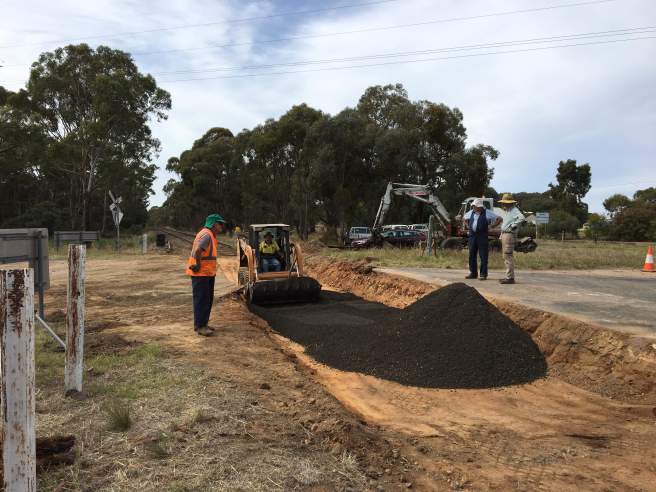
A good layer of road base was rolled in to help cap the clay layer (not that we found much clay).
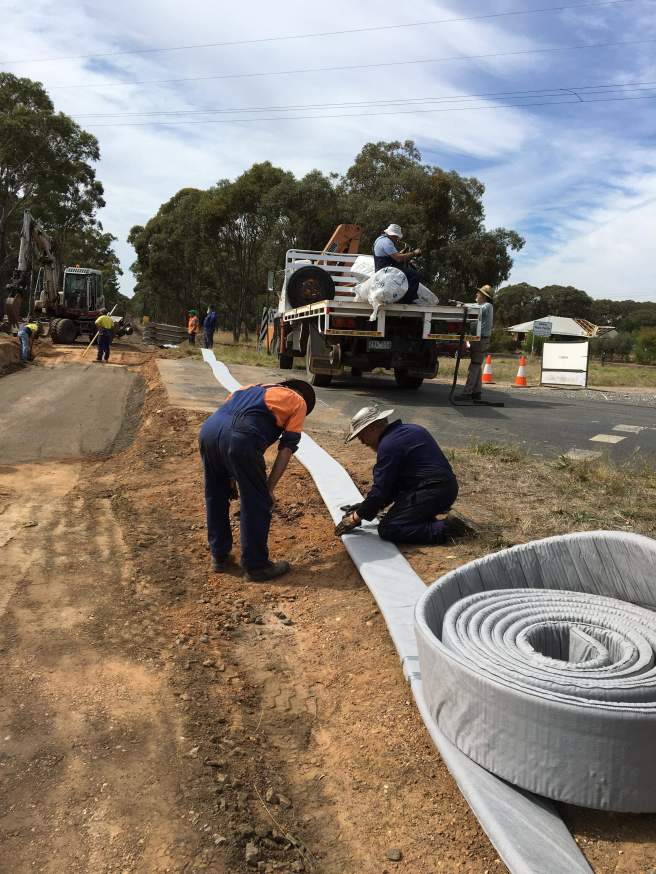
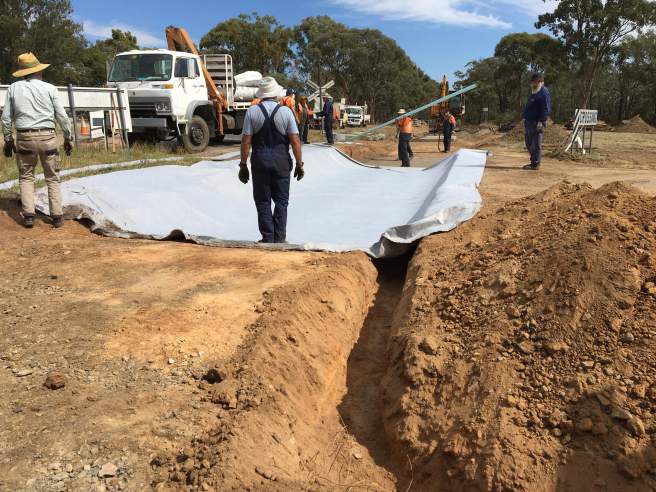
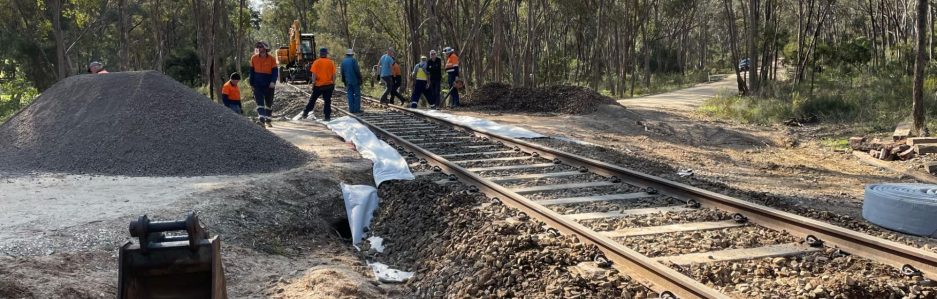
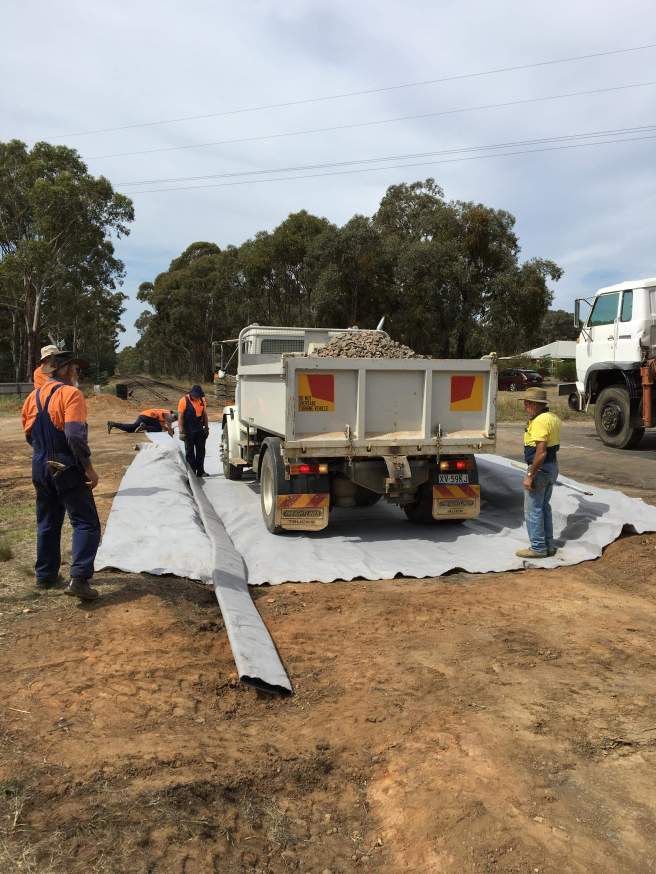
Drainage and geofabric were installed, we had intended installing more drainage but we achieved a very desirable slope over the trench and given the water is obviously not hanging around, one good drain on the north side will be quite sufficient.

Ballast was spread over the fabric to give a solid bed for track construction.
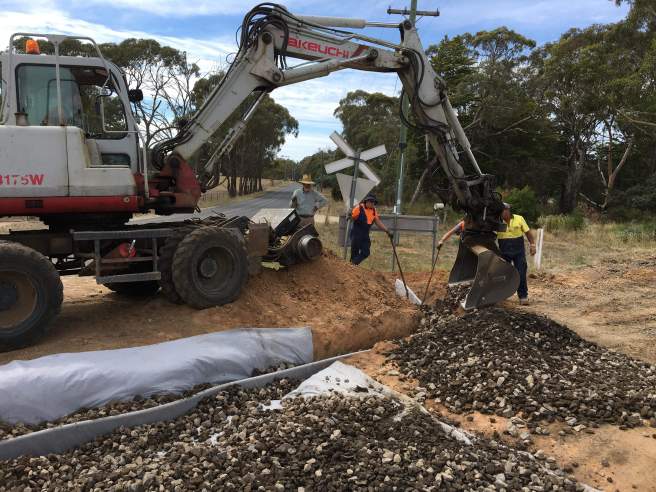
And around the drainage to ensure good water egress.
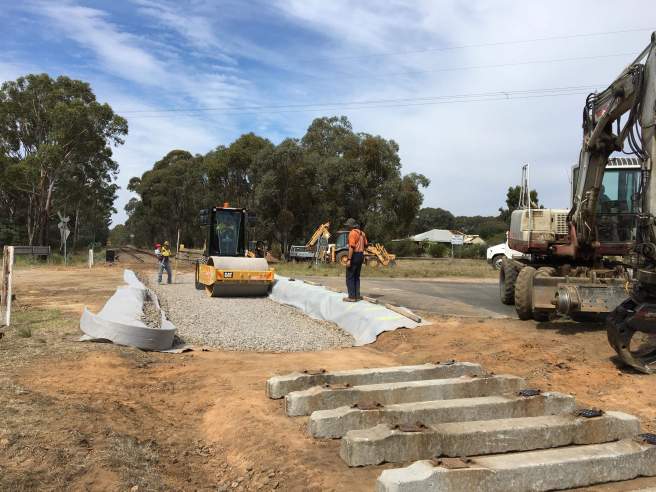
This was also rolled to a very hard finish, in hind sight, we should have added another few inches of ballast after this roll and re-rolled as we did end up jacking and tamping more than we’d hoped.

Then the all important sleepers were laid out. Once in the trench, string lines and spacing marks were used to locate them accurately.

We had meal breaks with this horse… Who tried to steal our food and pinch our hats!
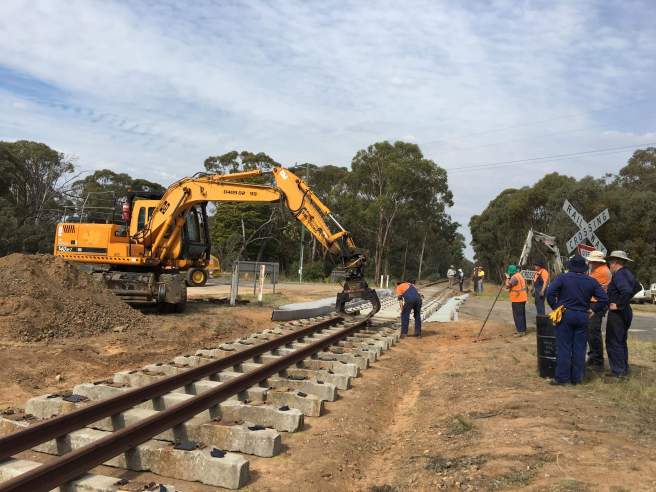
The big digger proved invaluable in dragging in the new rail.
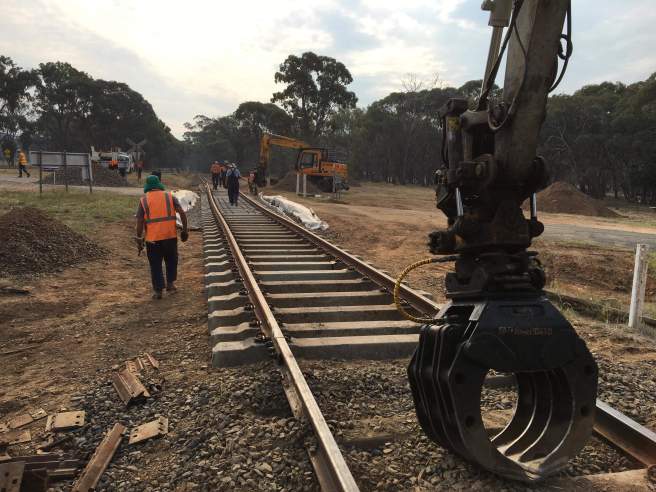
And by knock off on Thursday (around 5pm), the new track was bolted onto the UP end rails and fully clipped by to the down side of the roadway.

Thankfully the road closure included the nights, so we were able to leave a pile of ballast right in the middle of the road.
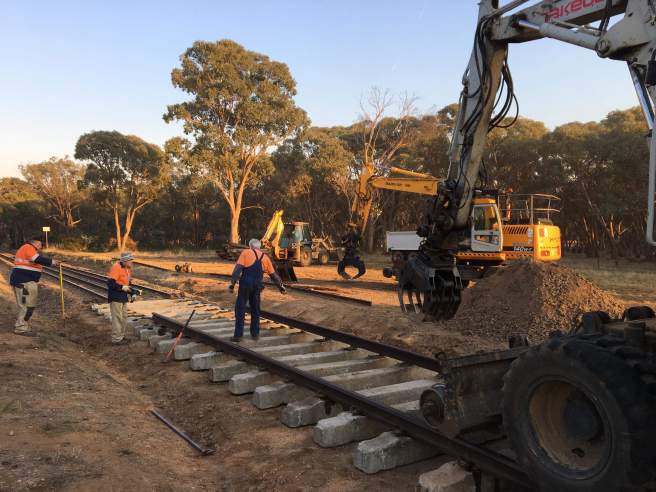
Job one today was clipping up the last of the sleepers and cutting in some closure rails.
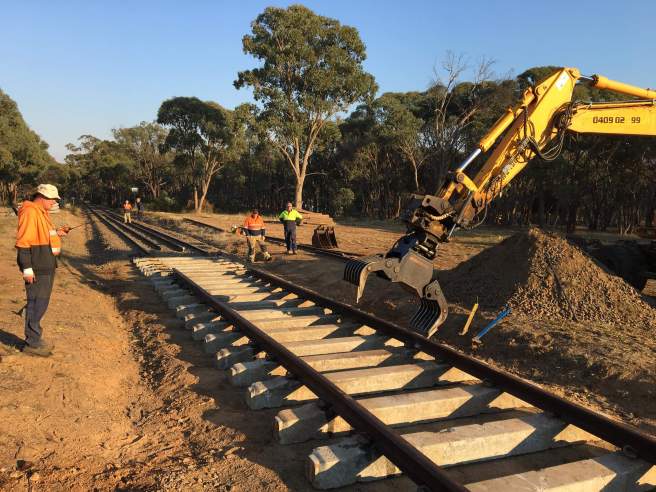
A good bit of tweaking the alignment to make sure we didn’t get a repeat of the previous rebuild here.

Then it was hell for leather to get some rock on.

Lots of jacking, tamping and more rock finally saw us reach the final height through the roadway. We felt a bit pressured at this point as we really only had time to have a bite for lunch as the asphalt was arriving at 1pm and it was looking like we wouldn’t be ready.

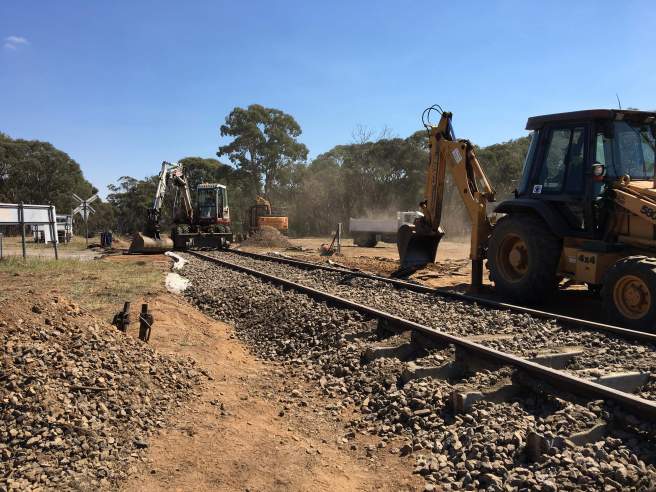
However by 1pm we had completed the ballasting and tamping and we just had to remove the outer strips of old asphalt. The new asphalt started going down at 1.15, so a pretty good result really.

A very welcome sight.
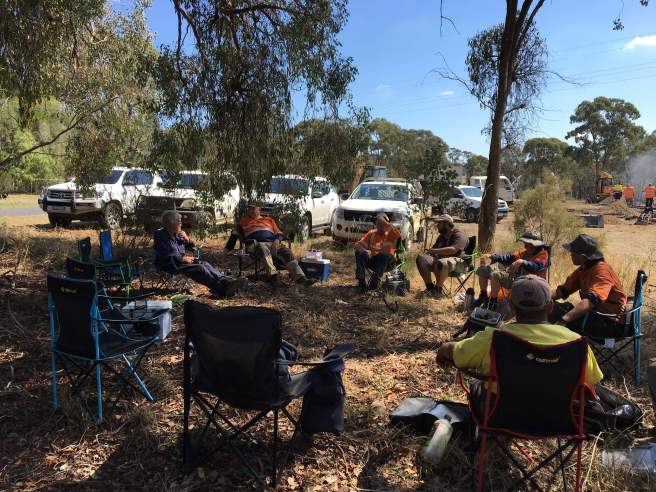
We made use of the following half hour to have a good and extremely well earned break.
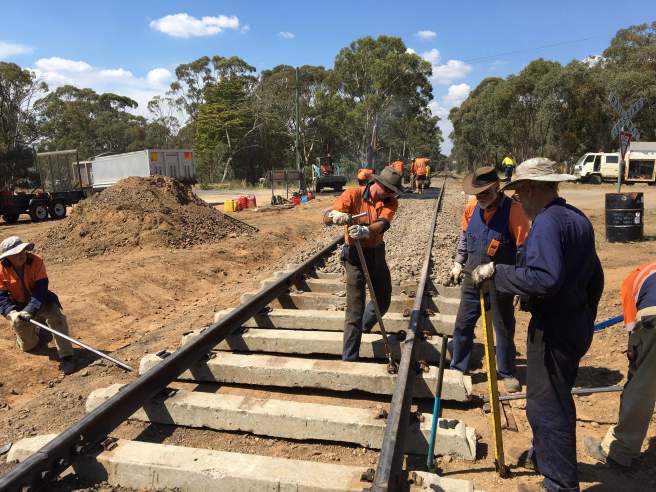
After lunch the short closure lengths were clipped up, ballasted and the final lifting and tamping of the crossing approaches was completed.

It was a bit of a non event, the asphalt going down, mainly because it just looked normal again!
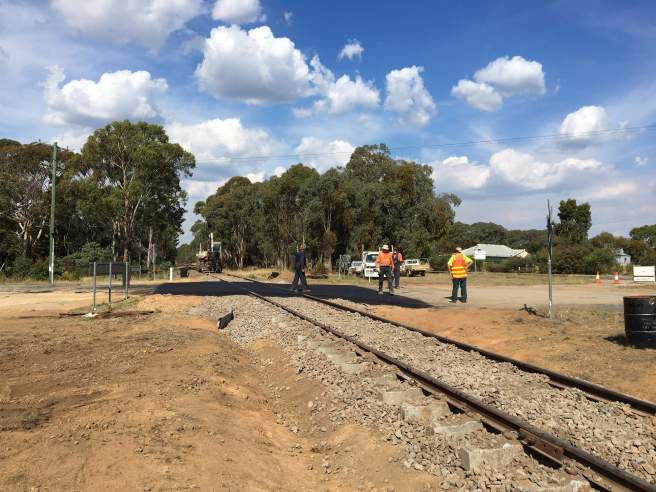
We’ve still got a lot of tidying up of the ballast, materials and rubbish to do next week, but we’ve pretty well got the track completed, certainly completed enough to use.
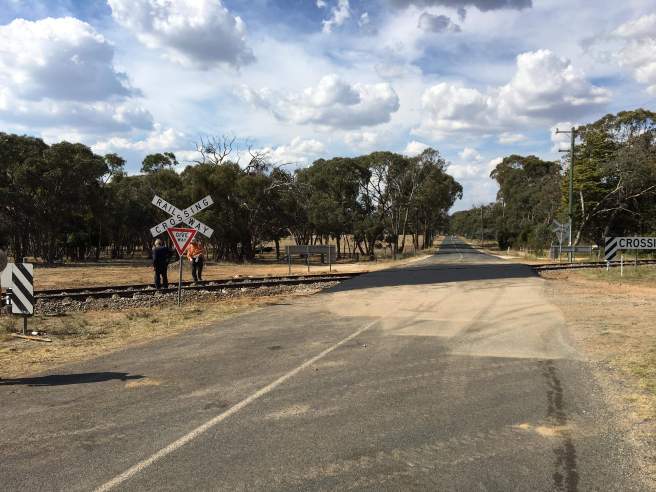
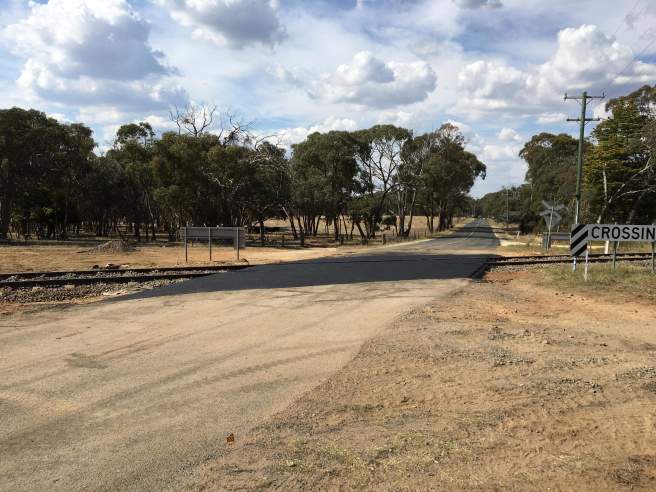
Looking pretty good.
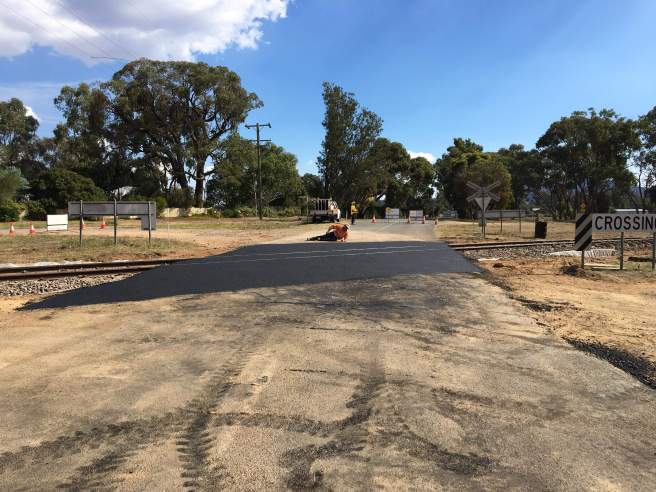
Now… We can only assume John was checking the road surface, but he looks quite comfortable lying on the road like that.
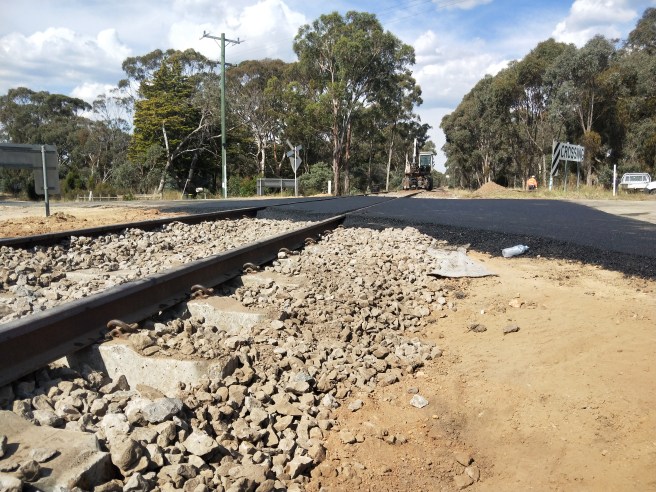
We’re pretty happy with the result. The best part of two weeks preparations and two very intense days, has seen another massive milestone achieved in upgrading our railway.

For those not in the know, all this work at the crossing is part of something bigger. This crossing has been funded by the Department of Transport for upgrading to active protection (flashing lights and bells). This is part one of that upgrade, hence why we’ve gone to so much trouble installing longer rails with no joints through the crossing area and nice long approach rails. It’s expected the lights will go in towards the end of June into July, at which point our most dangerous level crossing will become significantly safer.

A massive thankyou to everyone who has helped out not only over the past two days but in the weeks leading up, we really appreciate it.

Next week, weather permitting, Tuesday we’ll meet at Maldon 8am to begin the big cleanup.