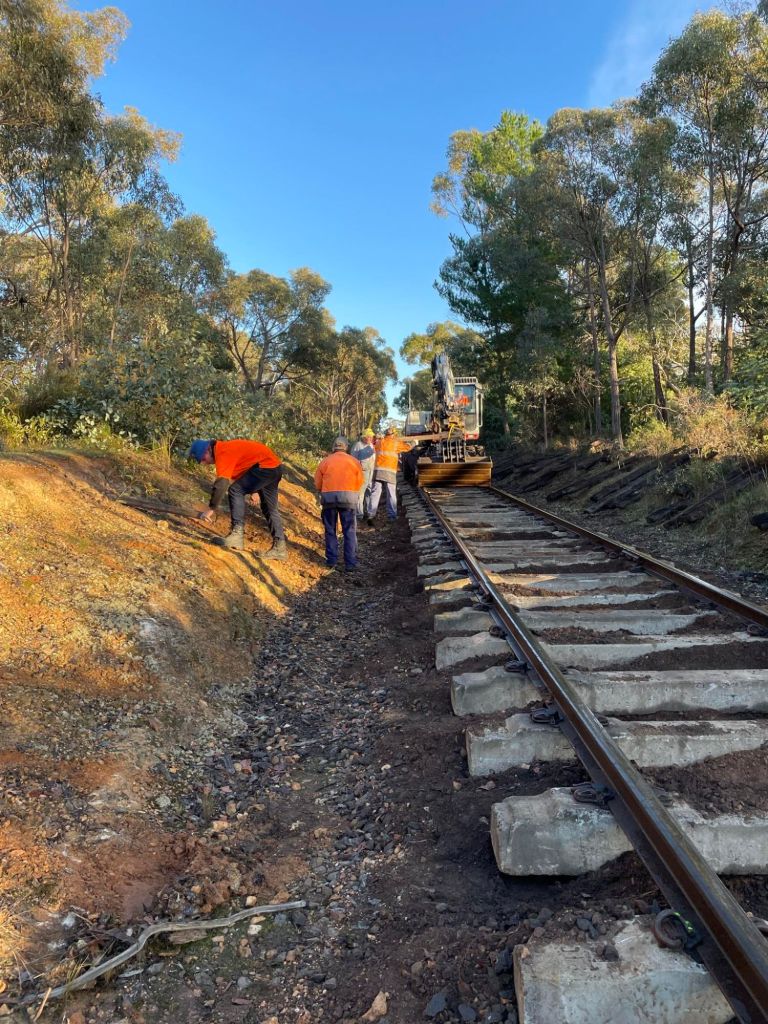
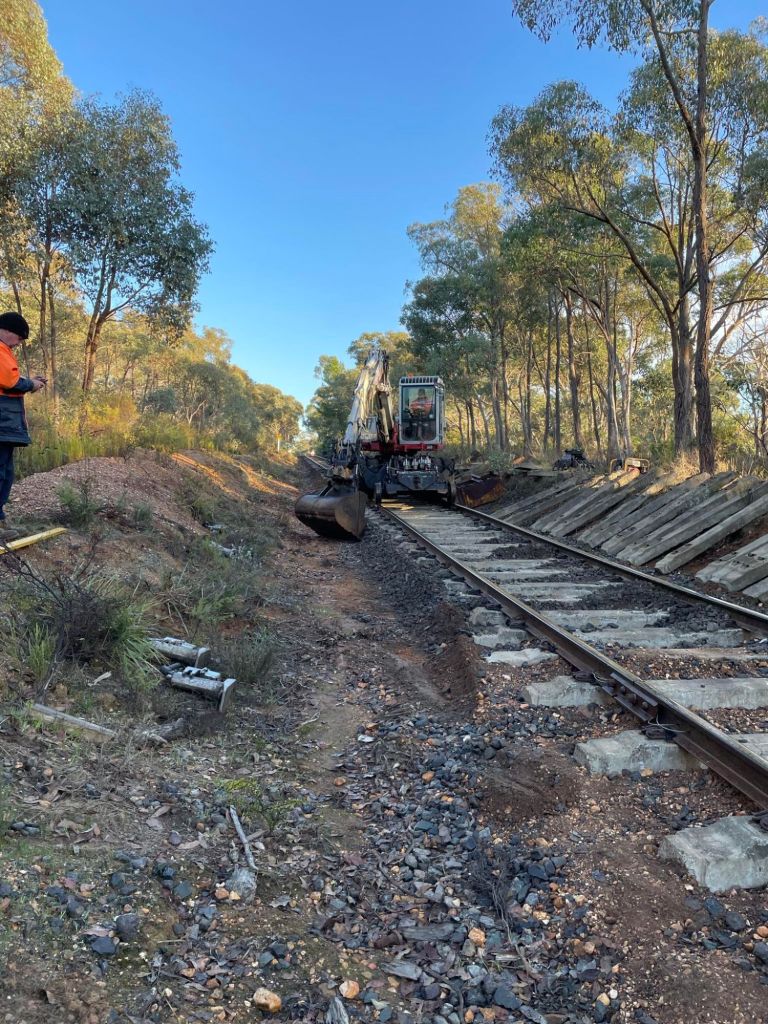
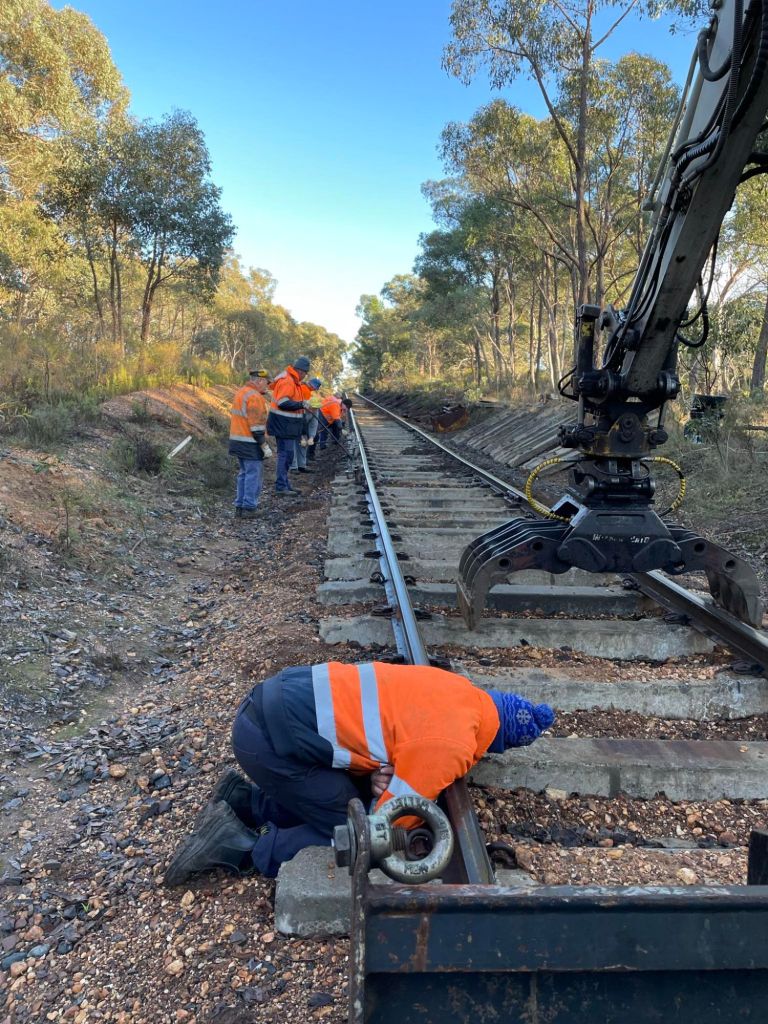
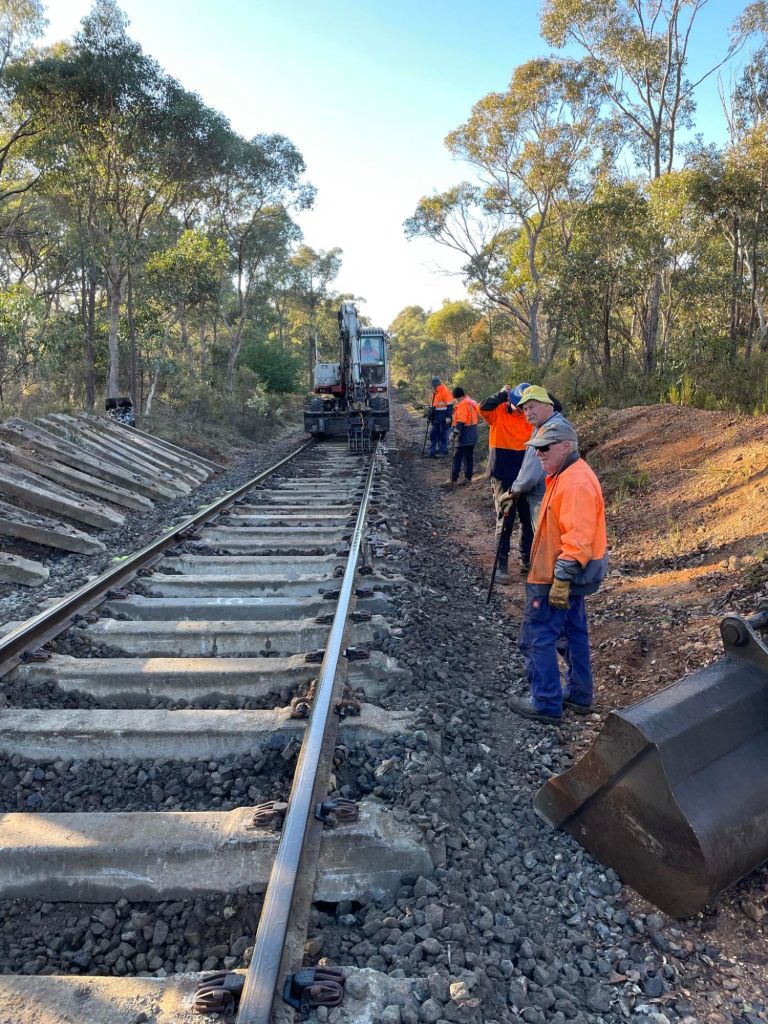
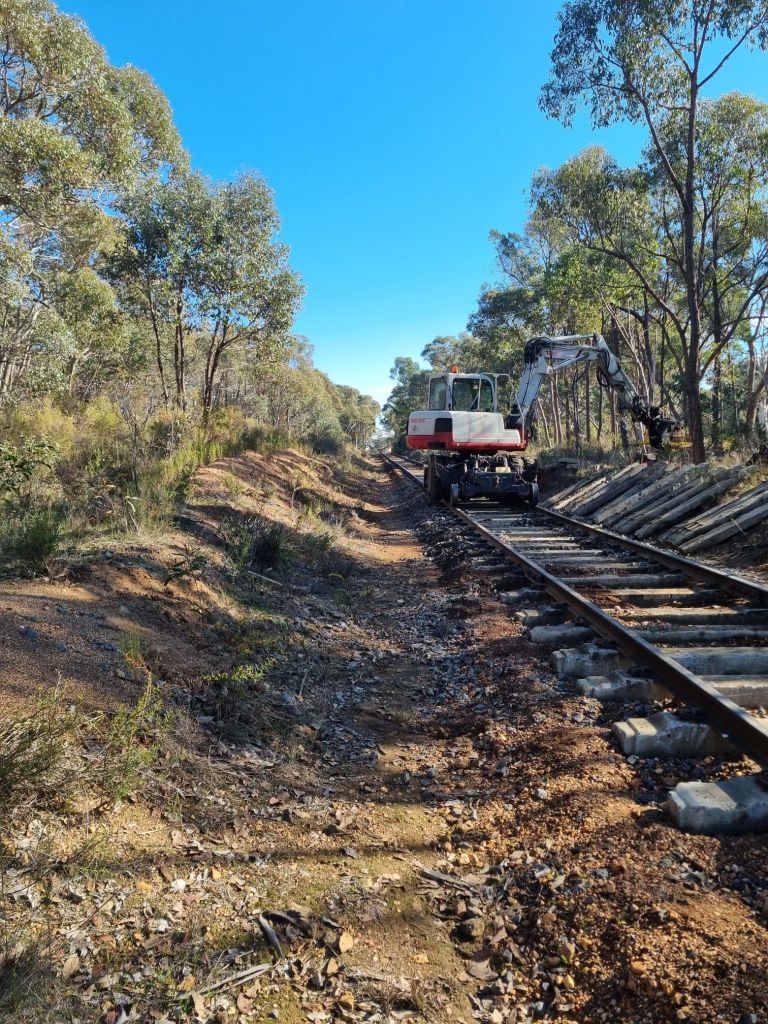
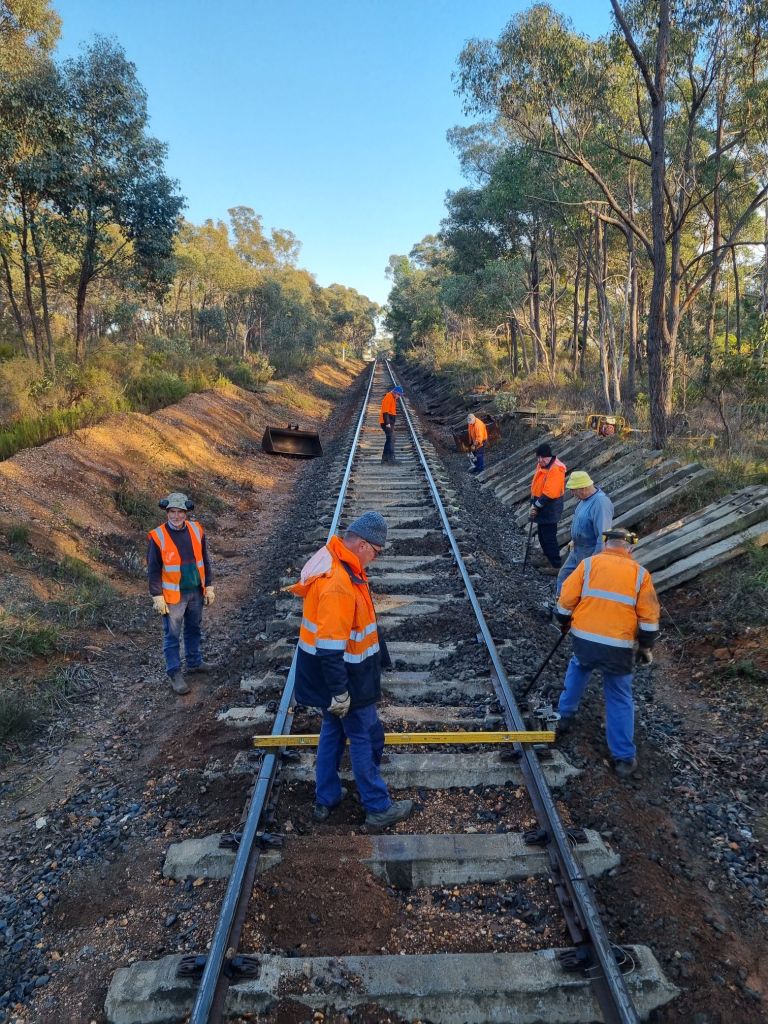
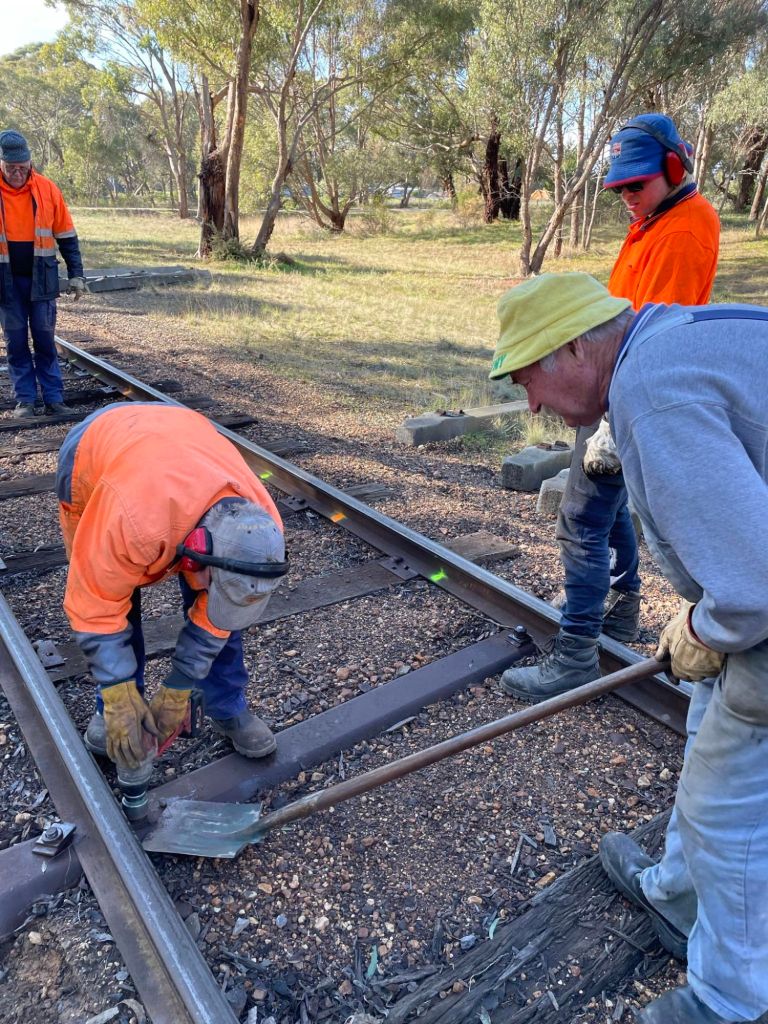
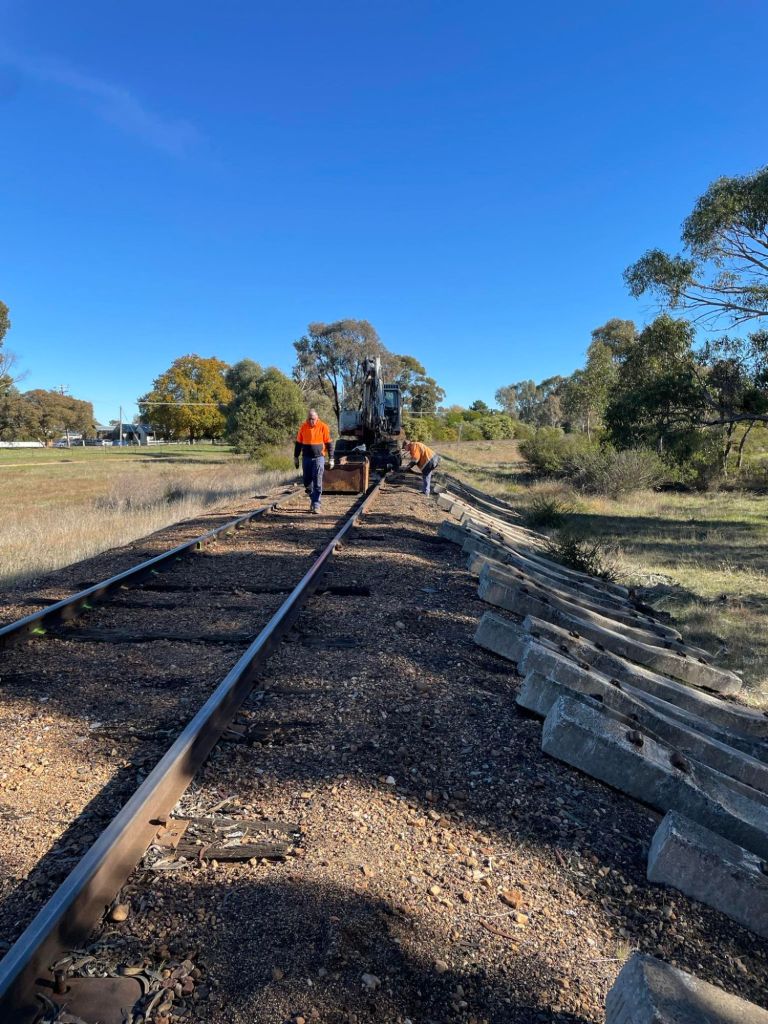
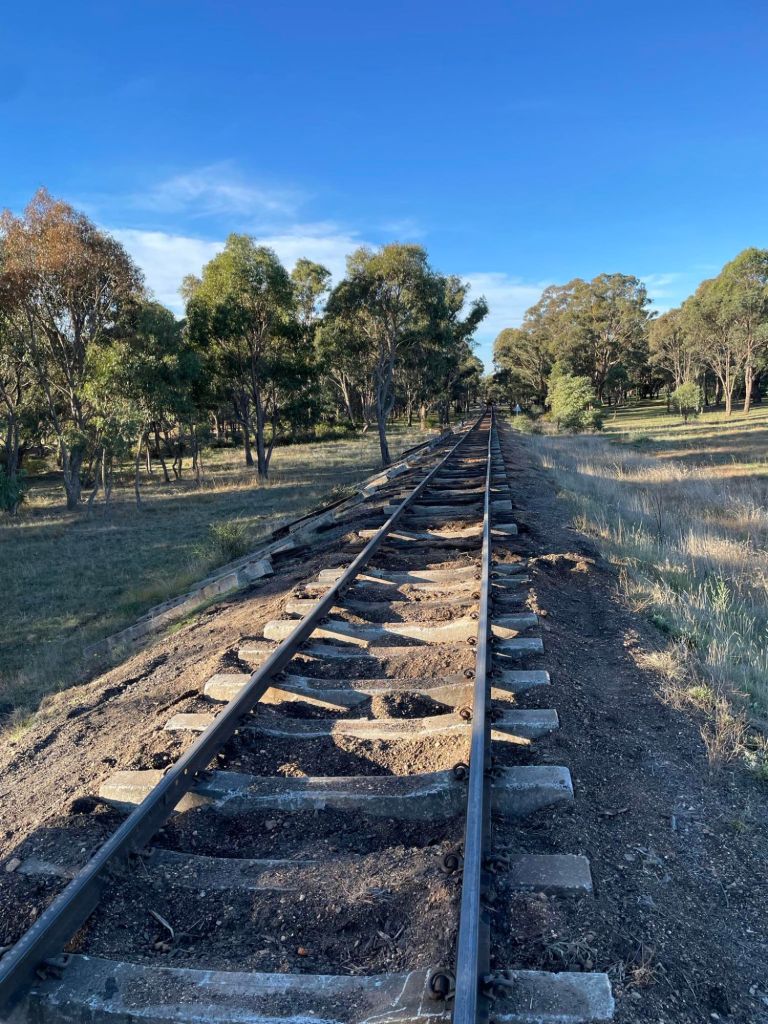
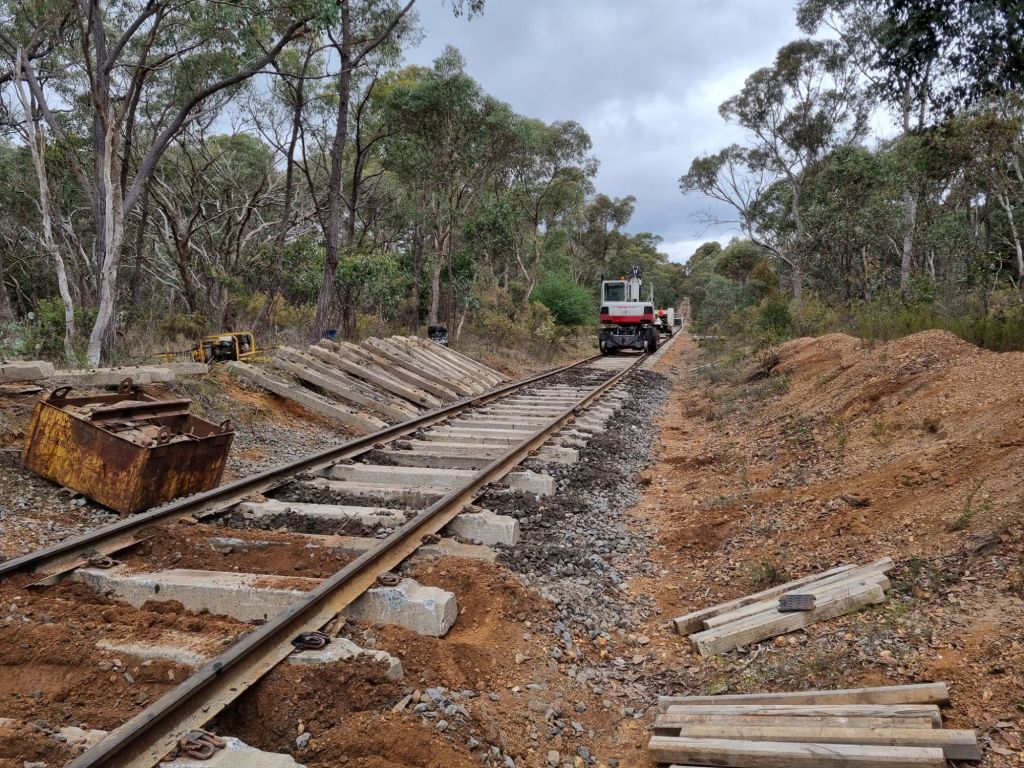
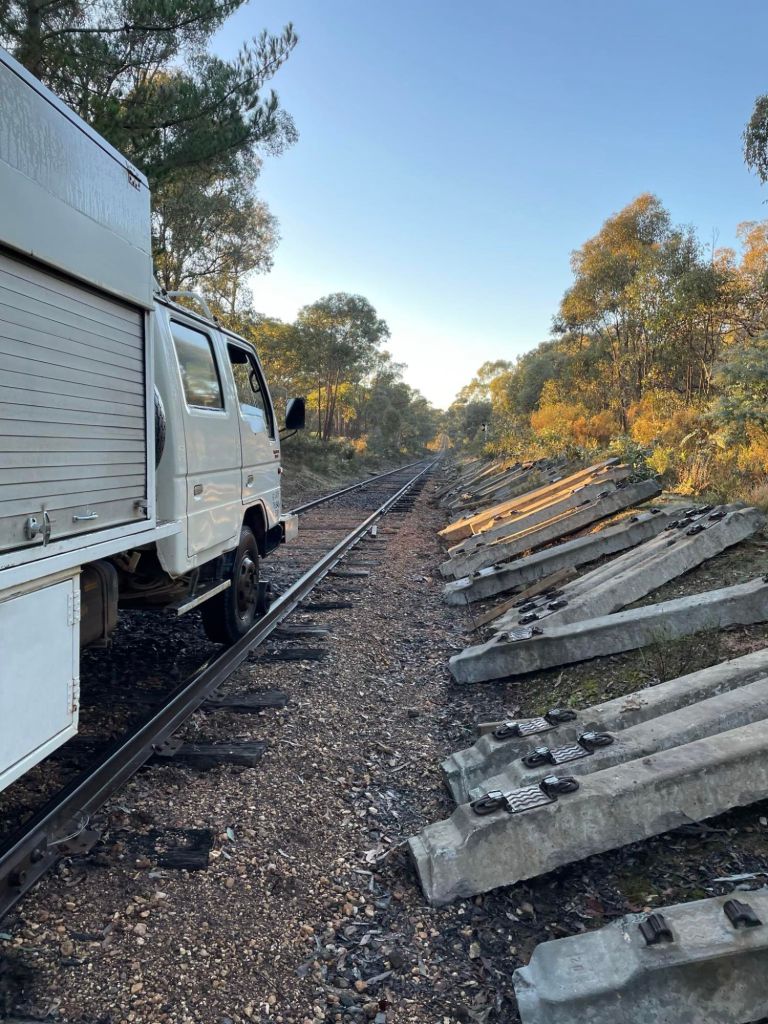
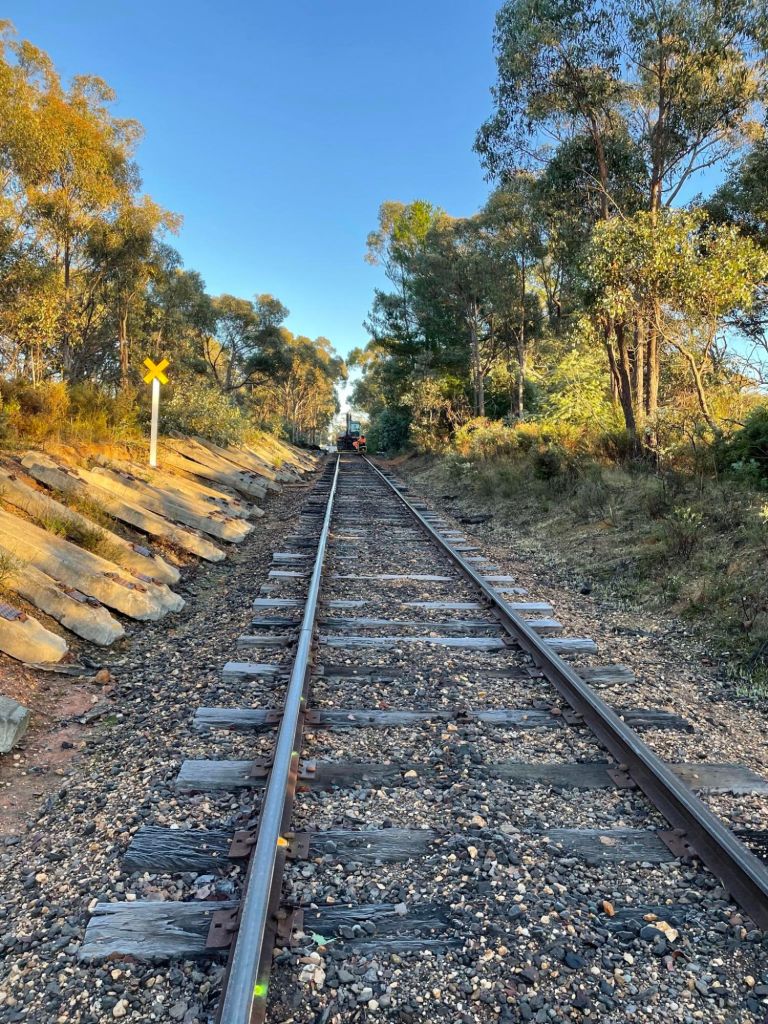
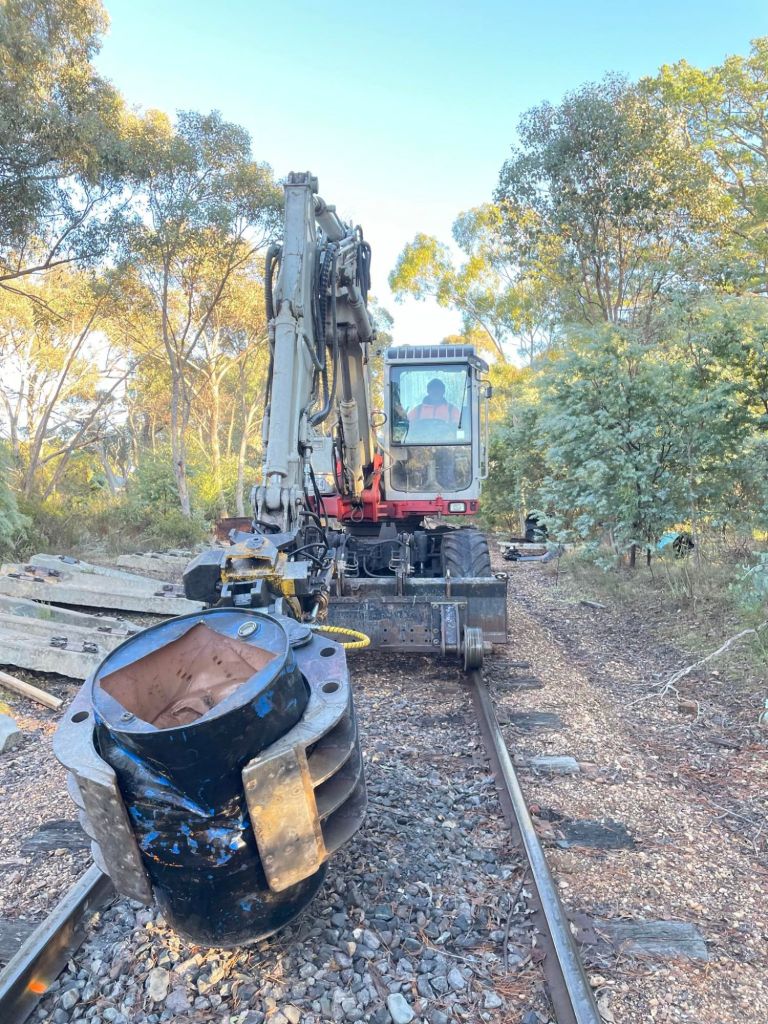
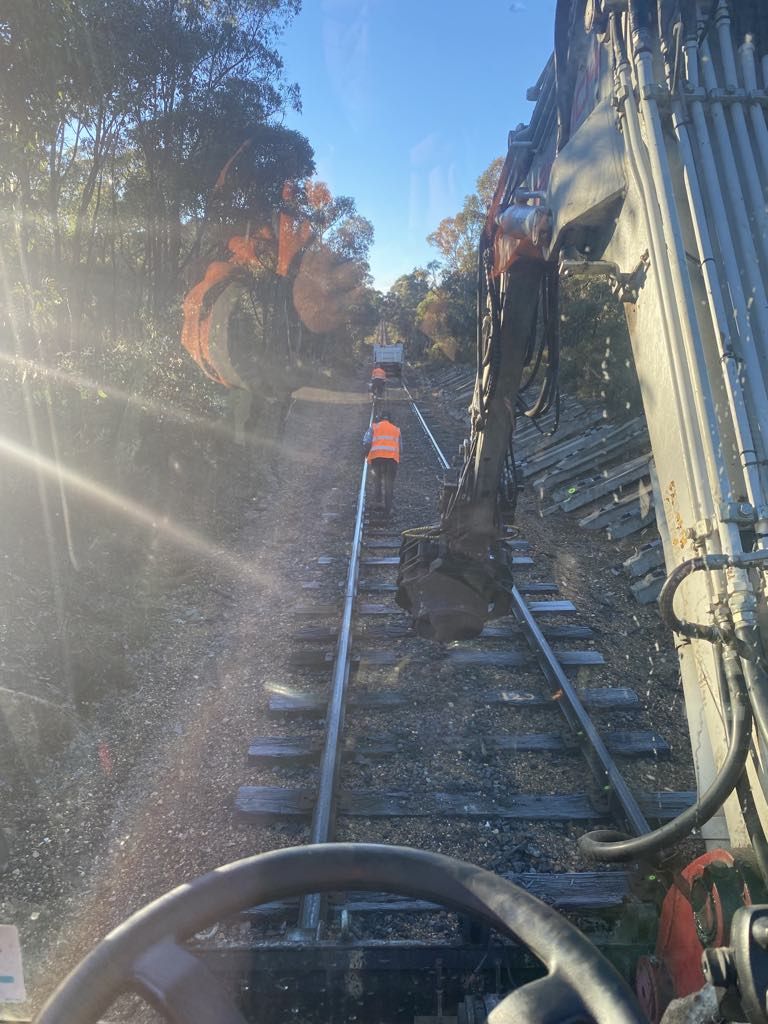
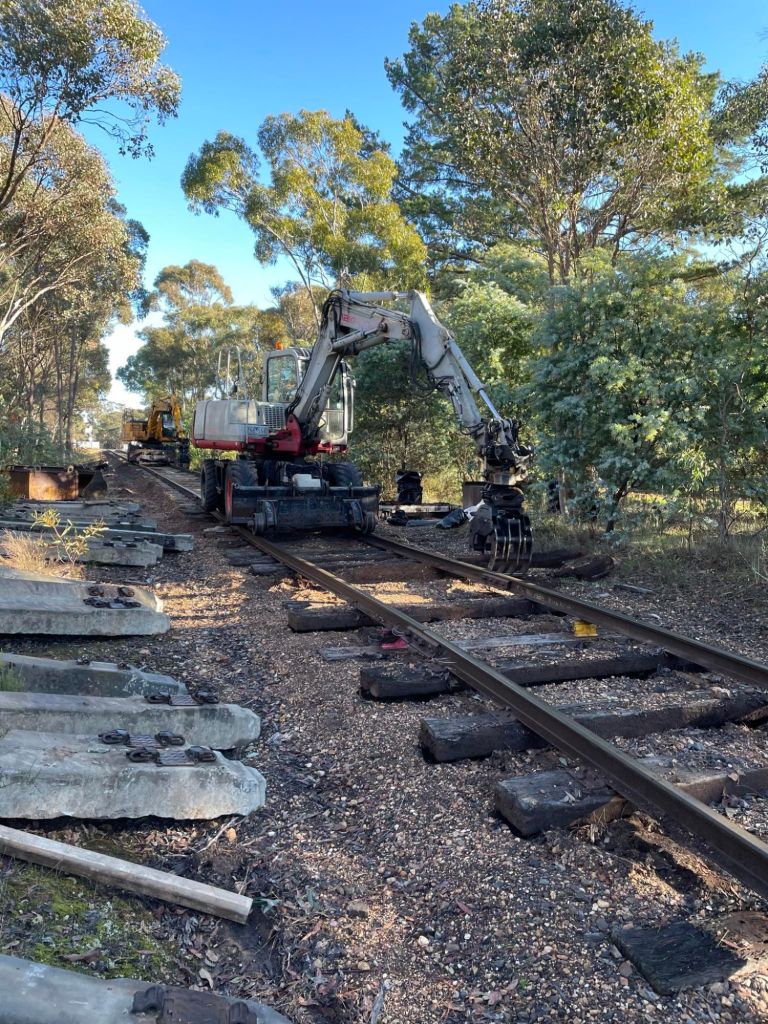
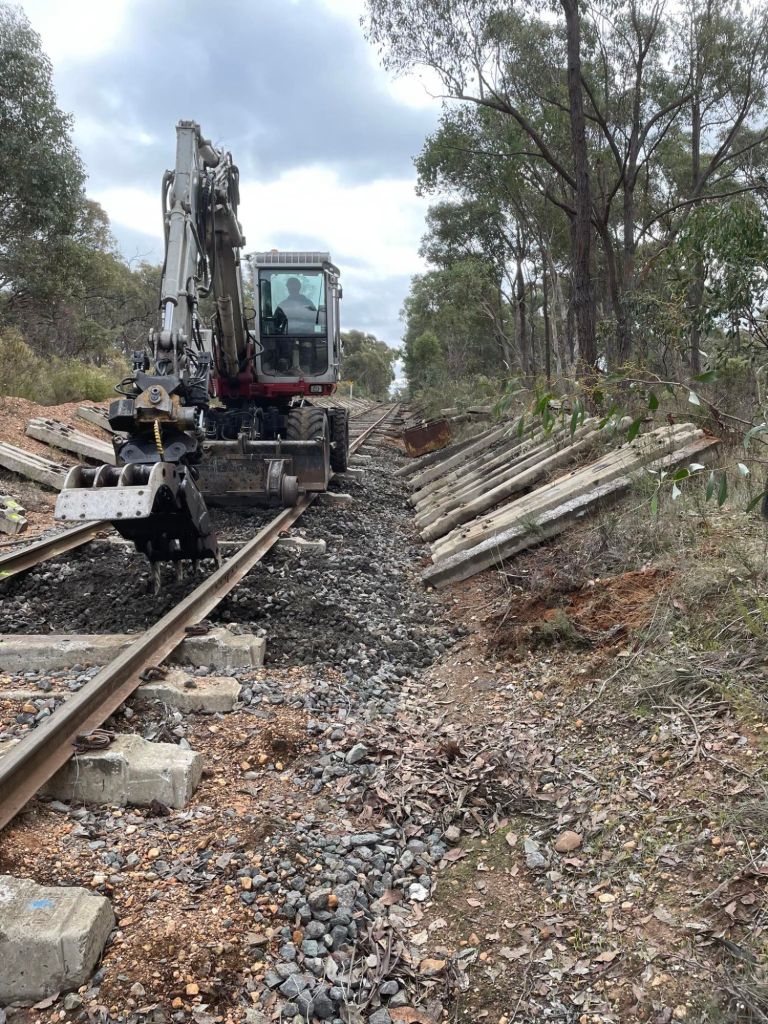
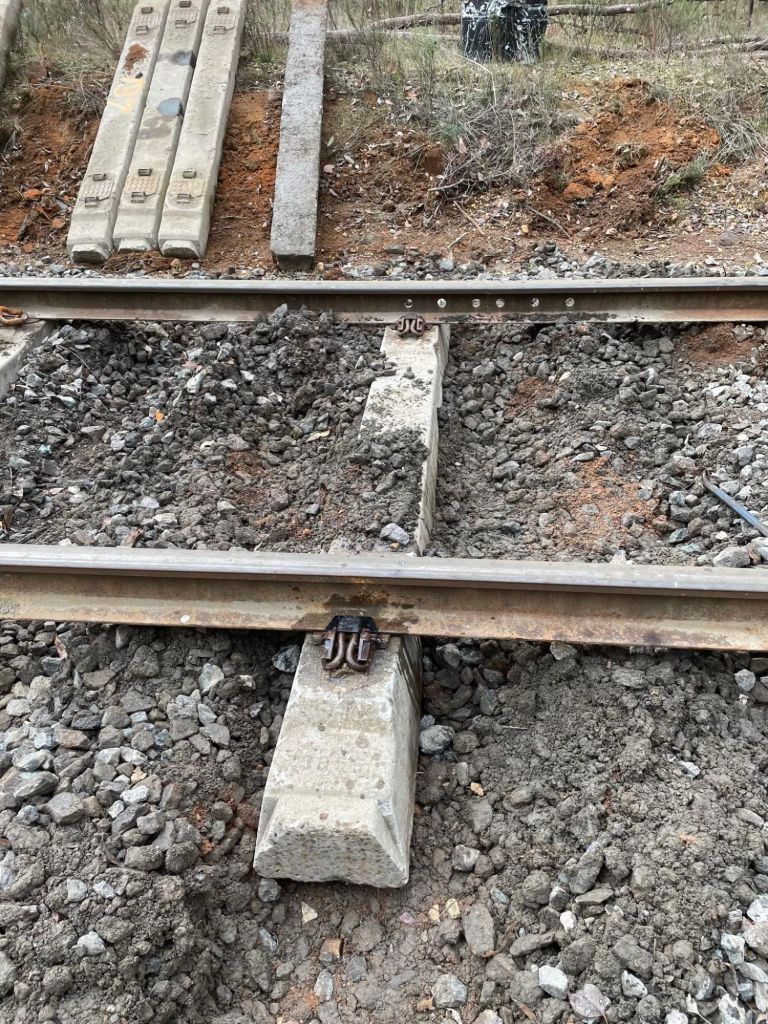
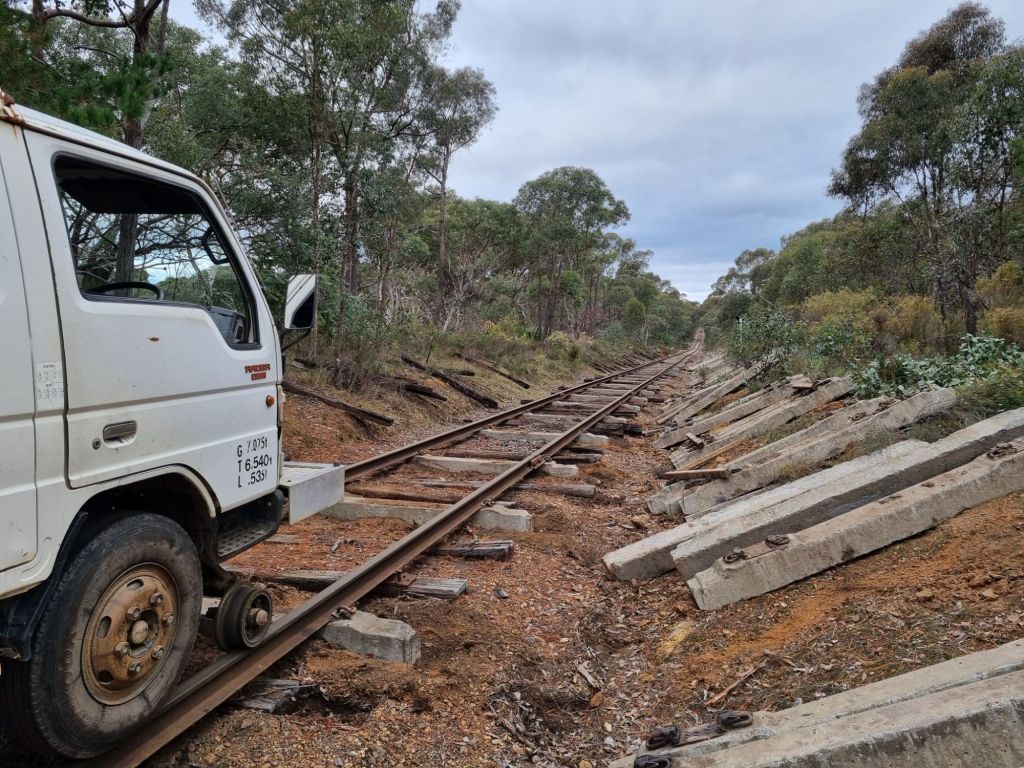
The day began with a final tidy up of the section from Tuesday, including a ballast scrape, Jack, pack and general mess collection.
It has come up really nicely, which we’re very happy about. This is quite a considerable length of concrete sleepers now, which looks impressive.
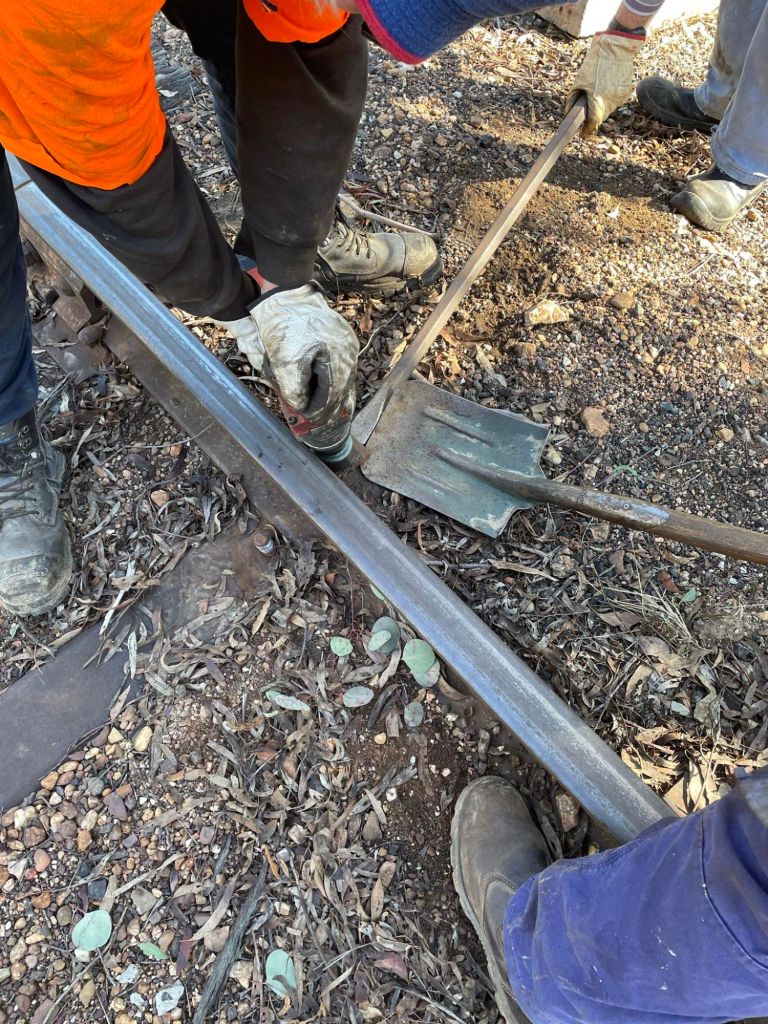
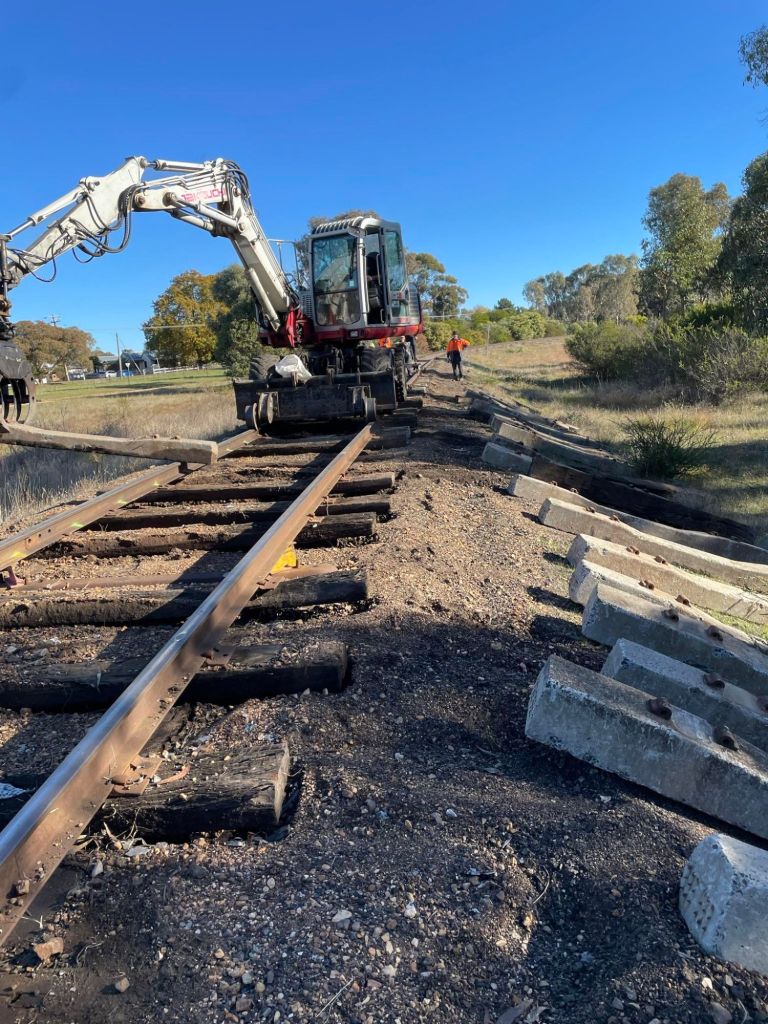
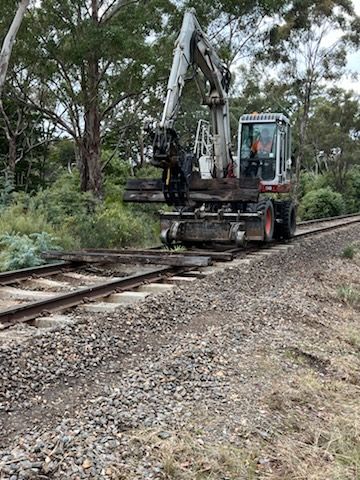
We then jumped around to the straight near Maldon, where we unfastened all the steel sleepers ready for the resleepering there.
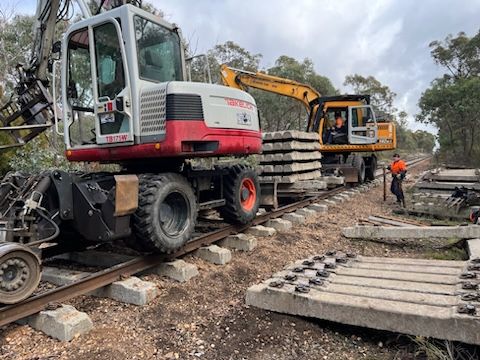
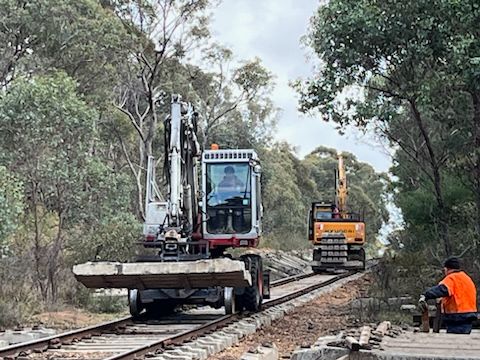
Then we begun the resleepering there.
We’ve installed and clipped up the first 22 sleepers (in the 1 in 4 pattern), meaning we’ll only have another 66 to install tomorrow, to give us the first 88 concrete sleepers in this straight.
This should be a nice, comfortable day tomorrow, meeting at Maldon 8am or on site shortly after.
Today marked another milestone, with the final 141 sleepers inserted and clipped up, a total of 188 this week. This now means we’ve got continuous concrete from Woodlocks Ln to the old tip crossing, quite a distance and one that was certainly due for a very heavy sleeper replacement, as the recoverable timber from here has been quite low.
The boys have now got very familiar with the fastclips and have decided they probably are quicker than the regular e clips, so we’ll need to retract yesterday’s comment about them being slow, rather it was us being the slow part of that equation.
For the immediate future, that’ll be all of these type going in, as we’ll be leap frogging back to the straight out of Maldon Yard, installing VR type E clip sleepers there.
The reason for the leap was simply that we needed to bring sleepers out from somewhere to do the work as it was a section we didn’t think we’d quite get to during the occupations, however we’ve outshone ourselves and this last bit will probably see us through to the end of June and hence the end of the week long occupations. There were almost enough left overs from around Bendigo Road to do this in VR type sleepers, so to save moving them too far, we’ll be using them.
There won’t be a workday tomorrow. However, we’ll be back into things as usual on Thursday, we do still need to jack, pack and tamp the section we worked on today, so meeting at Maldon at 8am or down by Bendigo Road shortly after.
We had an extremely productive day today, after a very chilly start it was glorious in the calm Winter Sun.
The short isolated section of timber sleepers between last week’s work and the work we completed late last year is now a memory, with the job well in hand to be largely completed by tomorrow.
Nothing too exciting or unusual about today, although the E clip sleepers used are the more regular common type, making that a little more straightforward. However we do a video to show the process in action.
Once the 47 of these were in and clipped up, we jumped over to beginning the clipping up of the fastclips, which was once again a bit of a learning curve! But we managed quite successfully, we’re not sure the name is really appropriate as they’re certainly not quicker… maybe brand new ones with brand new rail using all mechanical equipment might be, anyhow it’s probably quite comparable to the others when it’s all considered.
Once they’re in, they’re as good as a normal e clip job, just getting to that point seems a bit more awkward. There is a correct and completely authentic setup for using these with this rail, however it requires full replacement of the pads, biscuits and clips, which totals to around $30 per sleeper, which while that’ll be on the long term budget to progressively change the across, the end product is identical to what this achieves, spending only about $5 per sleeper.
The end product of today, however, is still quite impressive, even without yet having the full infill and lining treatment, but that doesn’t seem like it’ll be too much of a hassle based on the recent experiences.
It certainly looks a lot more uniform or even or something now, even though it’s not fully complete yet.
Tomorrow’s crew will meet at Maldon at 8am or out on site shortly after.
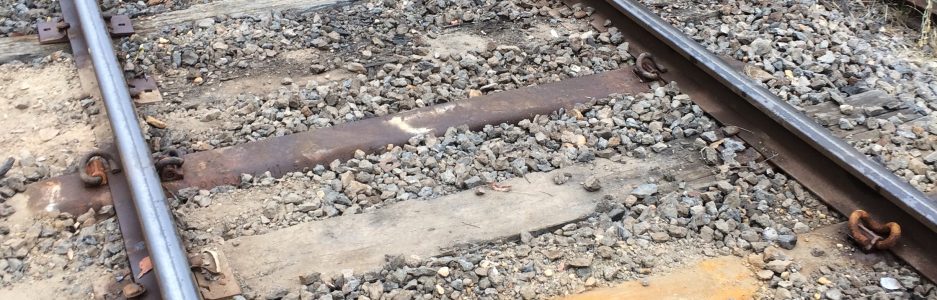
Friday began with a big tidy up of all the timber sleepers, bundling and strapping before transferring them back up to Maldon Yard.
Of all the sleepers removed last week, only 2 of them were good enough to recover for reuse.
The afternoon was then spent preparing and dropping out the last of the concrete sleepers to close the little gap we’ve got between the runs of Concrete Sleepers.
We got a bit more wise to the preparation this time, laying out a good number on the rail to give us a very even surface to work from, this also helped us identify any unusable sleepers, of which there is a few, and recover any good parts to fix up others.
We’ve been trialling a range of lubricants to aid the clip pulling process, the best has proven to be a small drop of soluble oil in a good quantity of water. Makes a world of difference and doesn’t leave a stick residue. Also relatively cheap and easy to prepare.
Next week should see all these sleepers in and installed, removing another 190 odd timber sleepers from the section. The total for the recent renewals around Bendigo Road was 356, not bad going at all given the added work getting the levels to match around the crossing.
Monday’s gang will meet at Maldon at 8am or out on site (approx 200m on the UP side of Bendigo Road Crossing).