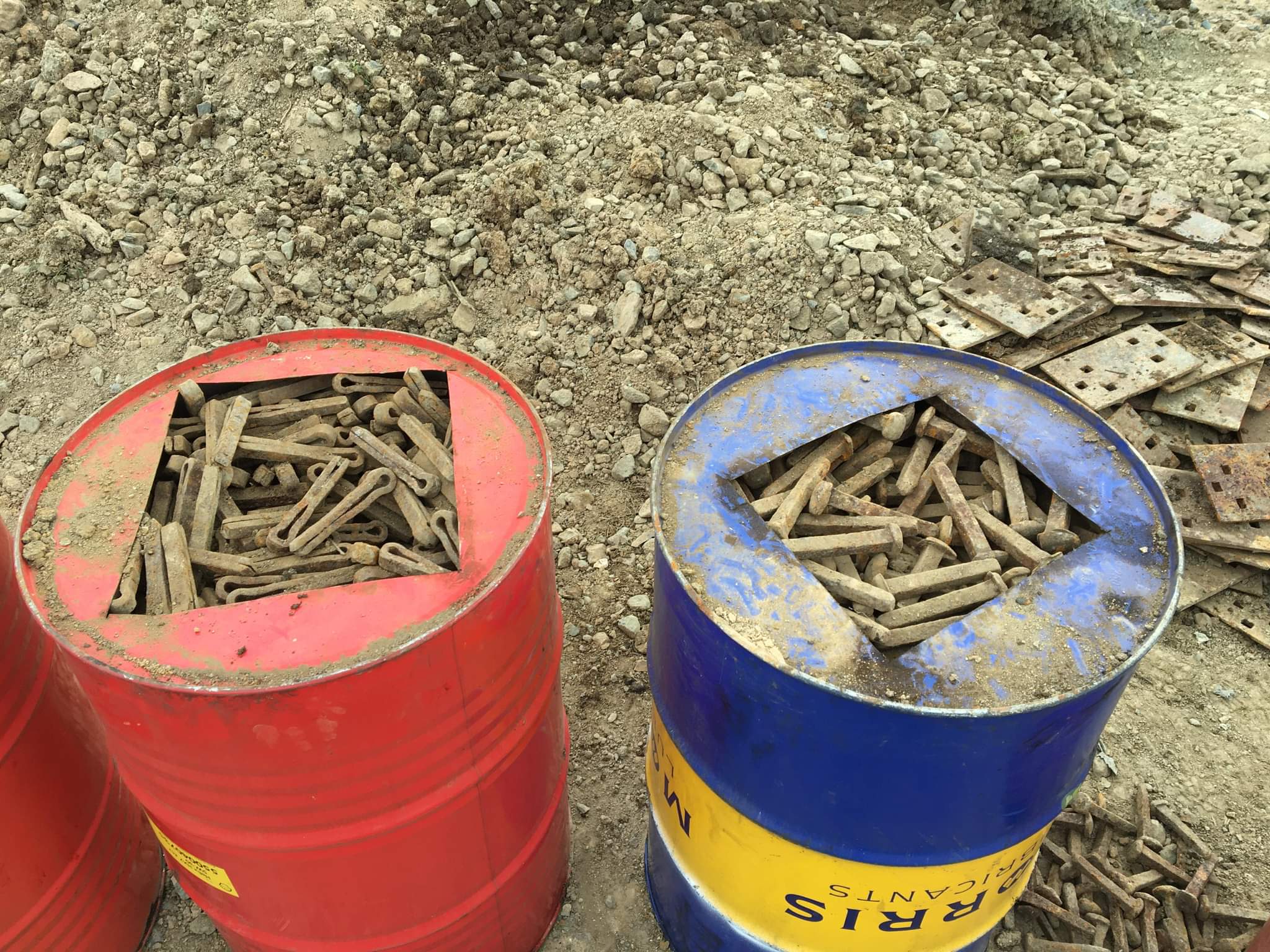
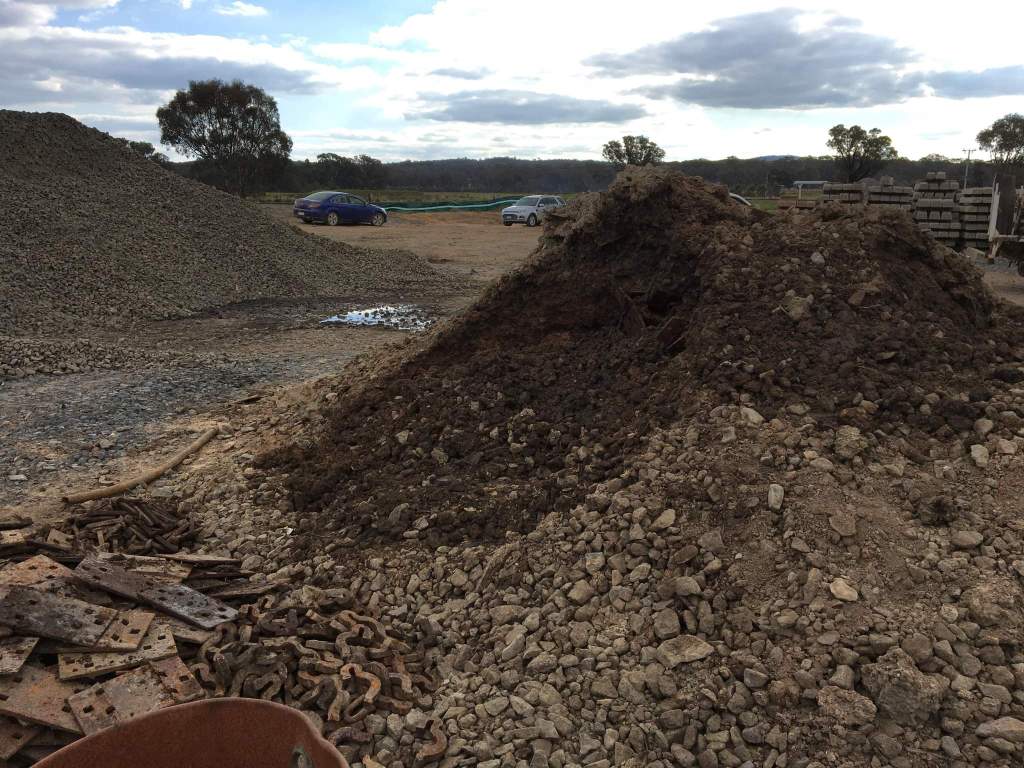
Well today’s exciting job involved sorting through a big pile of dirt. All by hand, to sort out any valued treasures that may have been hidden.
A good number of treasures were found, including pandrol clips, adaptors, dog spikes, lock spikes and of course hundreds of sleeper plates.
Everything has been placed into a dedicated drum ready to be redeployed to where it’s next required.
It’s slow going, but today’s gang have made excellent headway now, with around 1/3 of the pile dealt with, leaving only a small mountain to go! We’ll now try to use up the sorted stuff at the base to save double handling it, so it might be a while before we’re back.
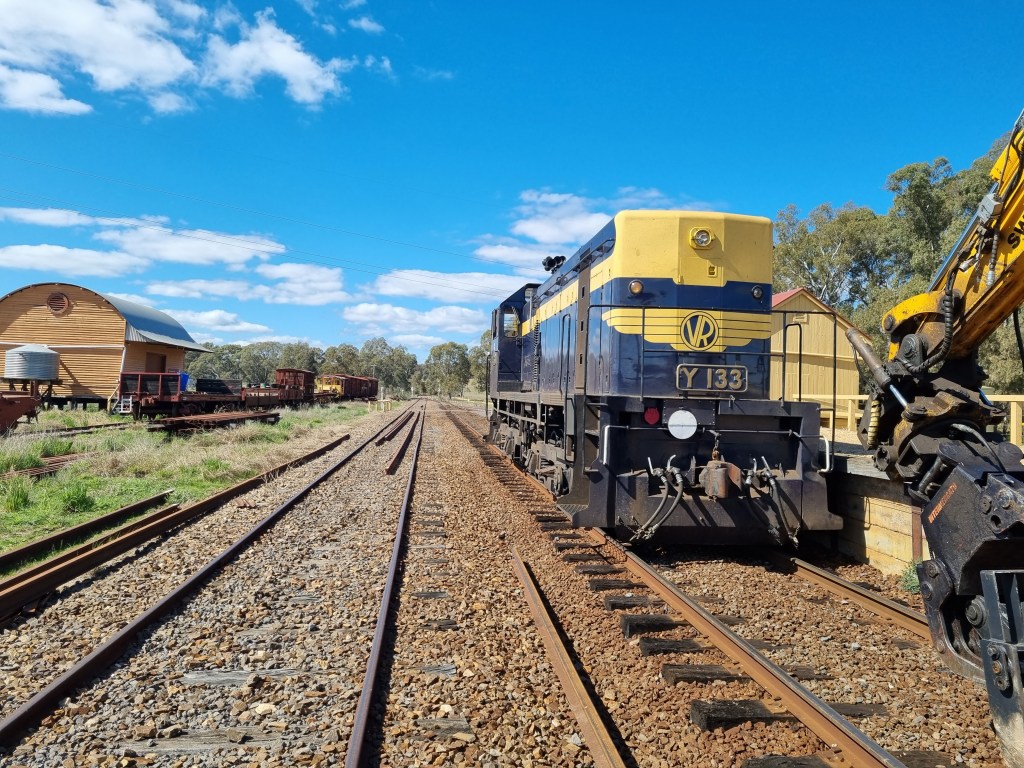
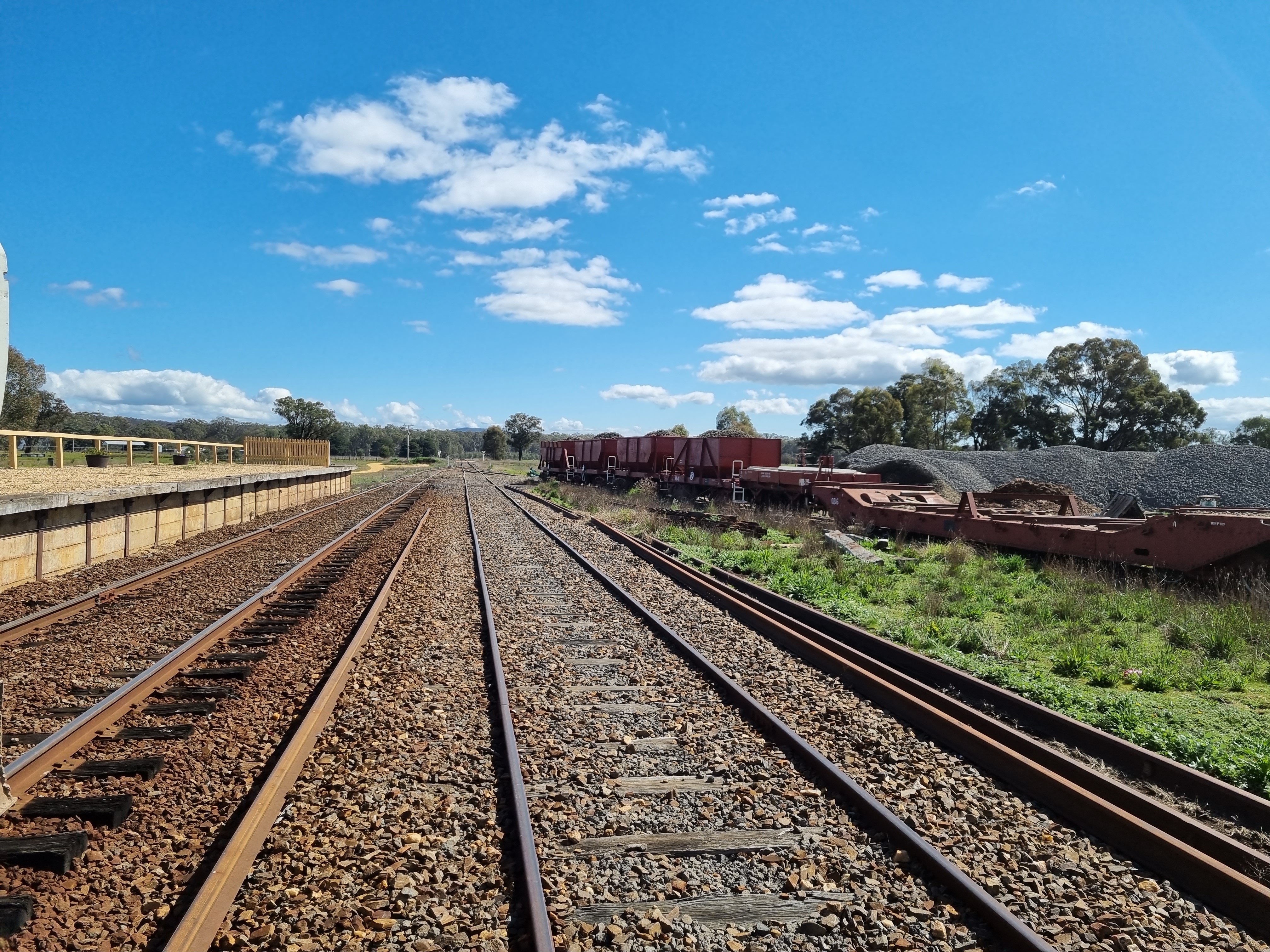
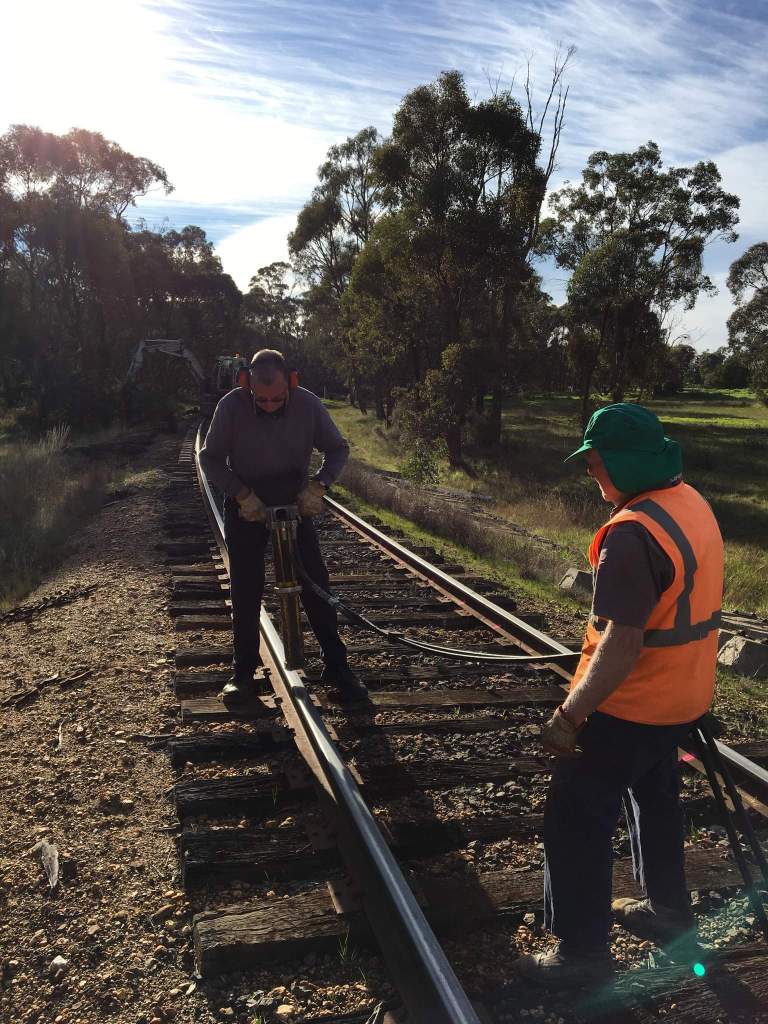
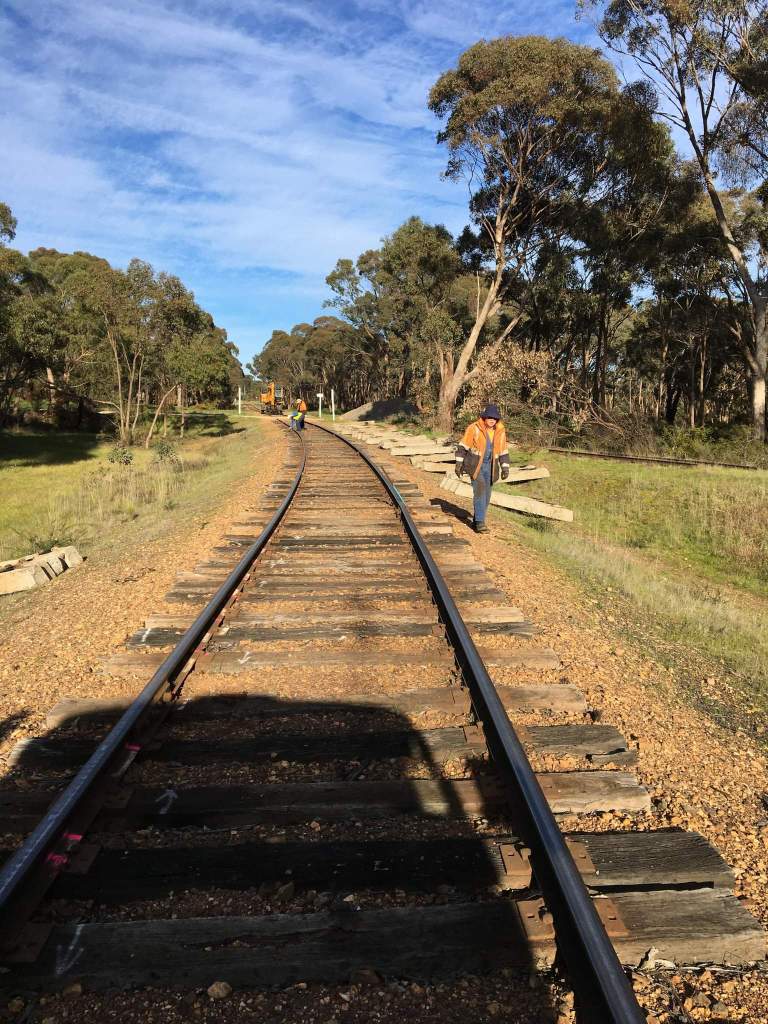
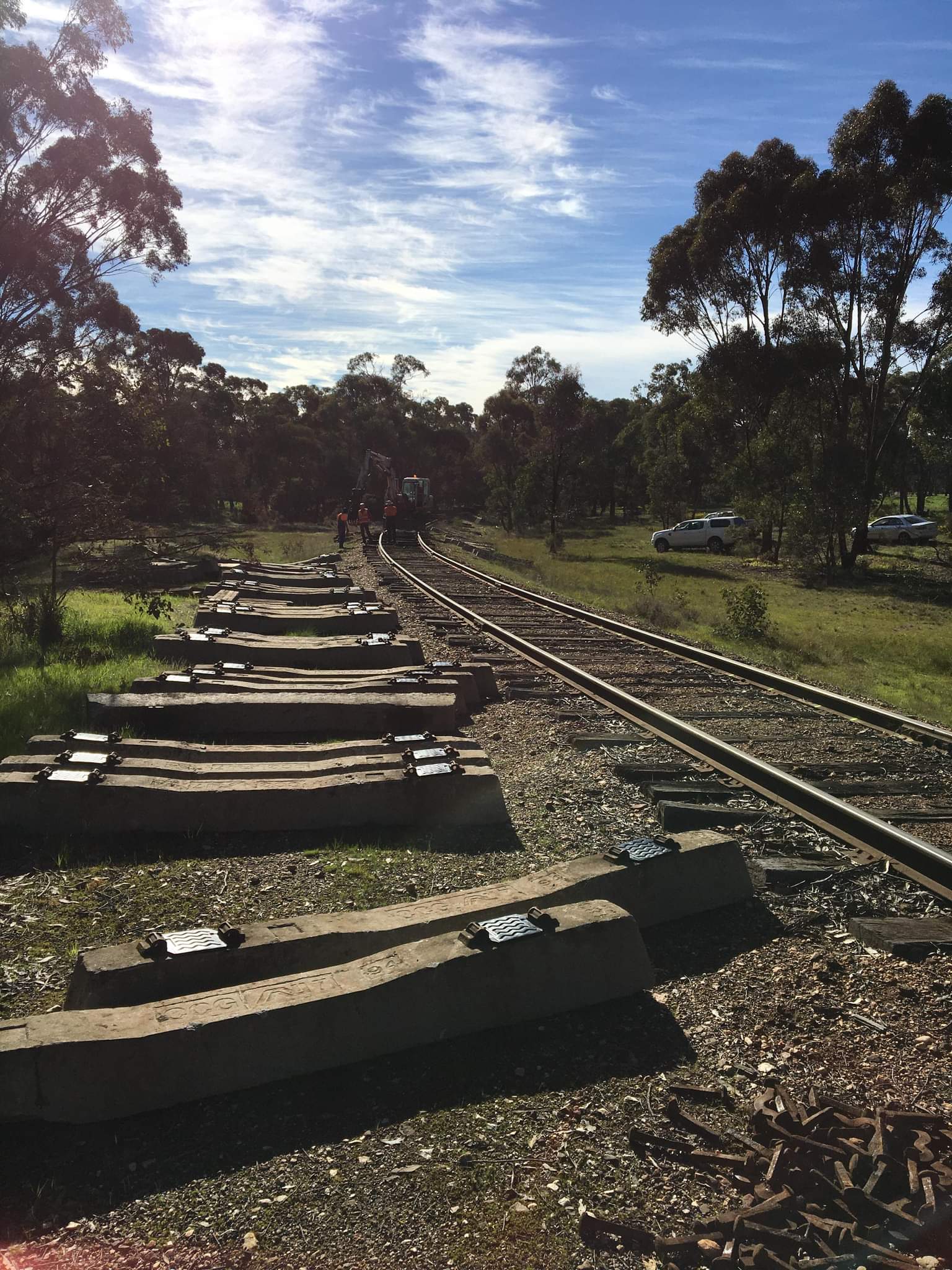
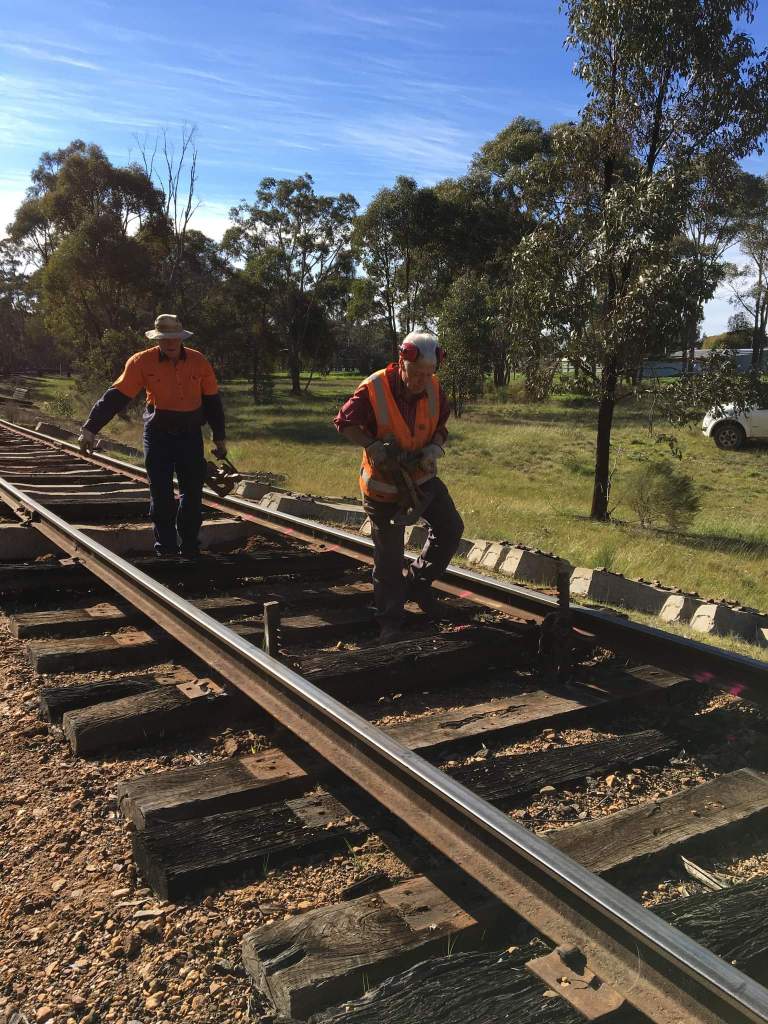
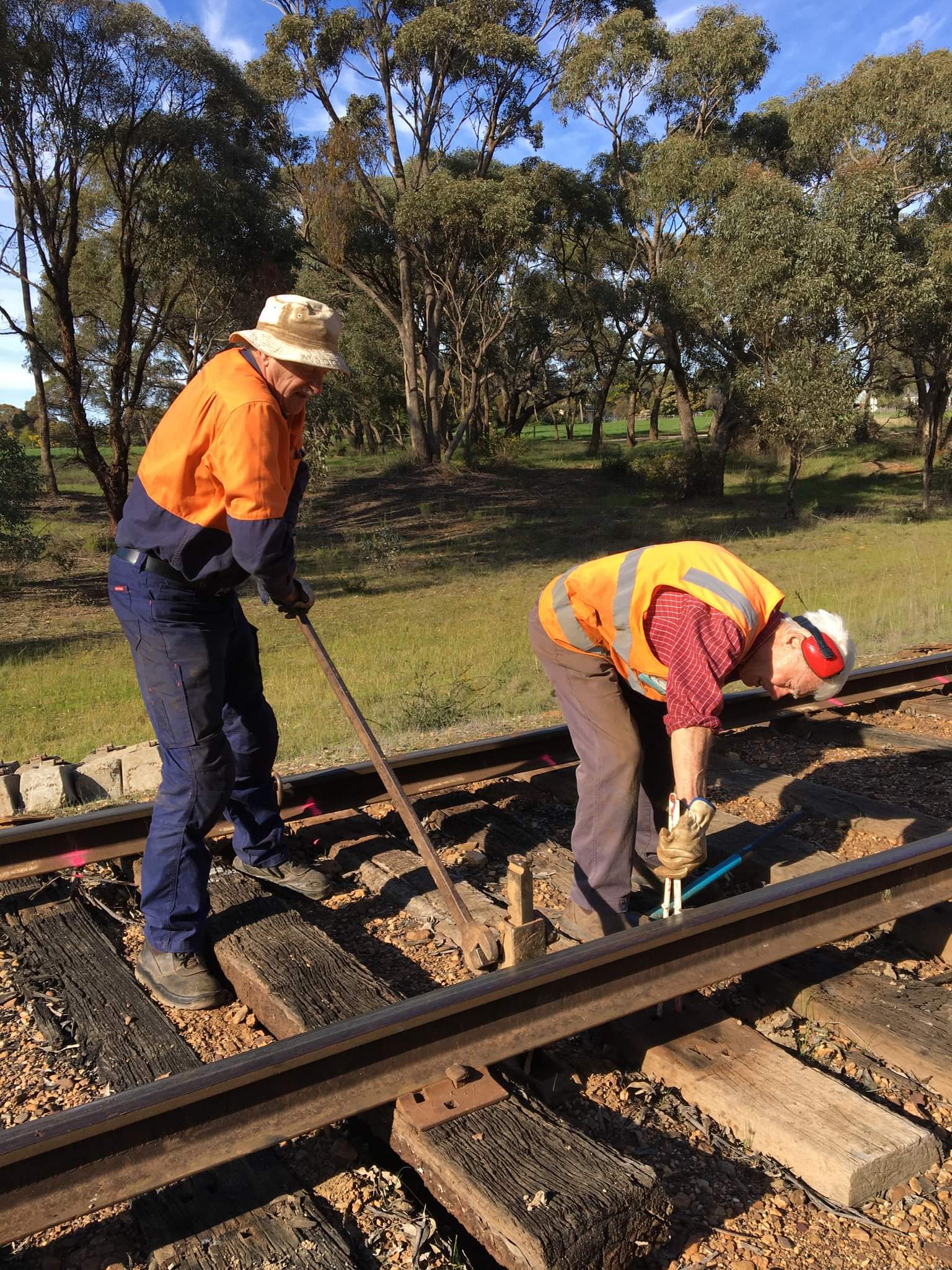
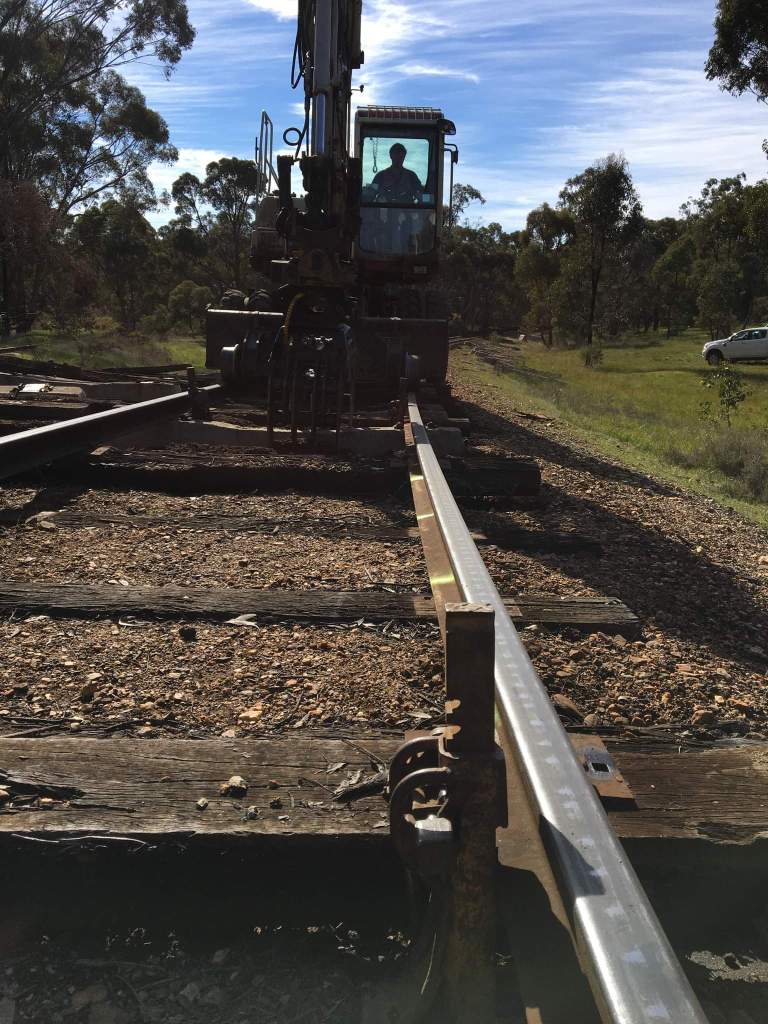
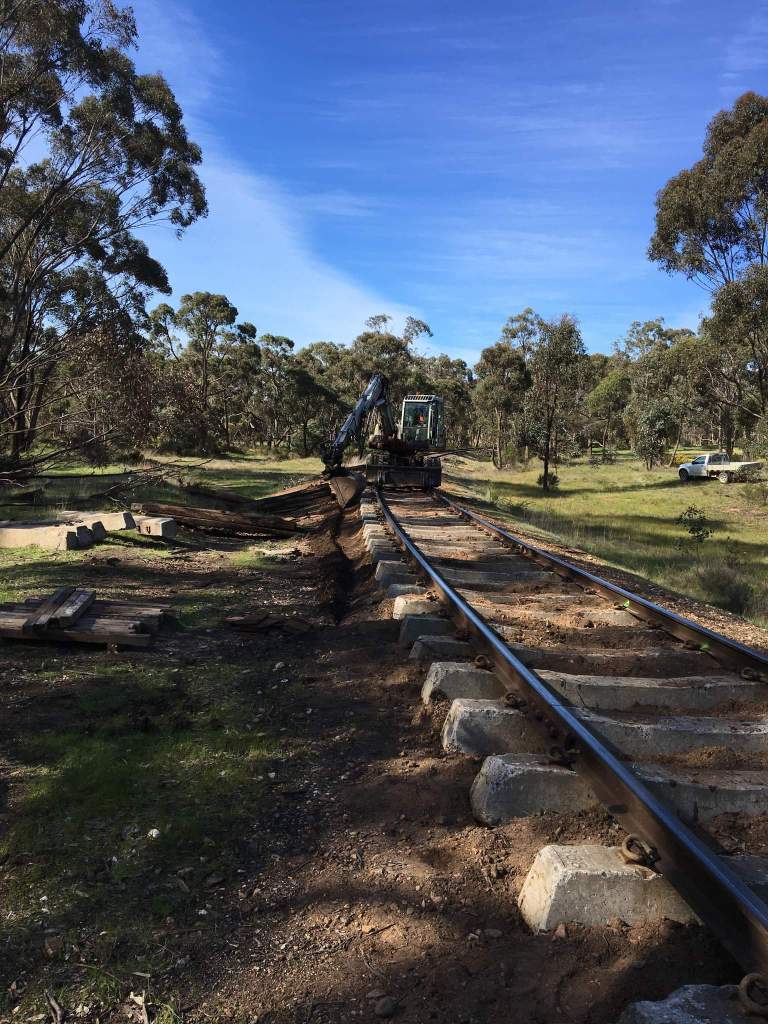
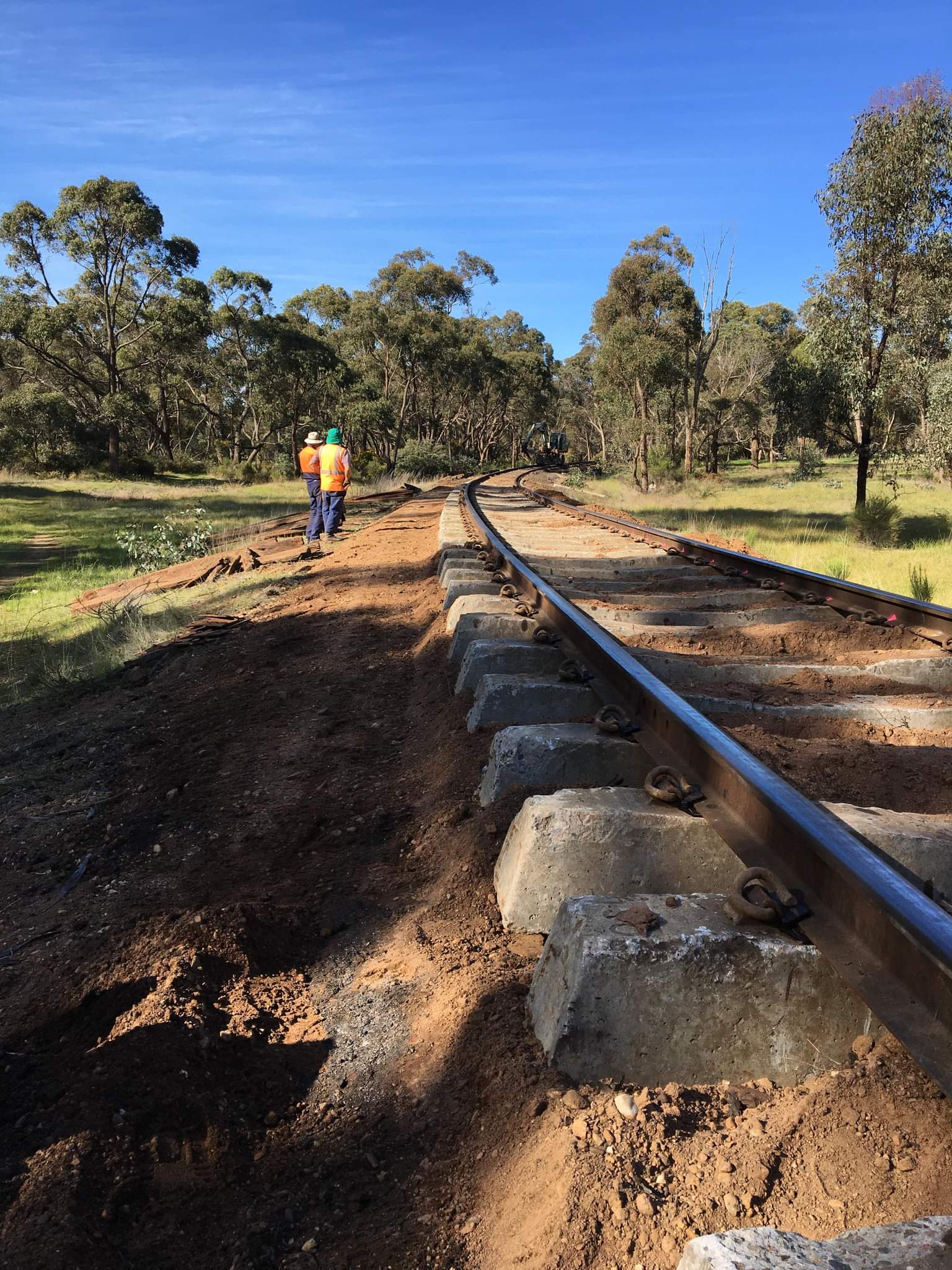
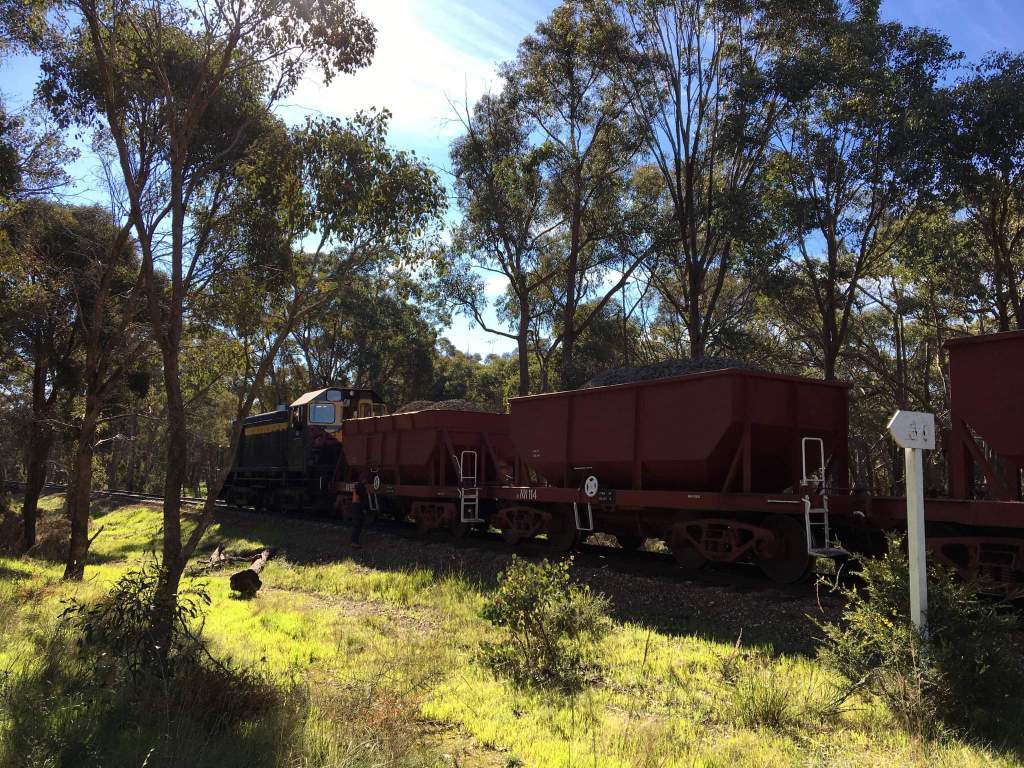
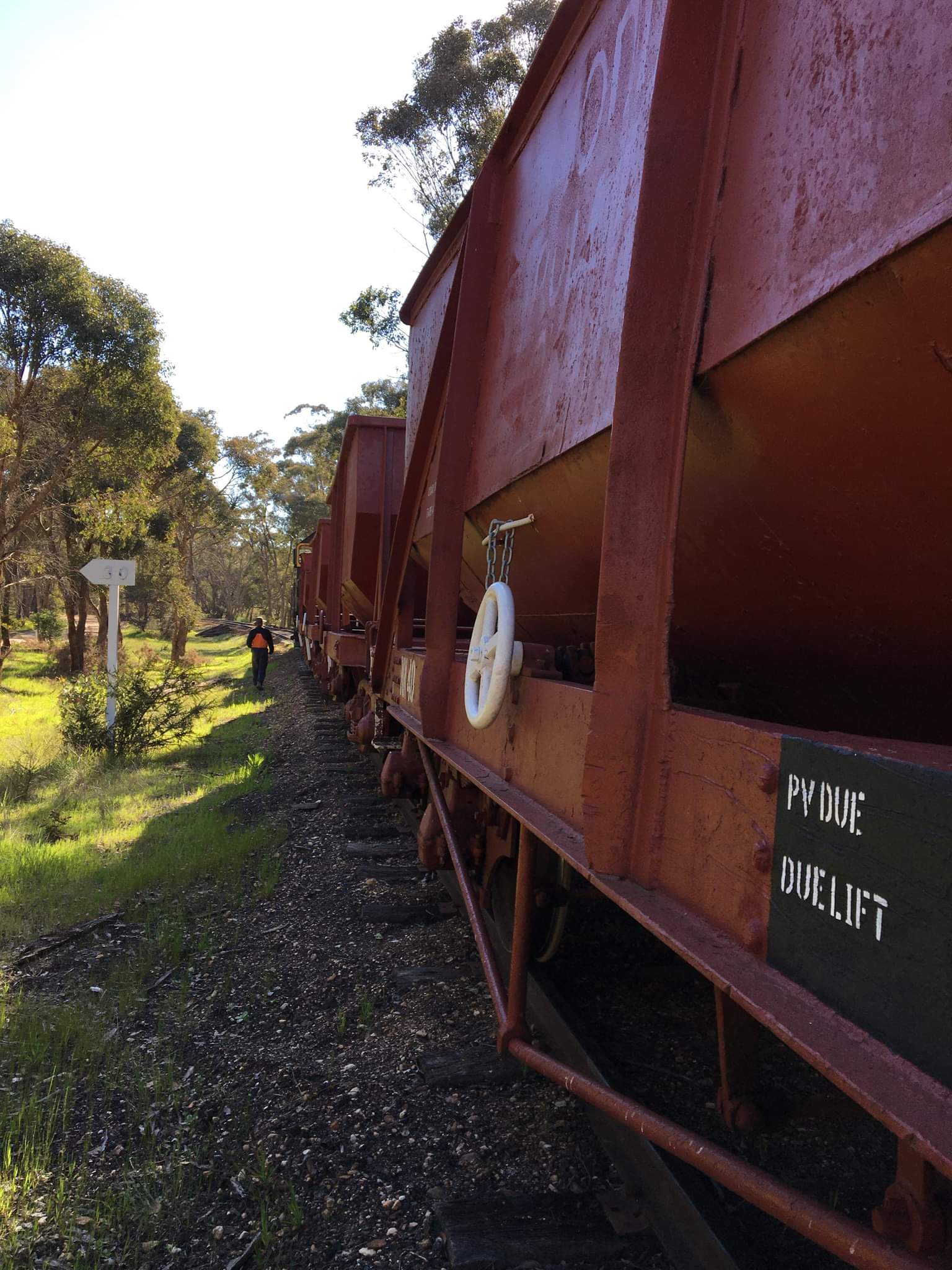
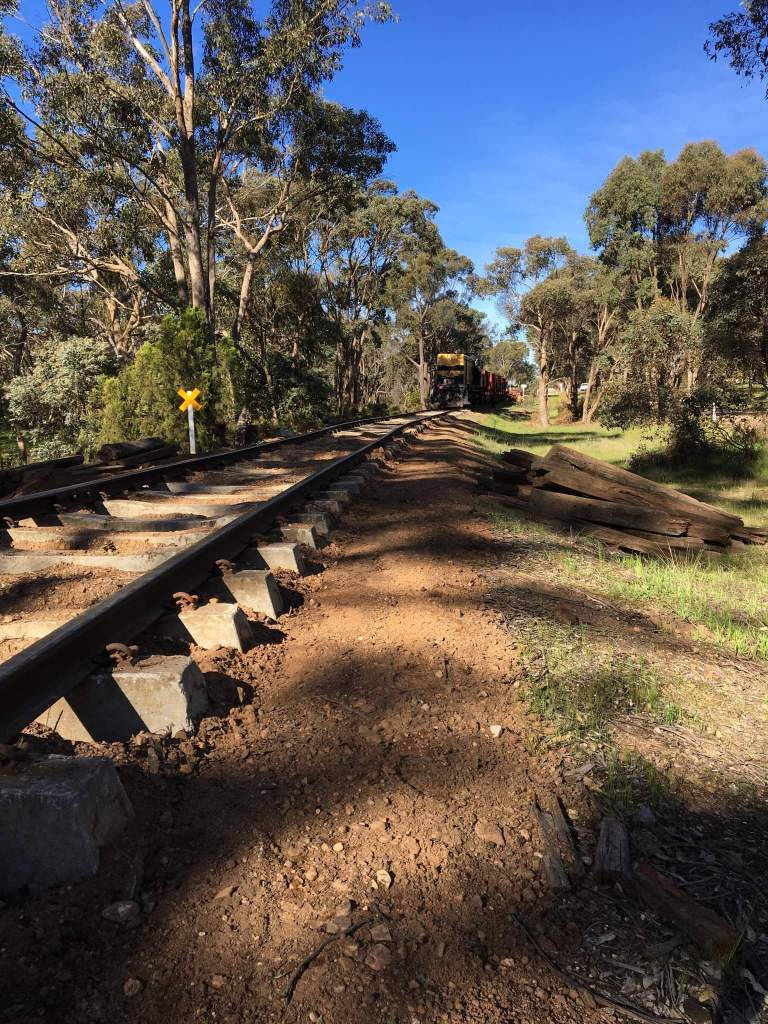
Earlier in the week we ran a civil train for the purposes of filling ballast wagons and dropping out some more 94lb rail, ready for our next re-railing job, just around the corner from Muckleford Yard.
Tomorrow we’ll be in at Castlemaine (meeting there from 8.15am), completing the new workshop track in the shed, with the afternoon likely to see us head out to Muckleford to make a start on some re-railing preparations.
The reminder of the stockpile at Woodlocks Ln was loaded into the wagons first thing today.
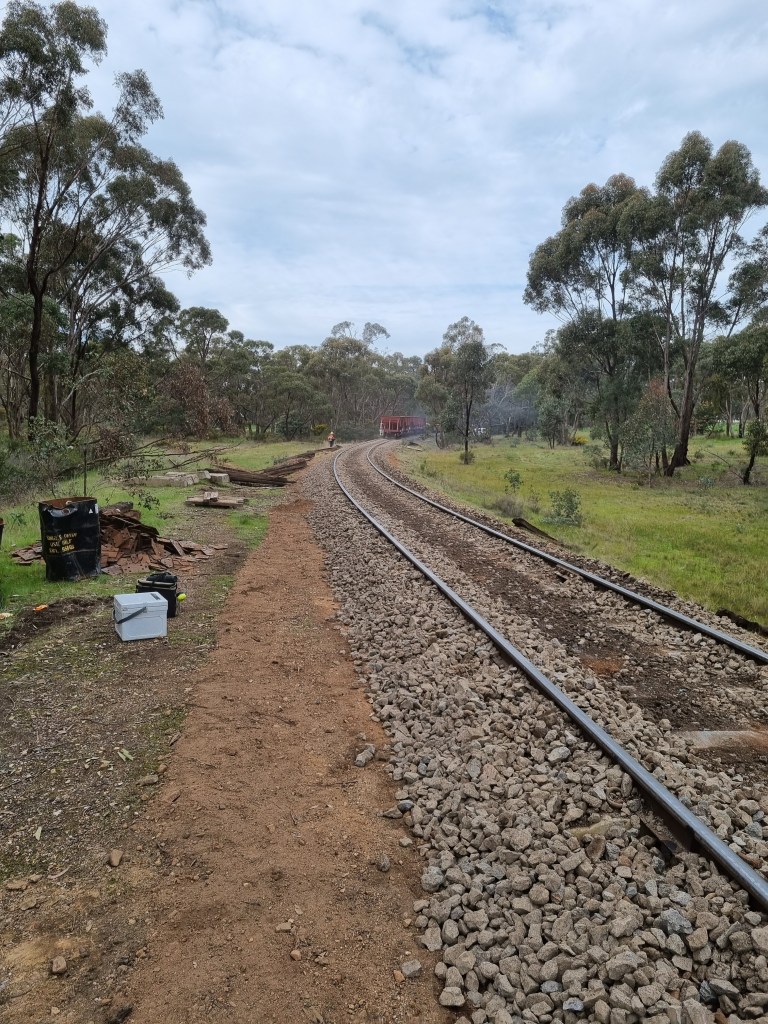
Then we got onto completing the discharge around Curve 21.
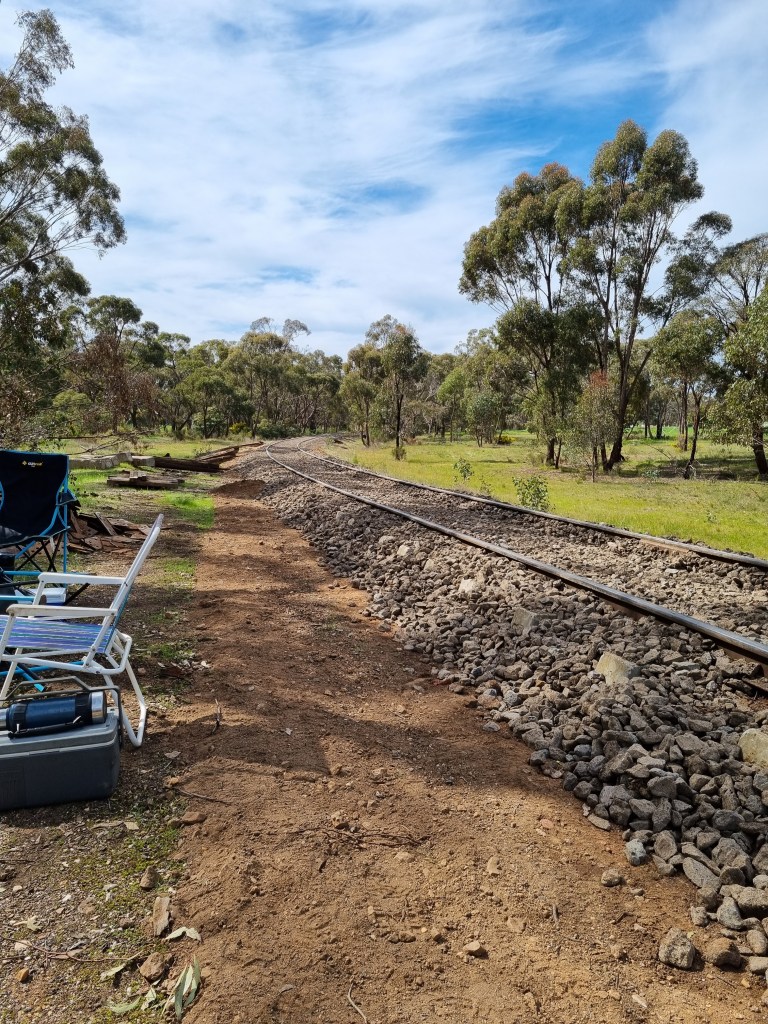
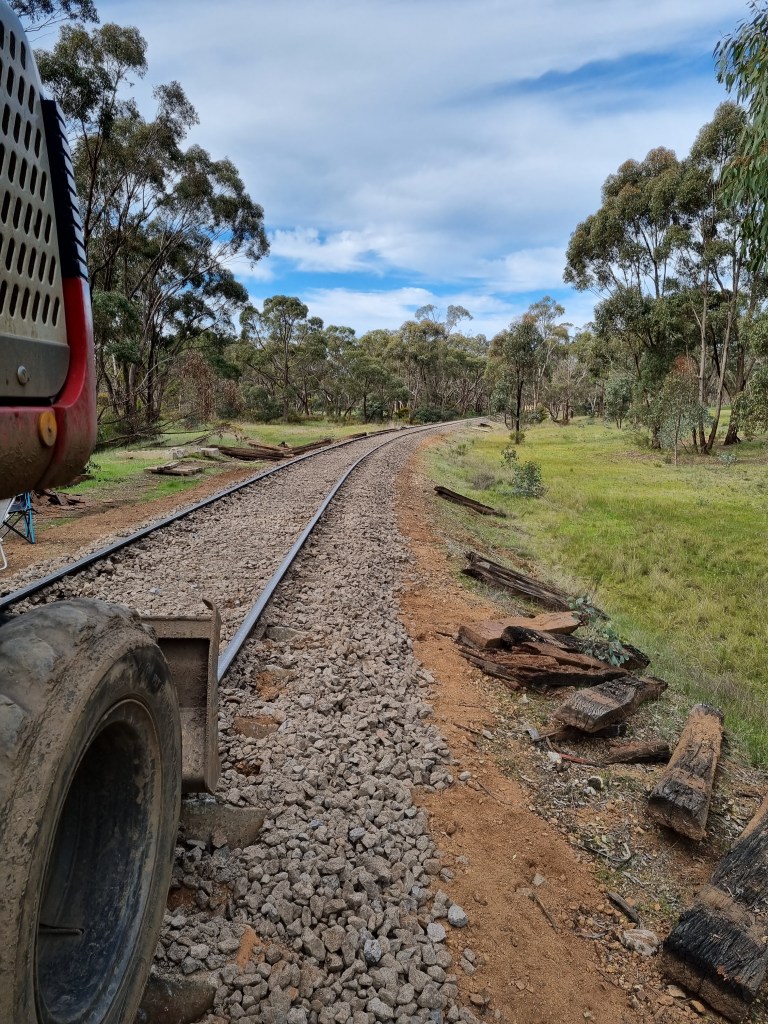
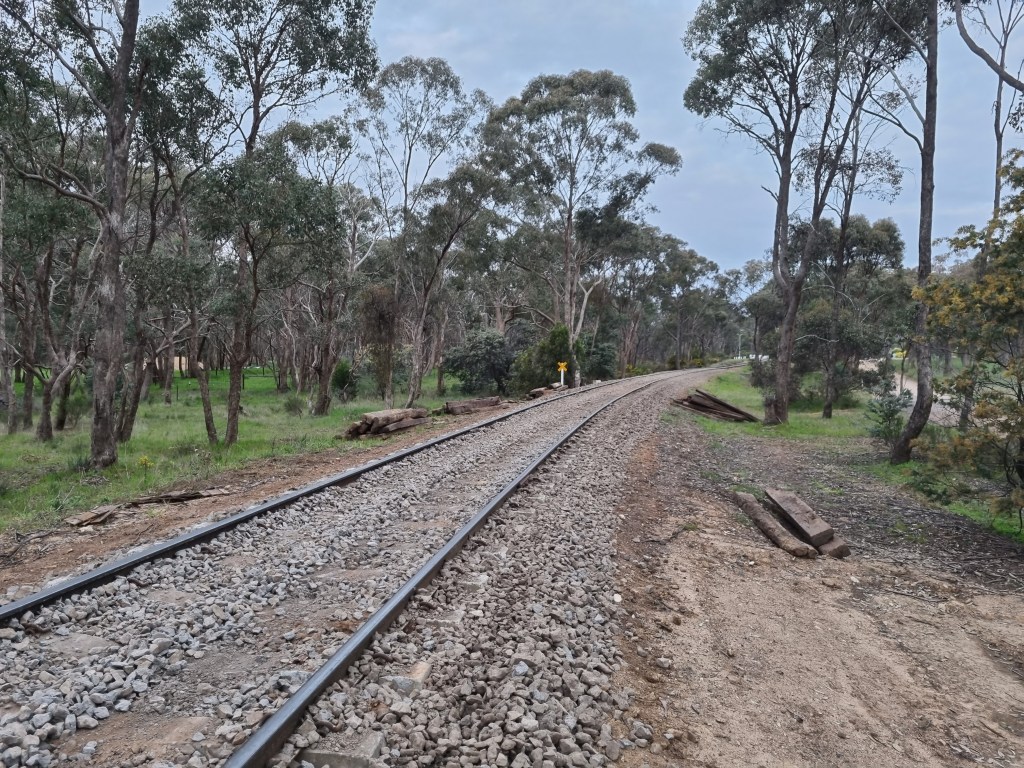
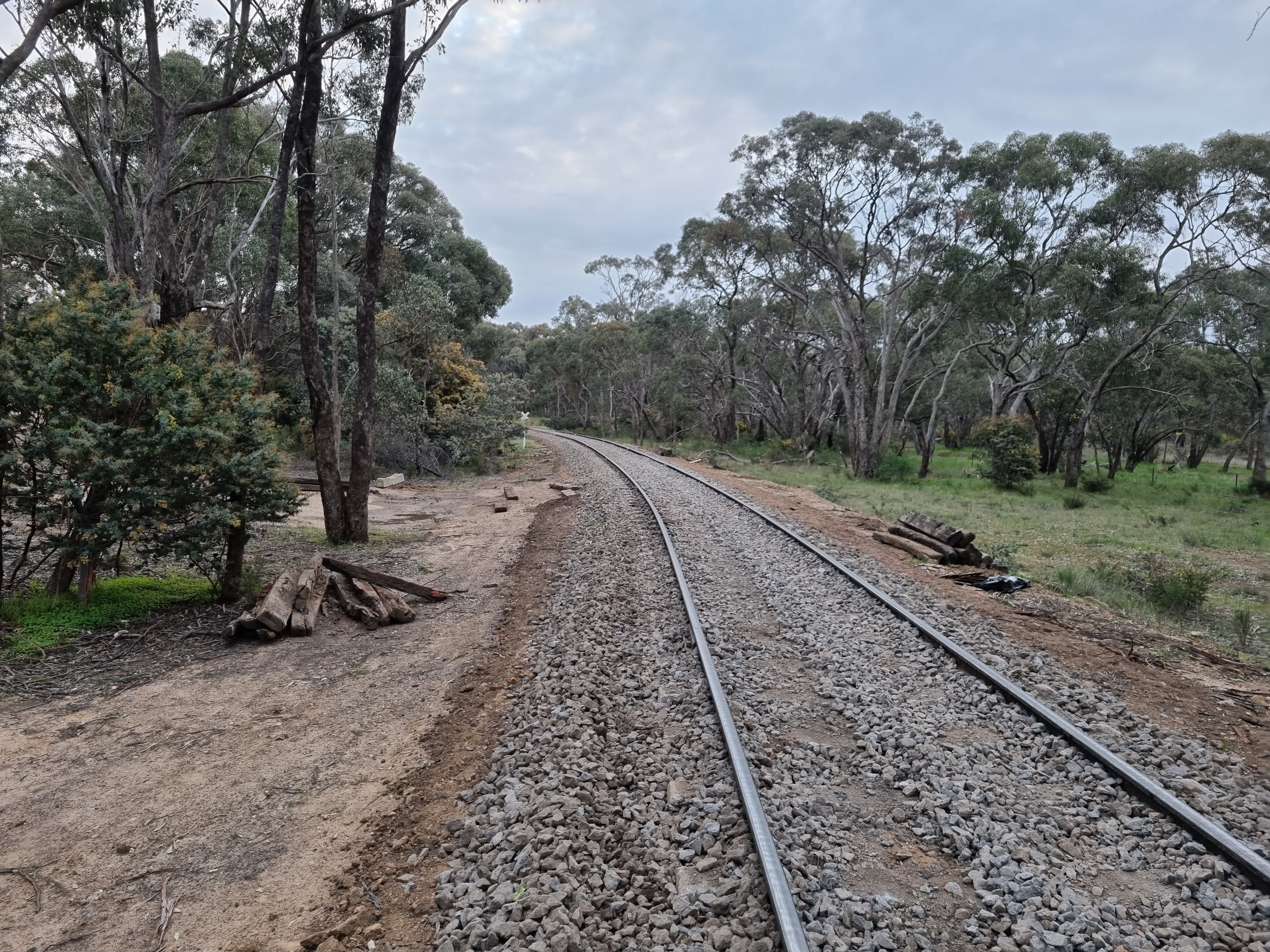
Looked a million dollars with a nice uniform ballast profile.
Of course after a ballast comes a tamp, which pretty much became the day’s task after that.
We did a running tamp the full length of the low leg, achieving a minor lift, with any dips jacked out to form a really very good finish.
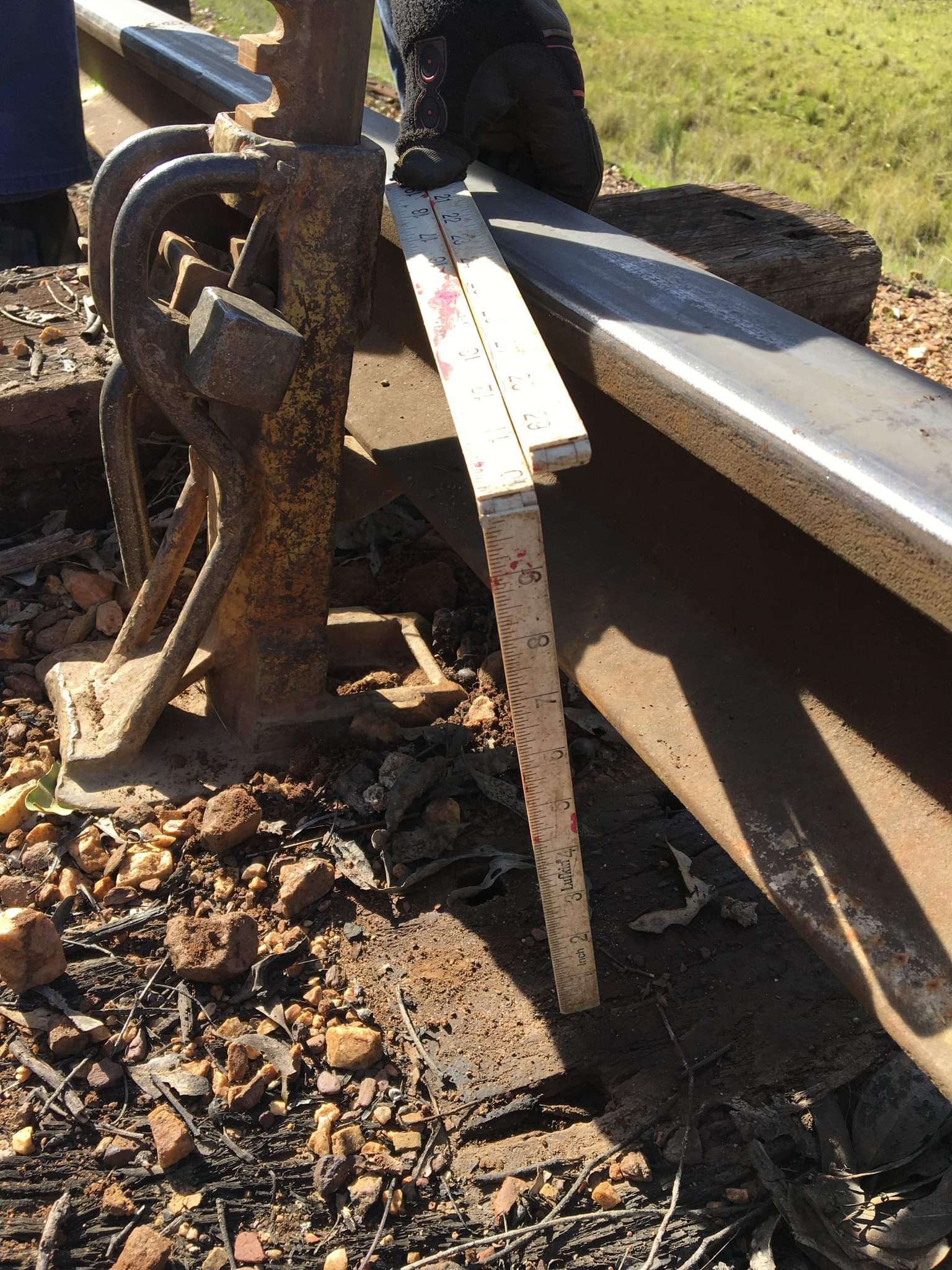
When it came to the high leg, we installed a uniform 30mm of cant (super elevation), as although at 40km/h cant is really not essential, should the high leg start to settle, you can quickly develop negative cant, which is extremely undesirable, especially with rigid vehicles such as 4 wheelers – of which we run a few. 30mm cant allows for significant settlement before anything problematic arises.
This cant was installed by using a cant gauge (track gauge and level with a measuring stick stuck on one end) and the tamping head. Not a single jack required, which was nice. We generally achieved about a 2 inch lift in that leg, which we’re very happy about, with excellent results.
It really did come up a treat.
A bit of ballast regulation (and a works train to drops the wagons home at Muckleford), left the job looking marvellous.
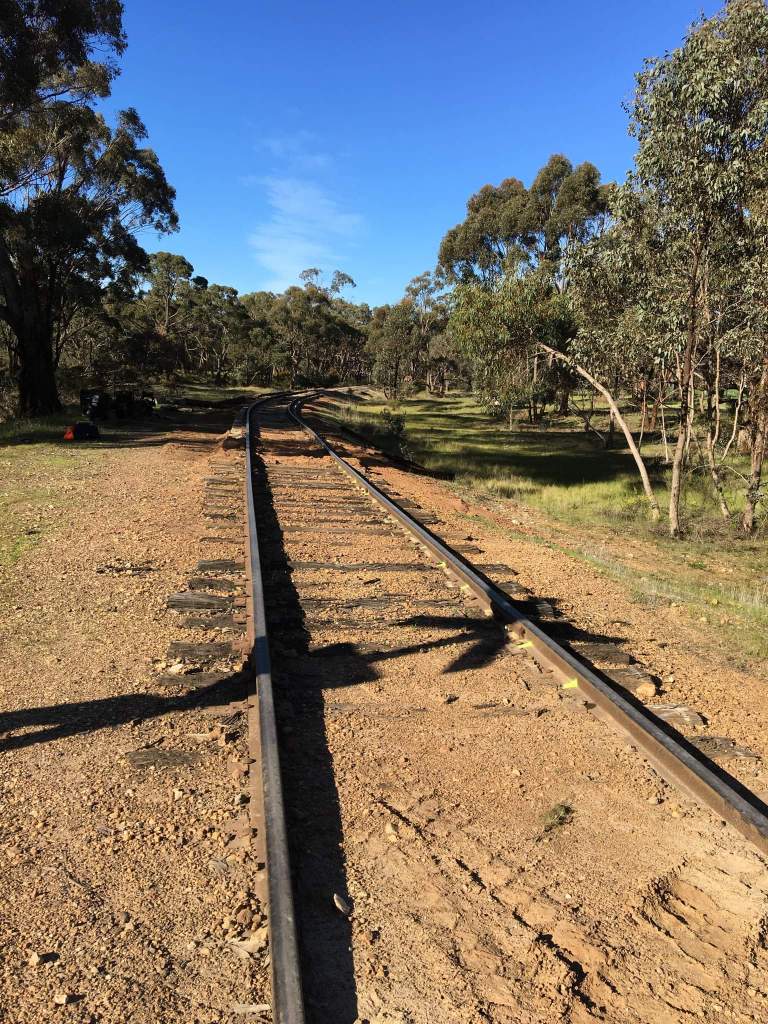
We’ve got a very slight kink, which we induced during the resleepeeing, to still correct next week, but 20 mins with big digger and it’ll be some of the best track we’ve got!
Before summer really hits we’ll increase the high leg shoulder in a few places, as this has historically been a place of buckling potential, although we suspect the 100% big concretes has probably fixed that. The only downside of the ballast train is it tends to favour discharging to the low side of a curve, but that’s just gravity really. So a good few bucket loads of ballast from the digger will be the best way to fix this.
Given that all this was done with just bare hands, hand tools and diggers, the line, top and appearance of the curve are pretty amazing. The next level would be to have a production tamper through, which would take it to mainline standard, that day will come and the more track we get up to this standard first, the better that will last.
So this curve, which is only approximately 350m long has taken around 7 workdays to complete (not including all the preparation time). 466 concrete sleepers have been installed, close to 250t of ballast and a very good amount of human effort. But that effort should see the curve last for a very long time, with minimal maintenance. Once we’ve re-railed more of the Muckleford- Castlemaine section, we’ll be getting into refurbishing more of this section in this manner, which will quite quickly reduce the ongoing maintenance of our running line.
Next week will be a little all over the place due to a number of commitments, so please check back Monday night for details of Tuesday.
A glorious spring day saw us make excellent progress on Curve 21.
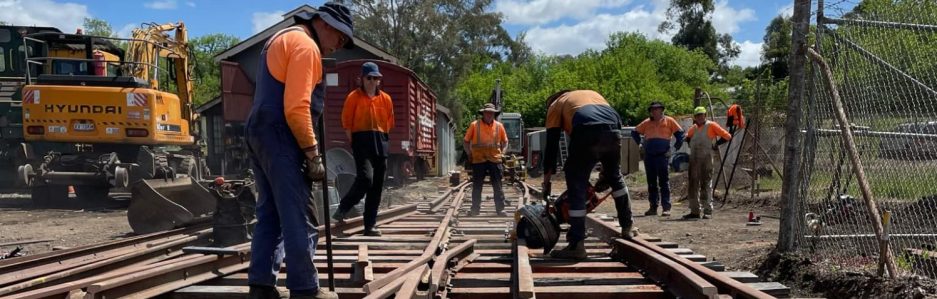
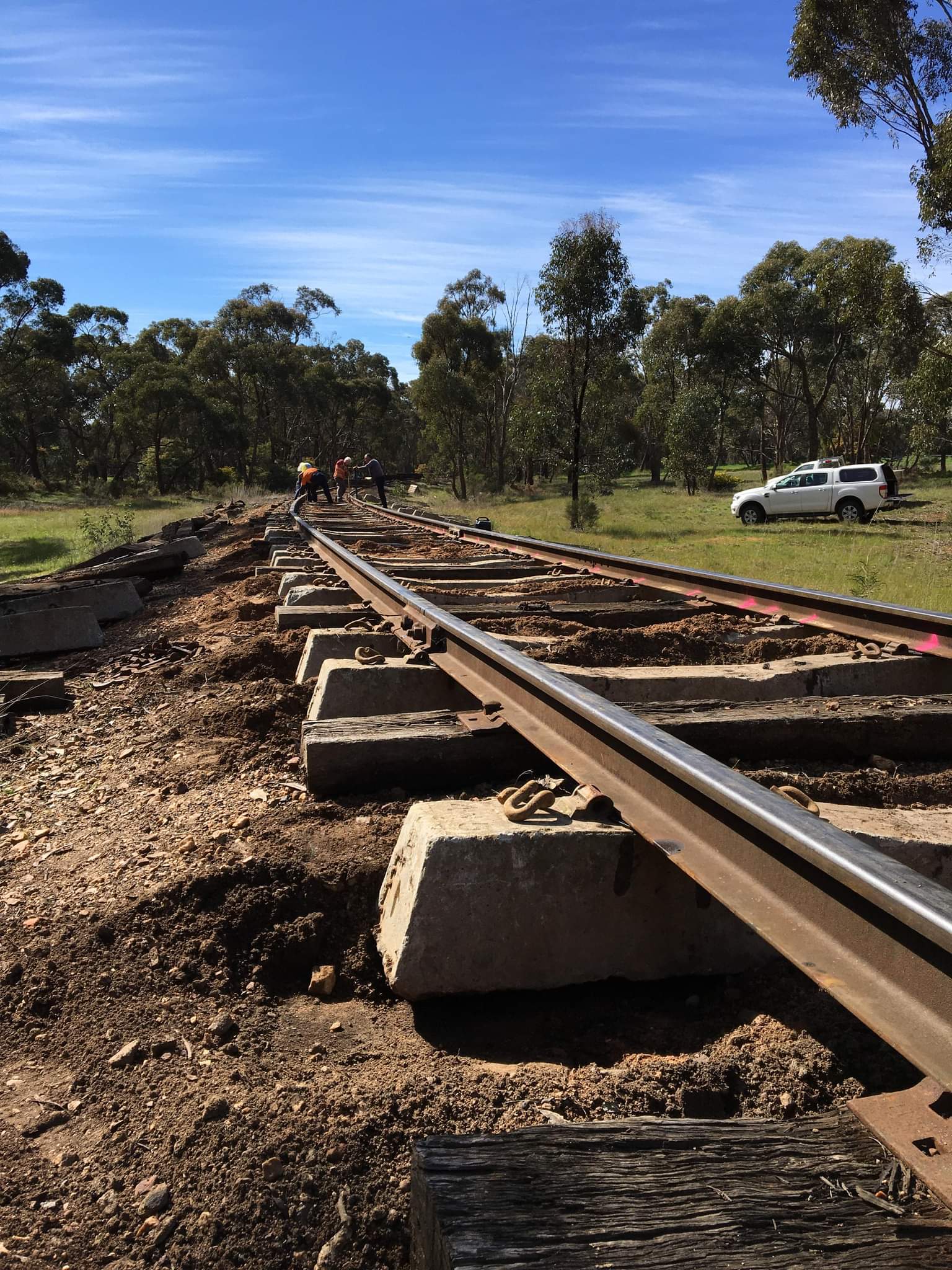
By 8.30 we were well into it, with the spikes pulled and digger busily inserting concretes.
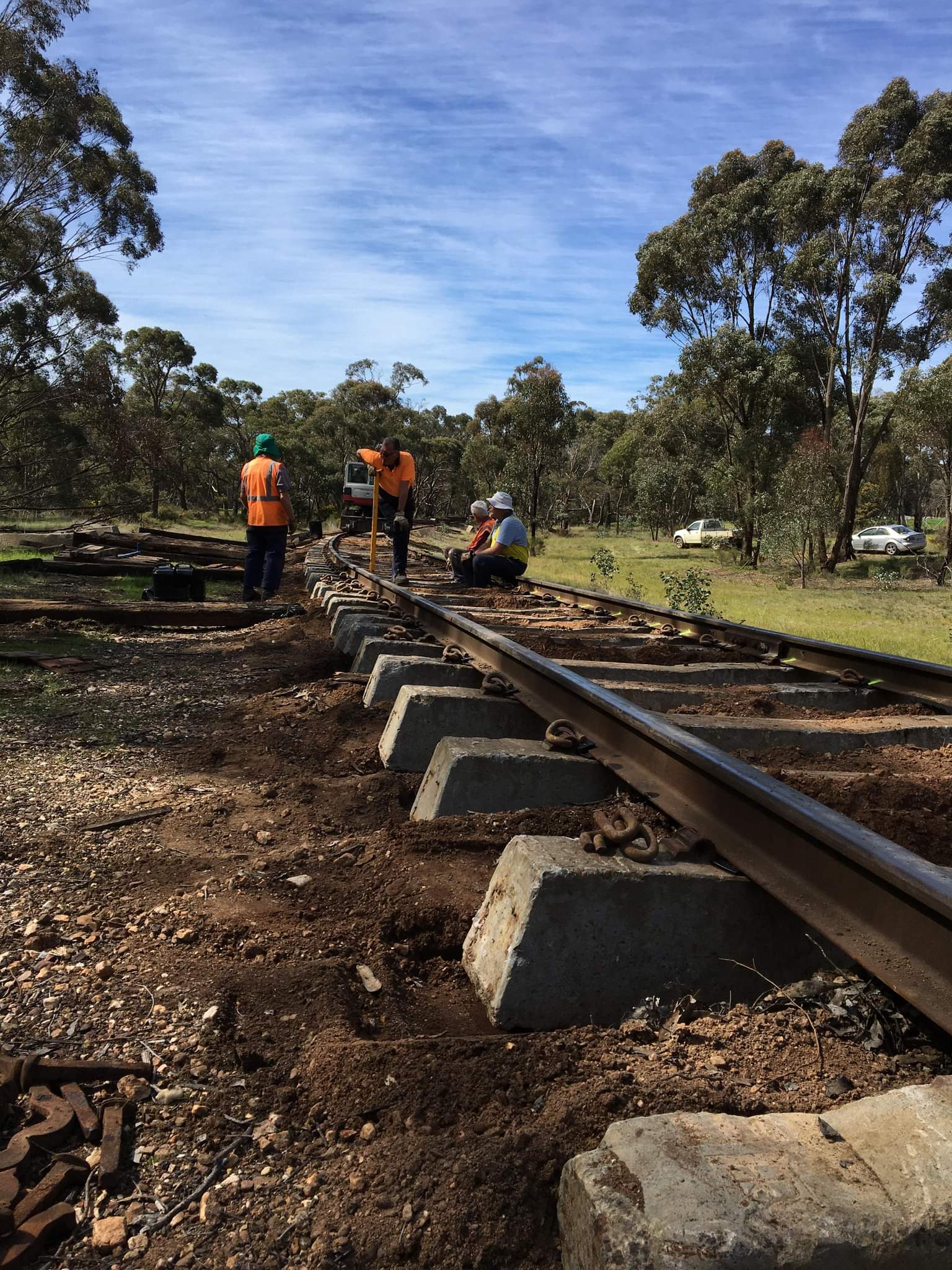
To install these big concretes without disturbing the underlying roadbed, a 5 inch lift of the rails was undertaken, meaning the new sleepers sit where the old timber did.
This lift is run just ahead of the insertions, with the jacks removed and cascaded once we’d got one sleeper installed past the jack, we found that gave us a very even top.
Before long they were all under, with clipping up well under way. Just in time to finish the curve we’ve got quite proficient at this!
Out of the several hundred sleepers installed in the curve… we managed to install 1 the wrong way! And no they don’t have a correct way, but these gauge convertibles are not symmetric, so we chose a direction and stuck to it, not just for aesthetics but to improve ballast profiles and regulation. So once everything else had been clipped up, we went back and turned it around, quite easy when there’s no ballast there.
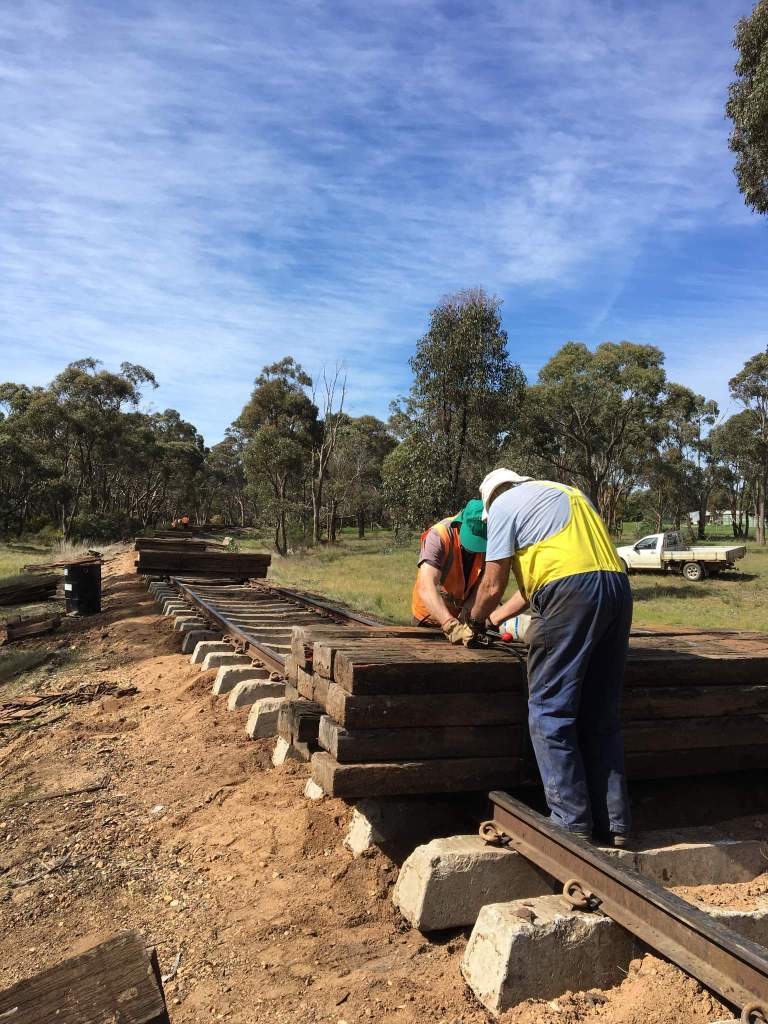
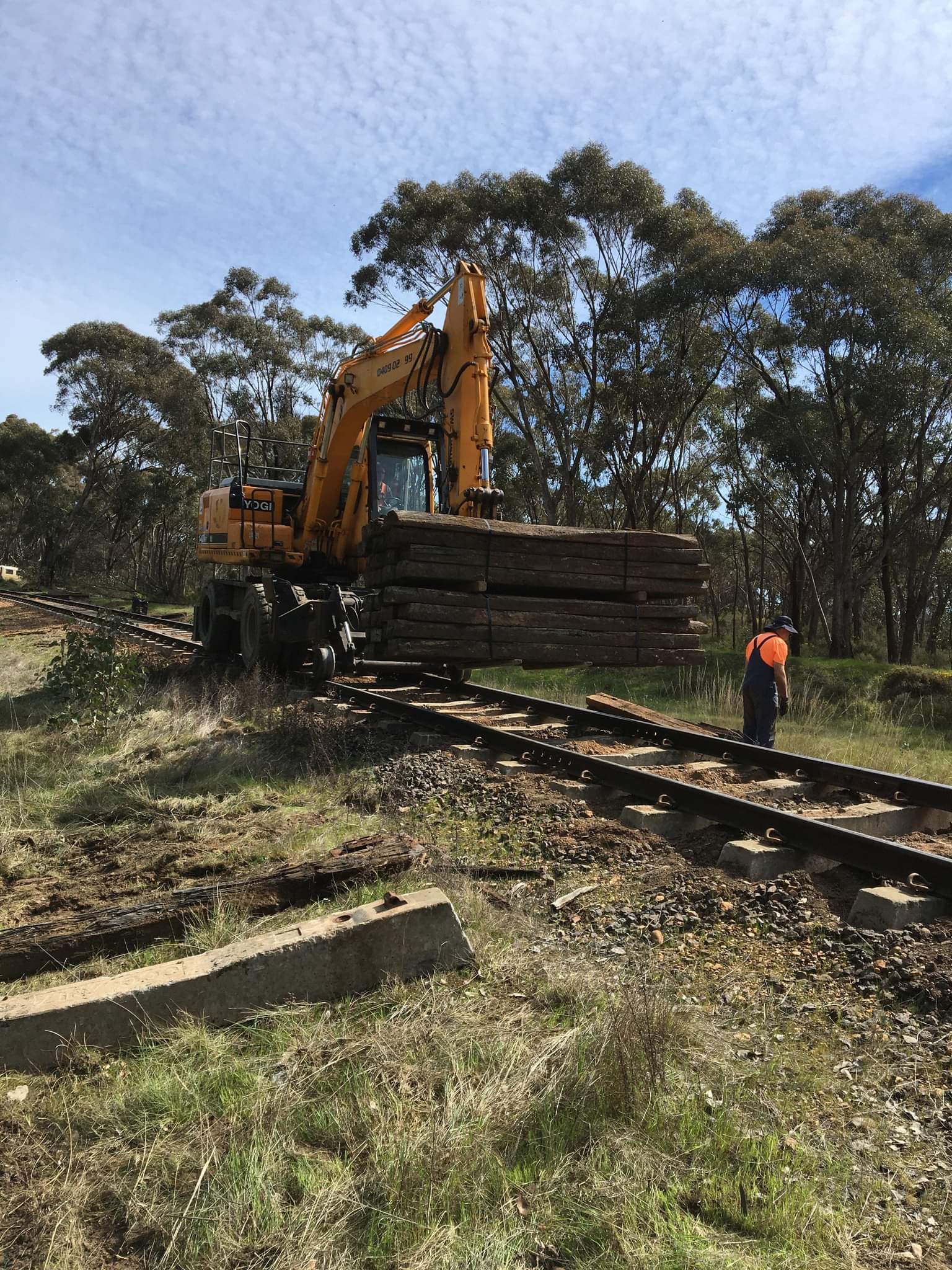
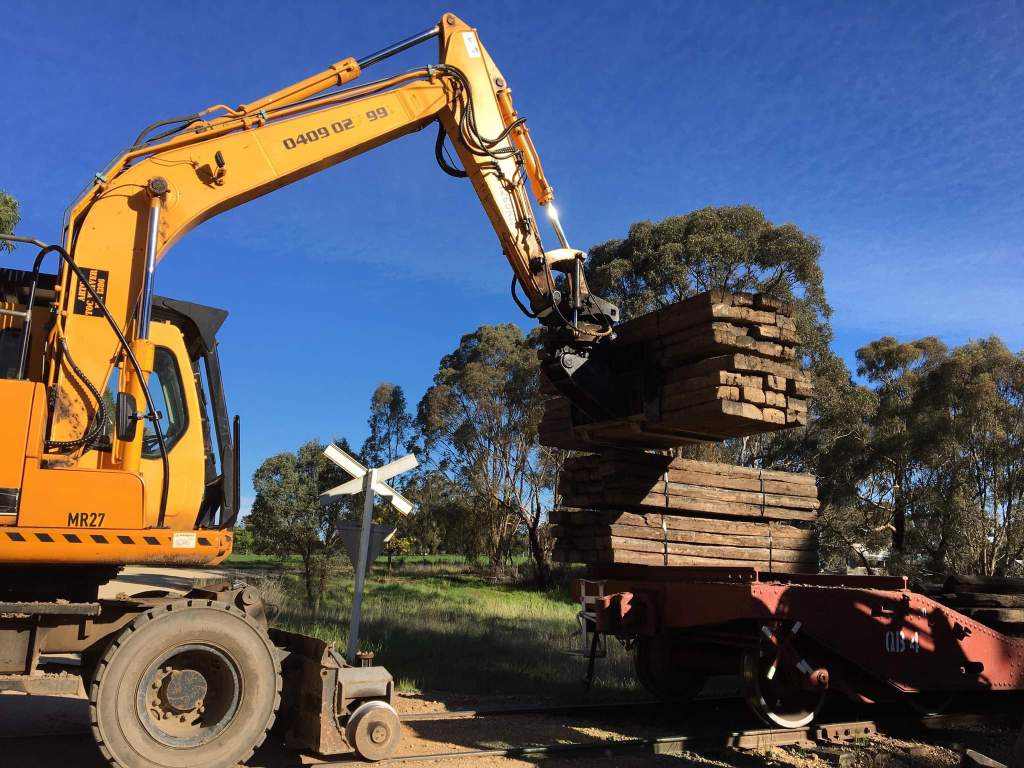
All the reusable timber sleepers have been bundled, strapped and moved to storage also, which was no small job in itself.
Mainly just to remove any gunk we’d introduced and to help level a spot for a ballast shoulder to sit on, rather than just tumbling down the embankment, we scraped the remaining shoulder material aside (what little was left).
Then we brought in the big guns to dump the first load of ballast. Starting right back at the start of the curve, we’ve dumped and ploughed, with Daylesford’s plough, 4 wagons worth, with at least another 2 still needed in the morning.
Just the usual sort of thing, but with a slightly larger drop than we did the other day.
If you look closely you can see where the ballast ran out, still a good few metres to go. We’ll save the ballasted track pics for tomorrow, but a little hint of how it looks is below.
The freshly bundled up sleepers were loaded onto the well wagons, which came along for the ride, except for the actual drop, where we left them up near Bendigo Road to help simulate a track fault to enable the ‘disable lights during a track fault’ feature of the new flashing lights.
It was an extremely successful day, far outstripping our first expectations, with 113 concrete sleepers installed, all the good timber bundled (approx 150 sleepers), a load of ballast dropped out and a myriad of tidying jobs completed plus a general line of the curve pre ballasting.
Tomorrow will be just as action packed and exciting, so if you’re a regional Victorian who is looking for something to do post lockdown, feel free to come along, plant your deck chair (or even better offer a hand) and watch us do our thing getting this curve jacked and tamped ready for trains on Saturday. Meeting Maldon 8am or on site from 8.15am.
Well today saw us give up our plans of using the concrete. Instead we resurrected the DERM and went back to dropping out timber sleepers by hand
And pigs can fly….
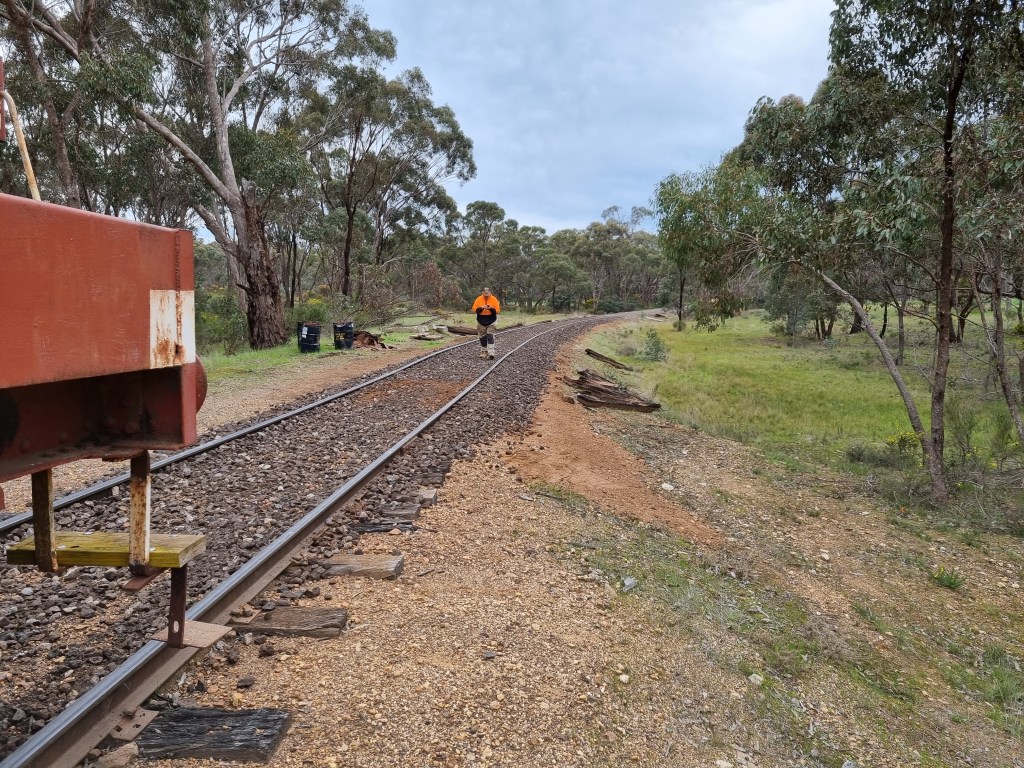
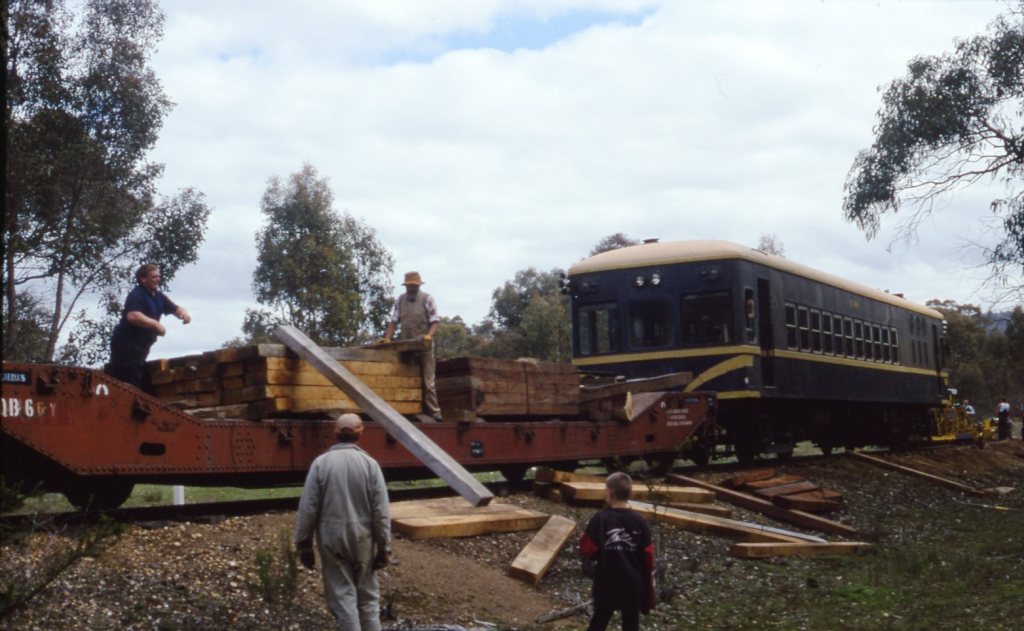
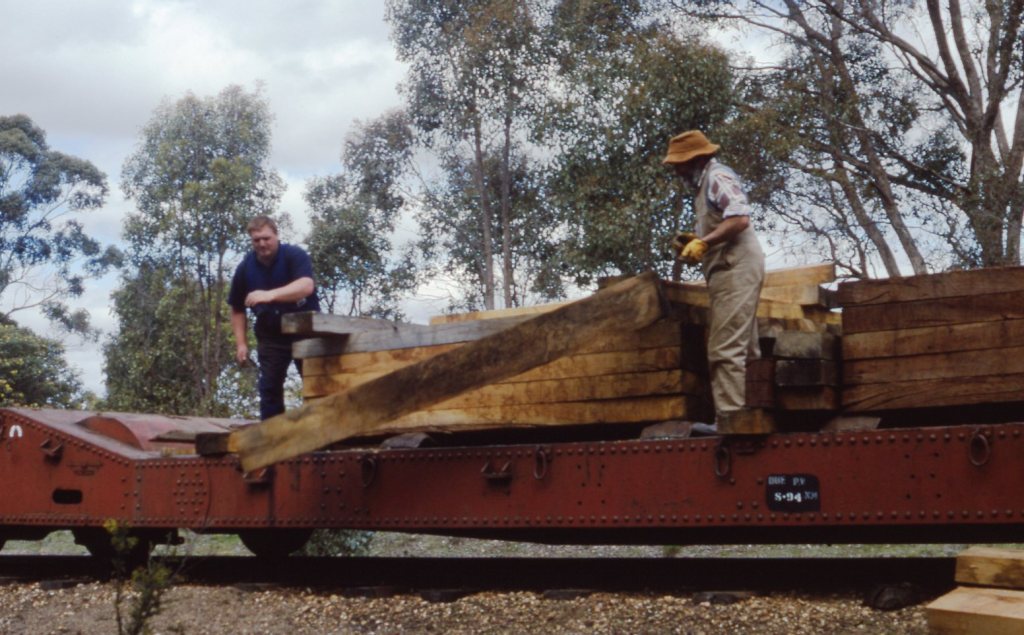
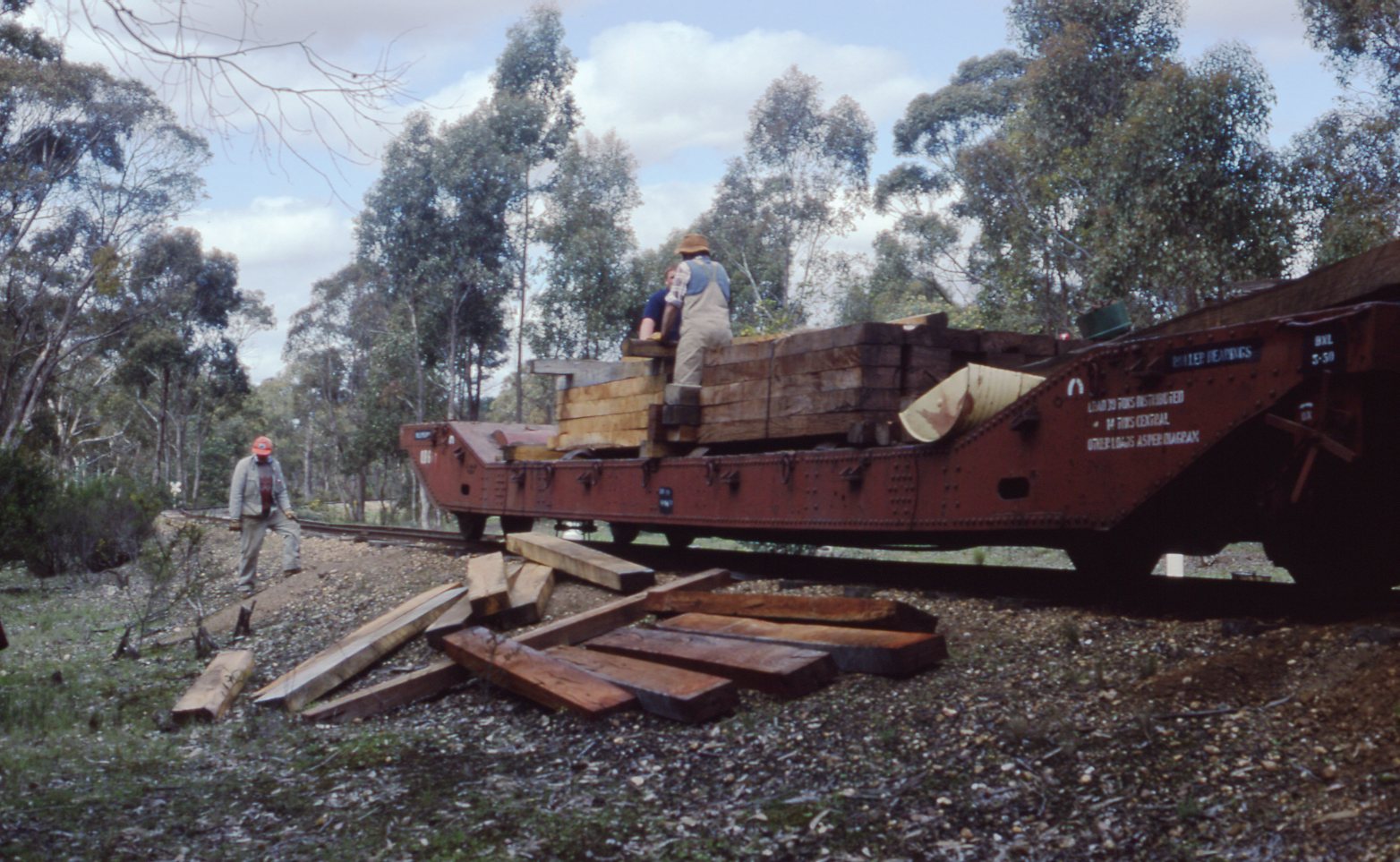
The top photo, as well as those below are from the last ‘major’ resleepeeing this curve had back in 1995, interestingly on the 2nd of September, so close to 26 years exactly. A mix of grey box and red gum looking at the wagon and that’s certainly what we saw on the ground pulling them out today.
Alan Williams took these shots back then and has kindly forwarded them on so we can make a comparison.
Almost all manual labour. A keen eye will note in the very first photo a sleeper extractor / inserter at work behind the DERM, but even still the new timber had to be manually placed where the machine could grab it, which was no small effort!
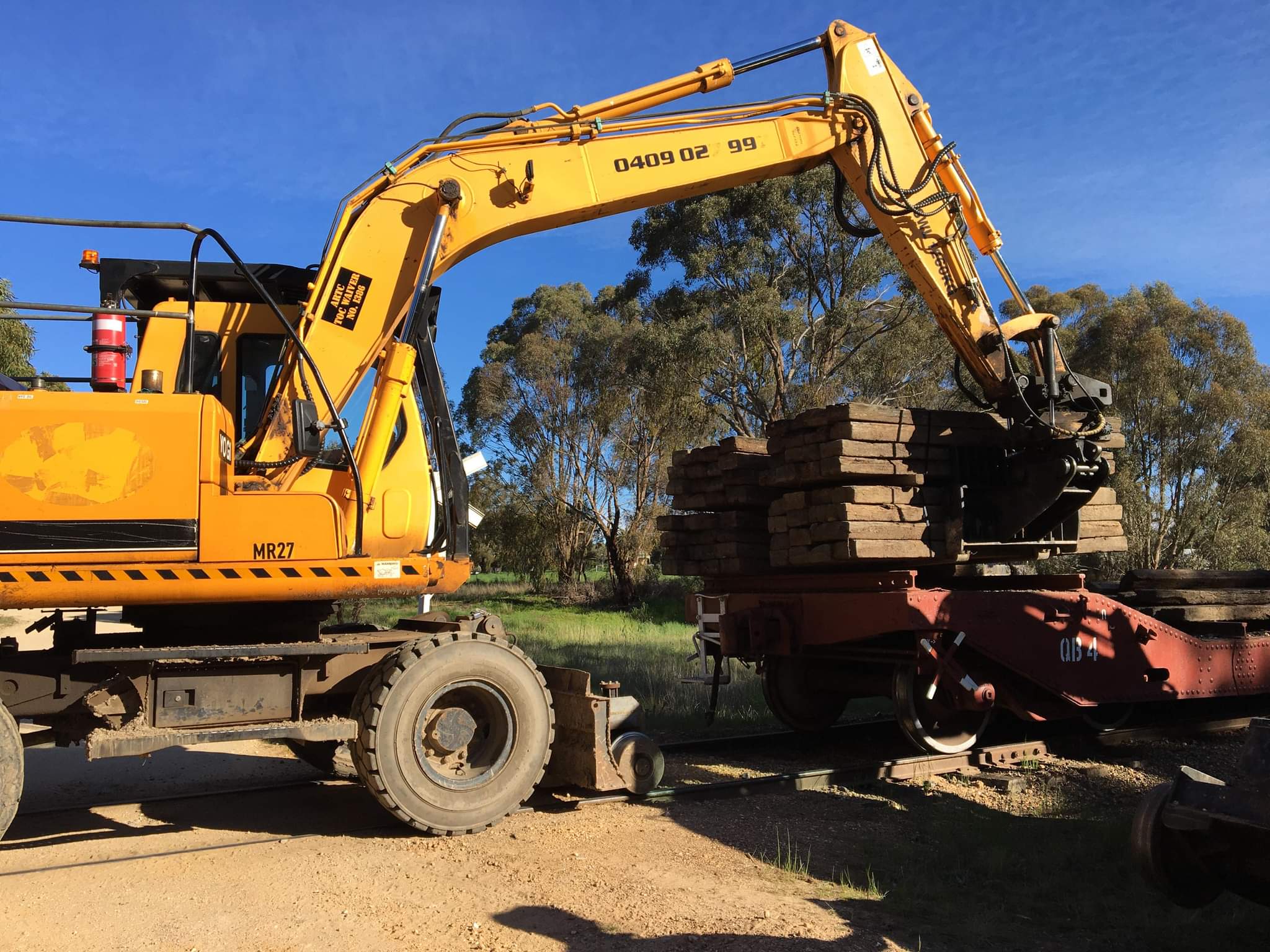
The one well wagon has become three (one on loan from Steamrail), timber is being phased out for concrete and the days of doing things largely with blood, sweat and tears are very much behind us. It’s amazing to look back and appreciate just how many functions the excavator now performs.
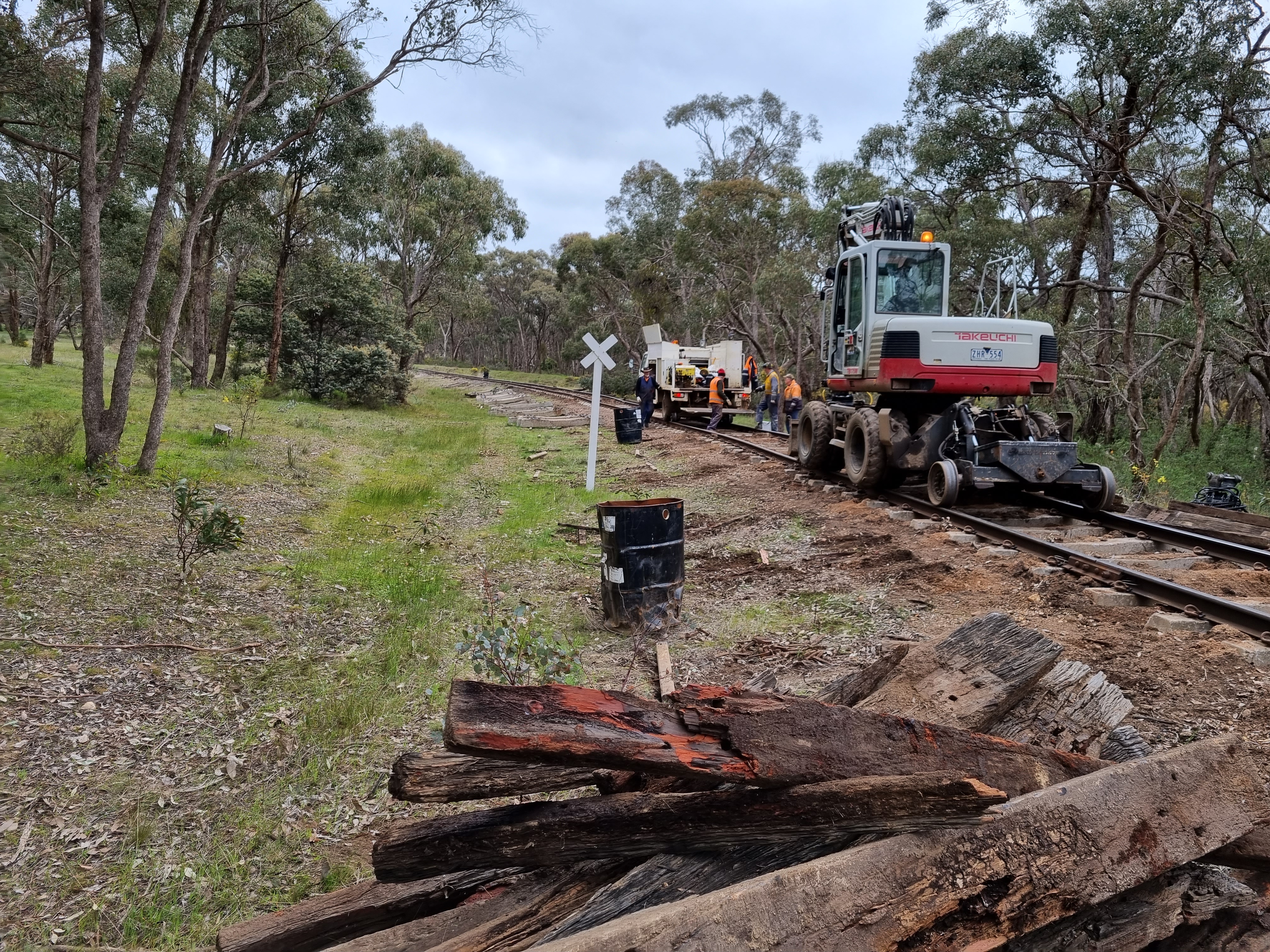
Just as a note re life span of these timber sleepers in our climate, the grey box are weathered and probably about 3/4 of their new size, but still usable (we’ll cascade them into Maldon and Muckleford Yards), the red gum is fully life expired, generally coming out in lumps.
There has been a few spot replacements since the big effort in 95, but the bulk of timber was still from back then.
Now back to the present and today saw us working through the exact section photographed in 1995.
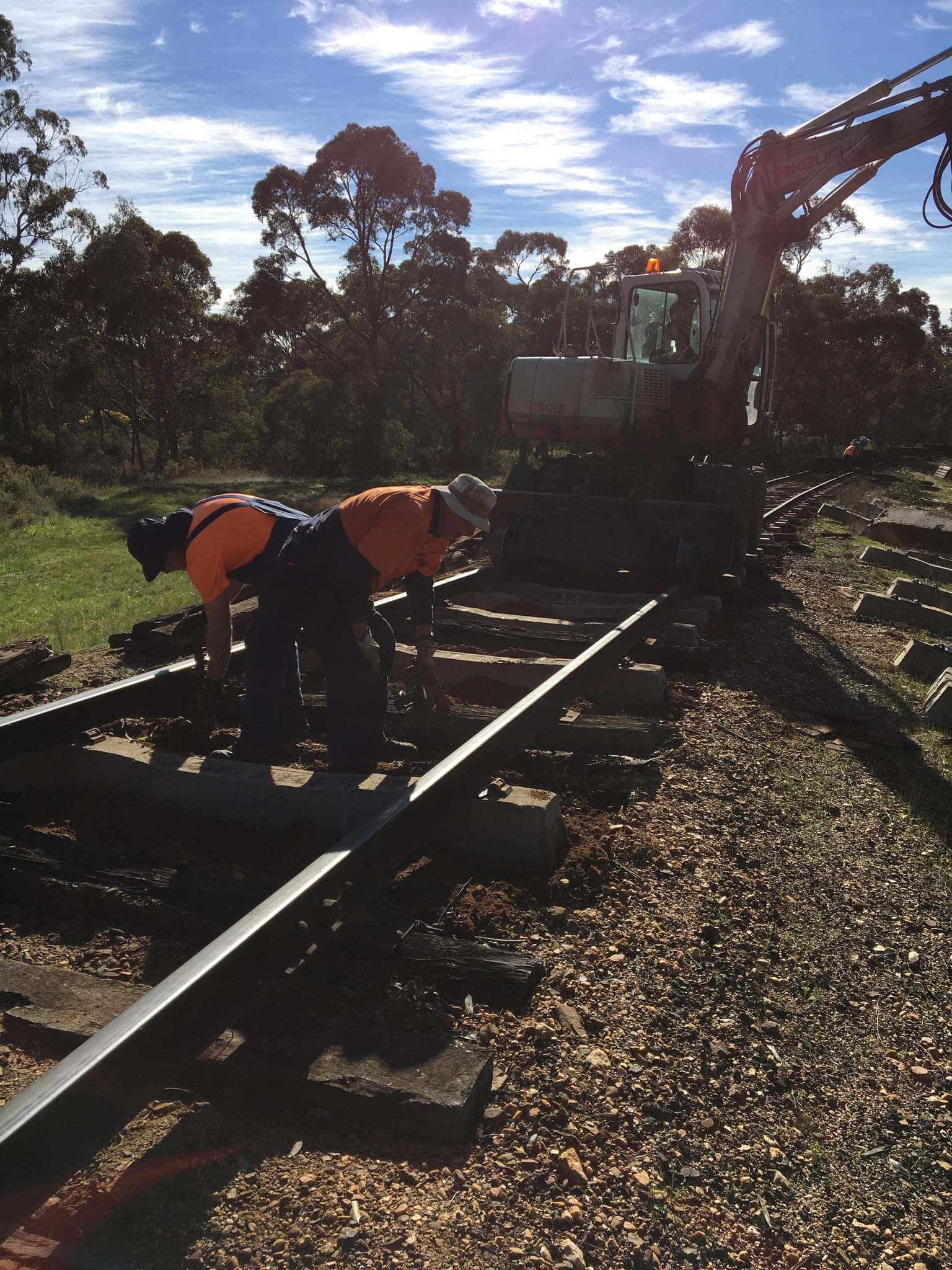
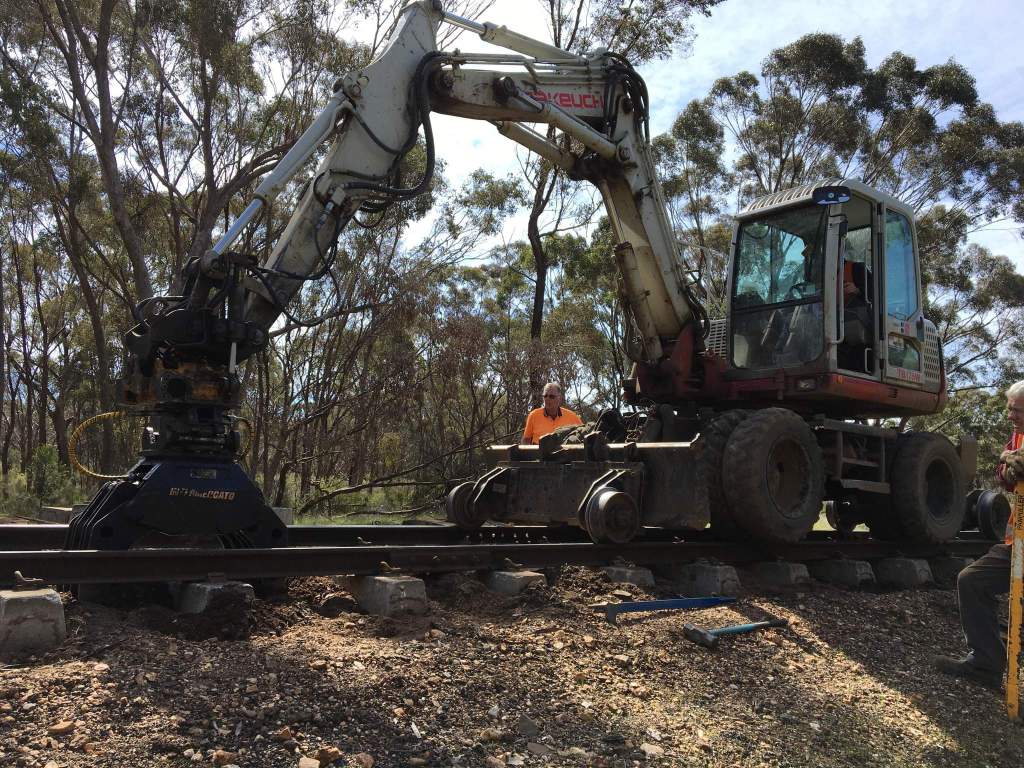
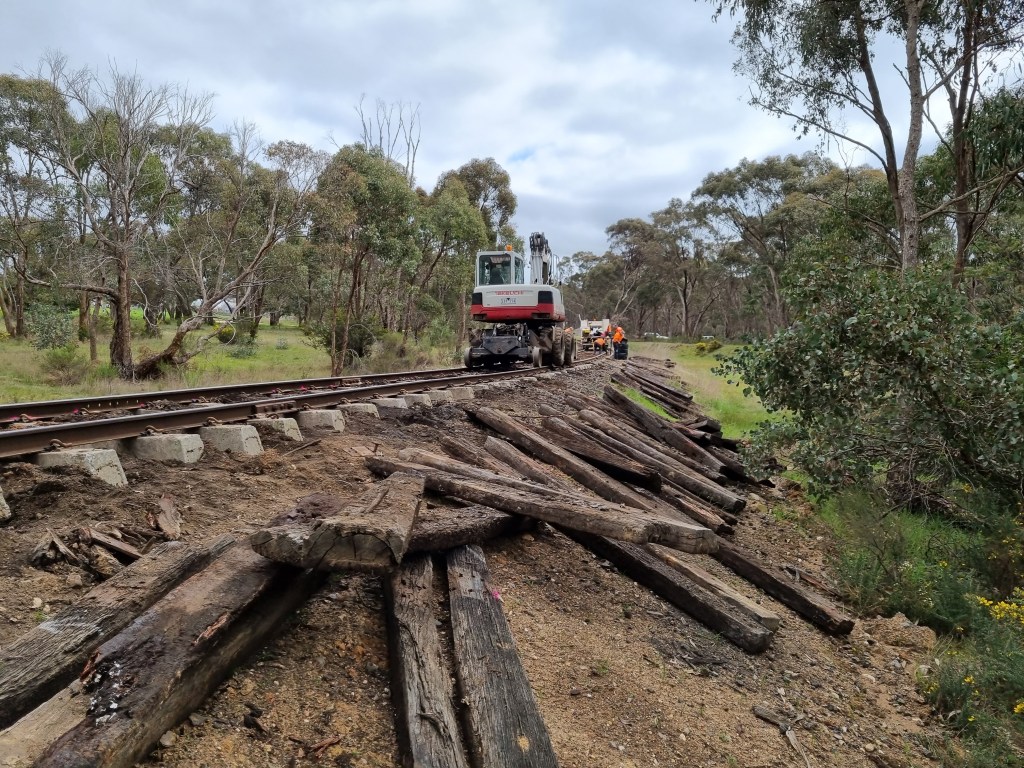
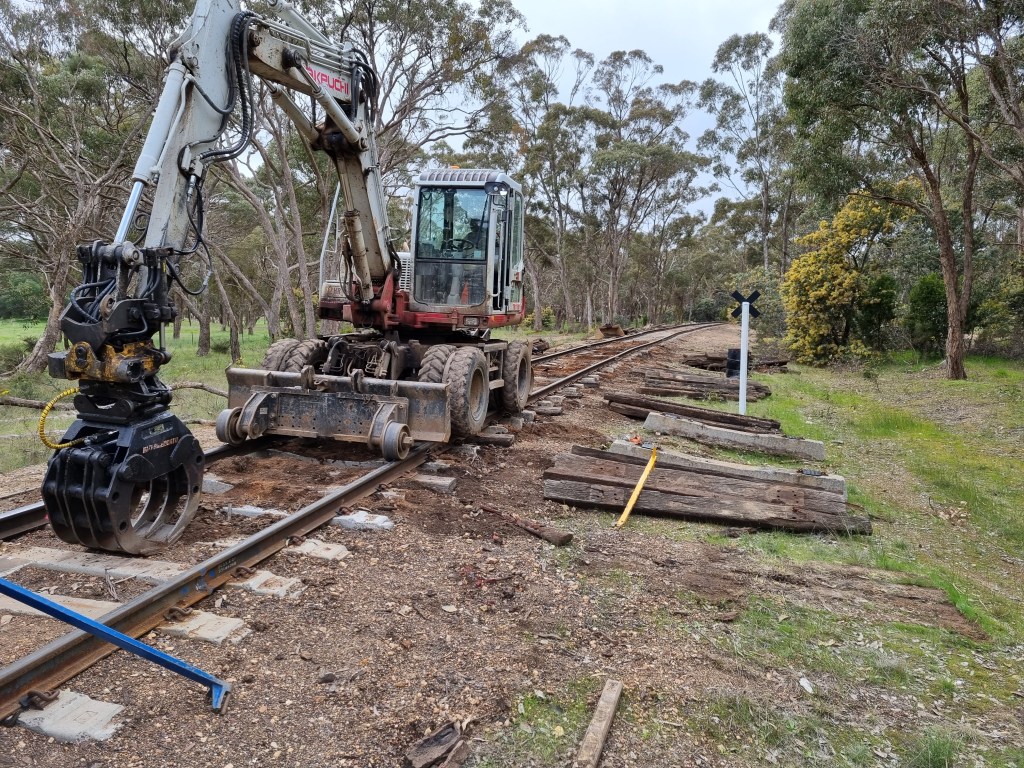
To add to the versatility of the excavator, the intermediate timber sleepers left in to hold gauge, are removed completely with the excavator. A simple tap on each end to drop and loosen the spikes, the grabs pulls out two spikes, the sleeper is skidded to one side and has it’s plates pulled away, ready to be flung aside and the new sleeper installed, saving a power of manual labour or even logistical headache getting the hydraulic puller back in the right place.
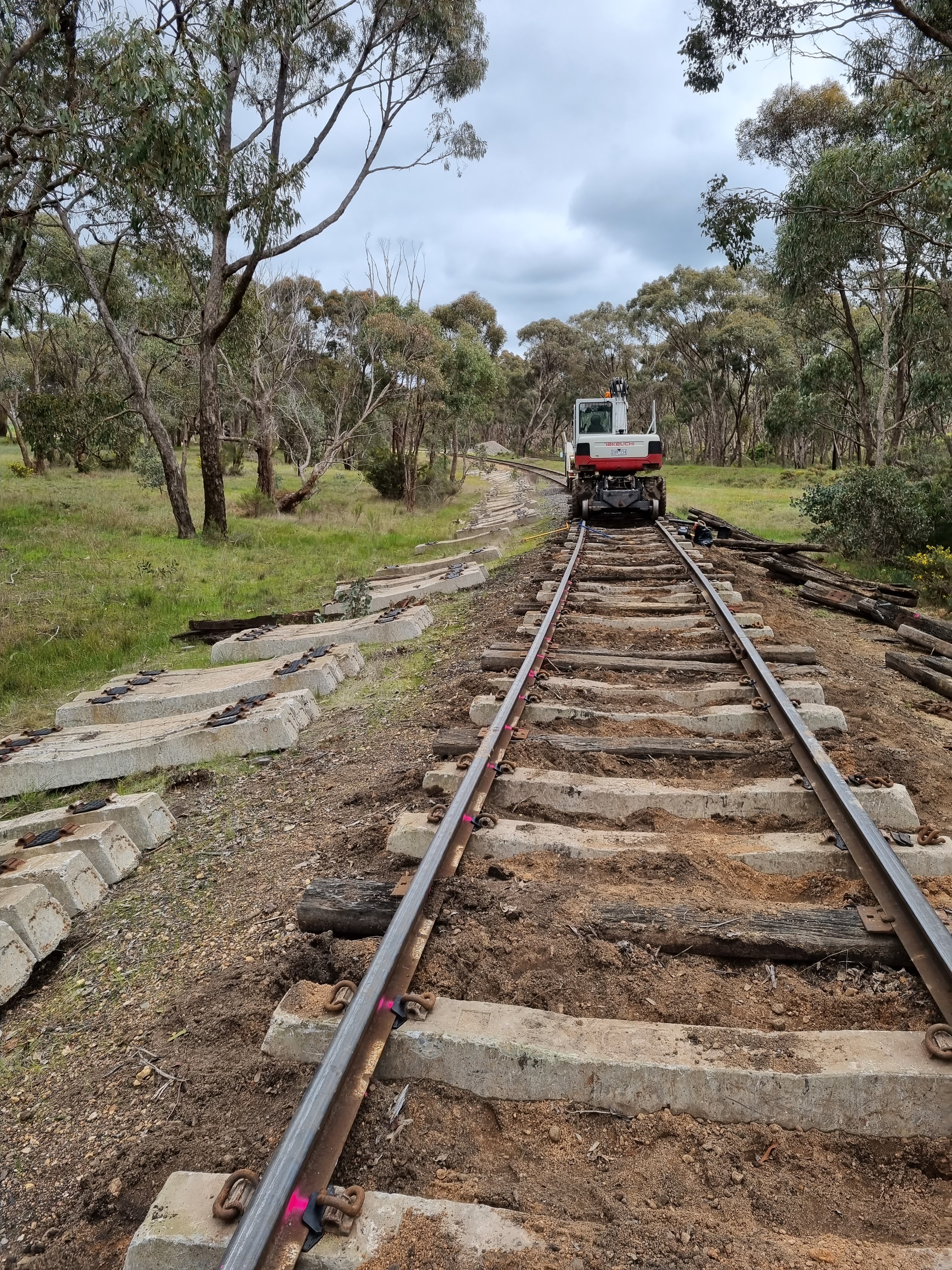
135 concrete sleepers was today’s count, with only 112 needed to get around to Woodlocks Ln, so all being well that’ll happen on Thursday. The dips and wiggles look bad, but the truth is they’re actually very easy to correct. All the dips are really just areas of deficient ballast and when some is added, a controlled squeeze from the tamper lifts the slacks out. Any wiggles can be removed with a shove from the Hyundai, however the ground is a little wet still to get trackside everywhere, so we may have to live with a few of them for a few weeks, but we’ll get them out.
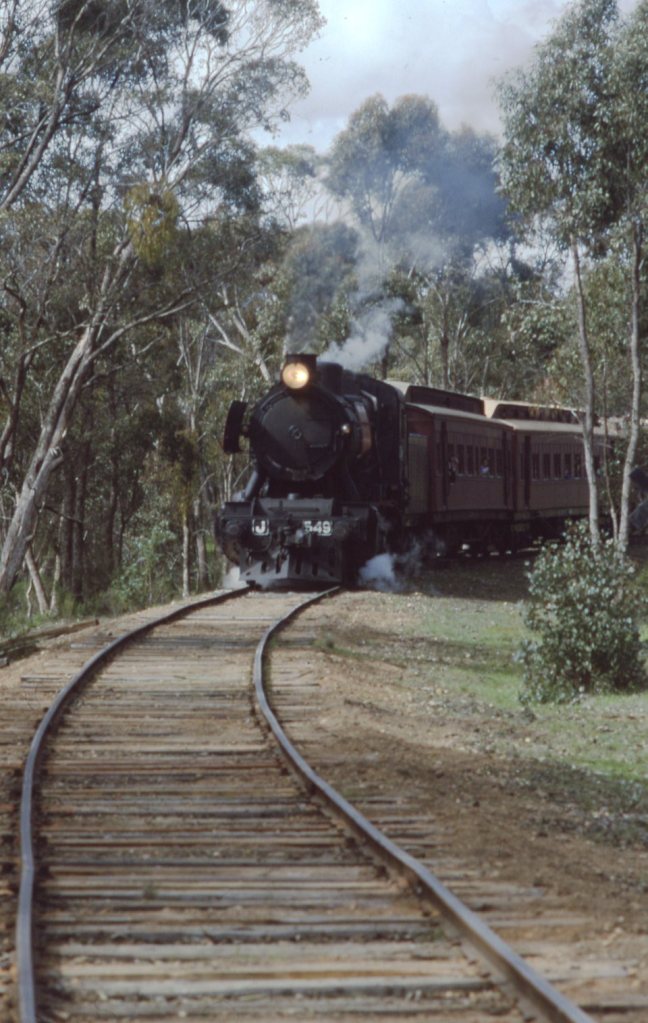
These three pics, also from Alan, are from the 3rd of September 1995, showing the first train over the recently re-sleepered track, we’ll replicate this (sort of) on Friday, with the first train being the ballast discharge train.
The upgrade to big rail and concrete have changed the look of our Railway, it’s no longer a country branch line. Which can be seen as good or bad, but from an ongoing maintenance, manpower and economic concern it’s really the only way we can survive. This is very evident if you look at the tourist railways in the UK, they made these changes years ago for the same reasons and now things have weathered back they really don’t look so different from a 1950/60s railway.
Thursday will be the next workday, with lots to do to finish the curve and tidy up. Meeting Maldon 8am or on site from 8.15am.













 VGR Civil Blog