Bolts and grass

Bolts and grass are in no way connected, but they’ve been the focus of this week.

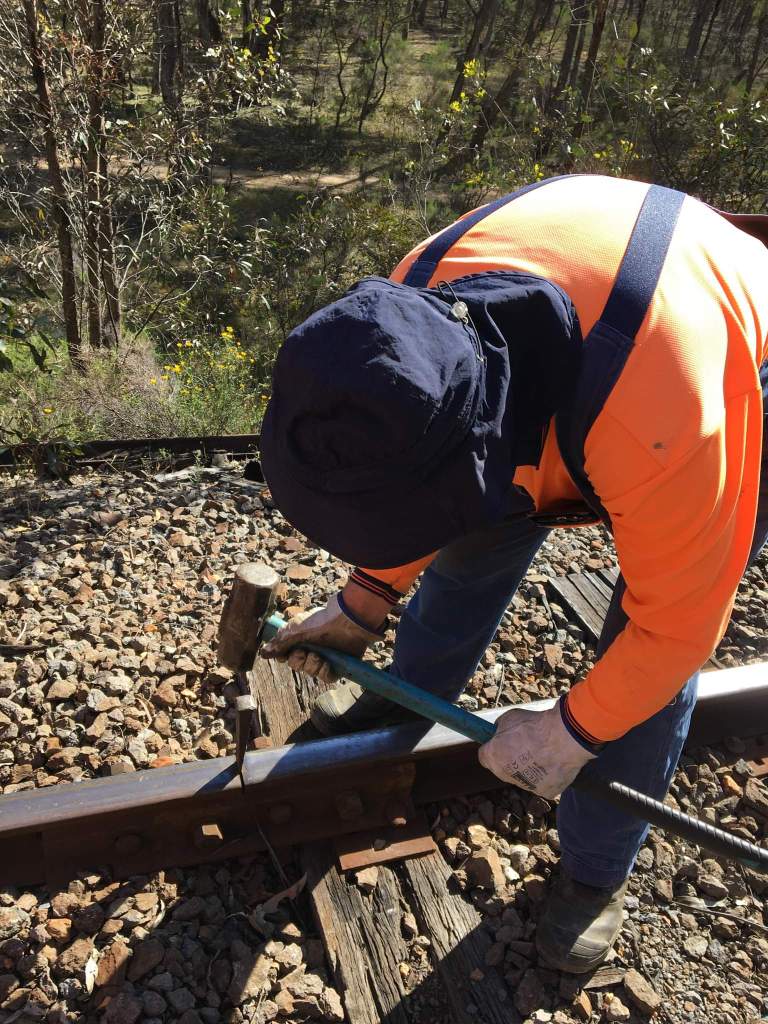
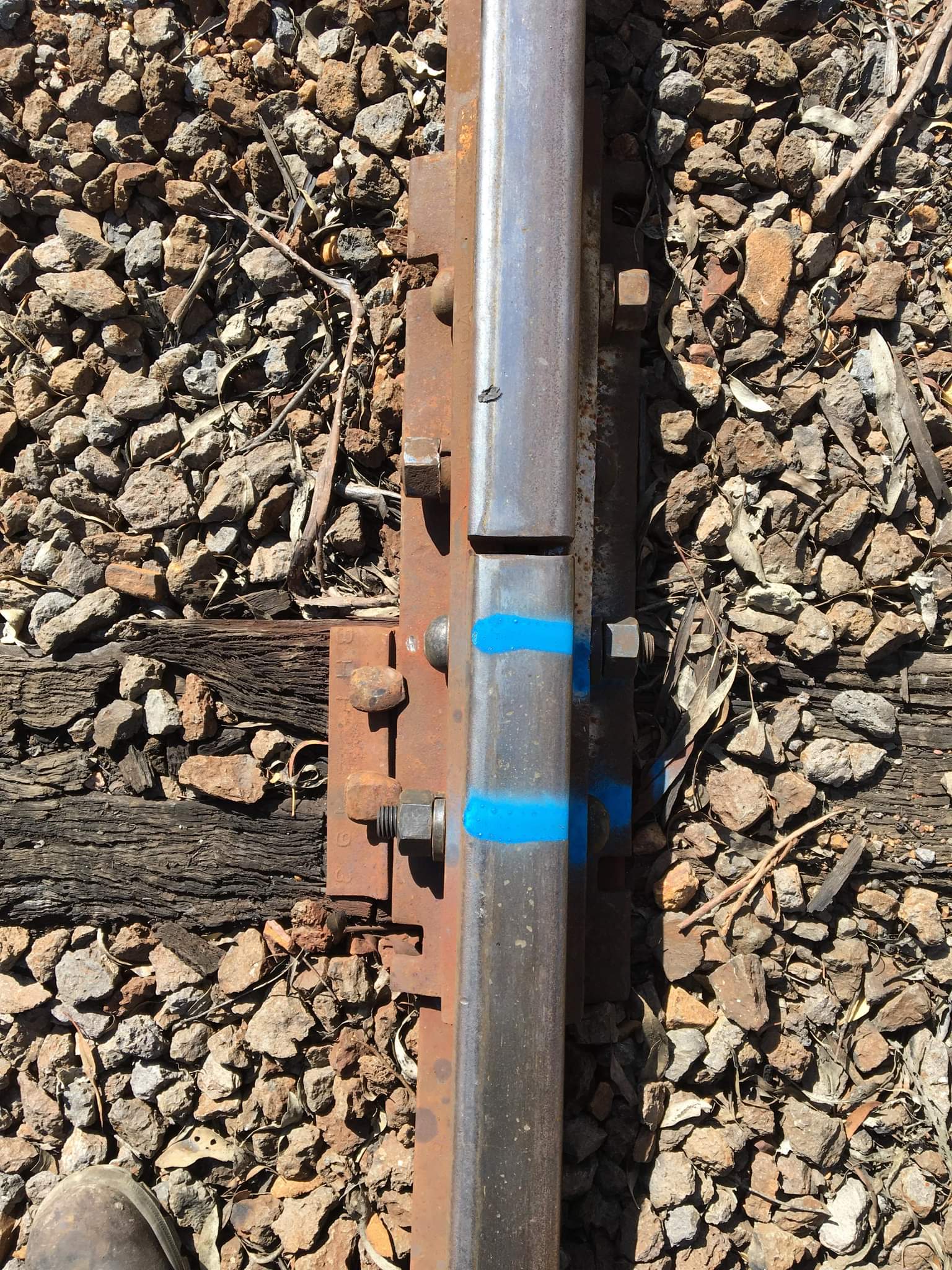
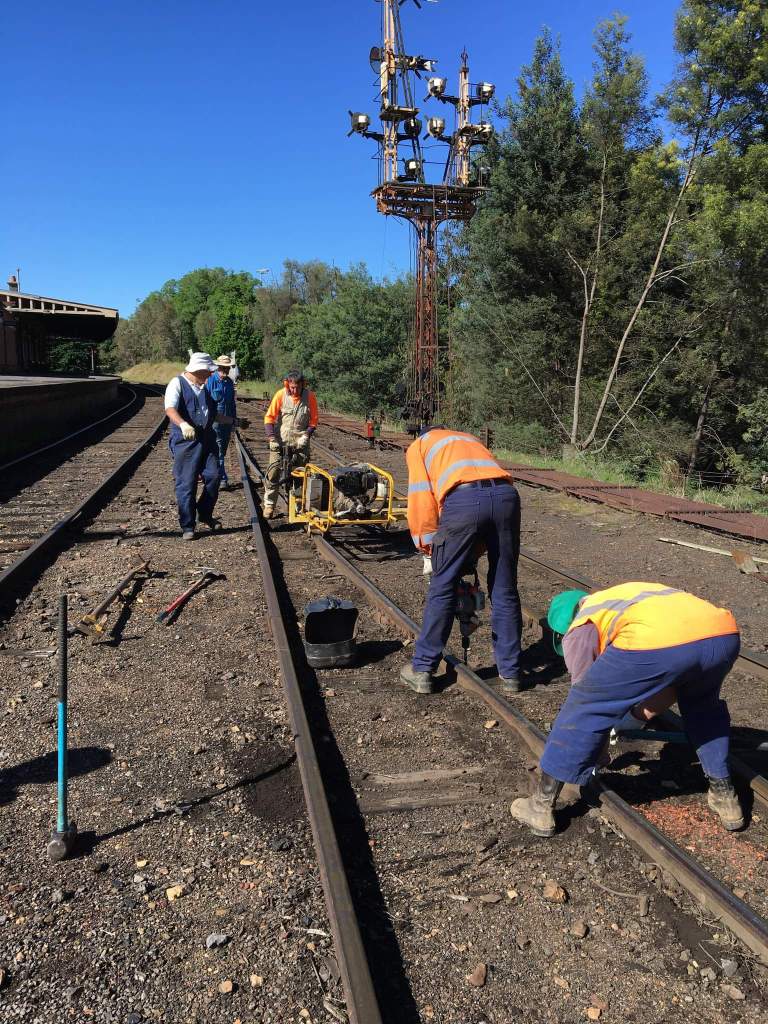
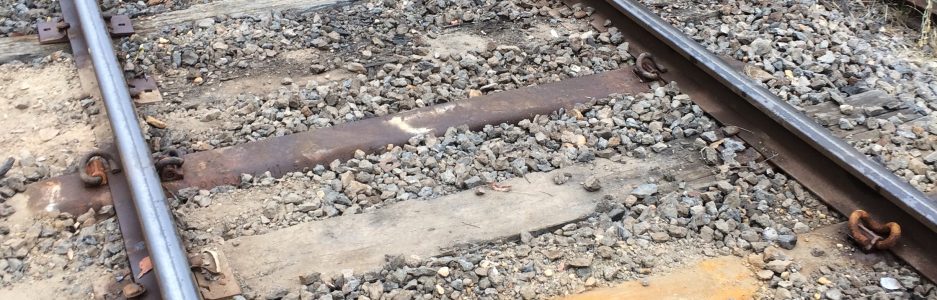
Following the recent track inspection, we’ve identified all the loose fishplates along the track, with most requiring replacement bolts to correct. So that’s what we did on Friday afternoon and again today, with a good 200 or so bolts installed so far, today’s small gang of 3 is certainly feeling it now!

However we’ve now only got one tangent left to go, about 50 bolts, which will see us with nice joints for the summer.
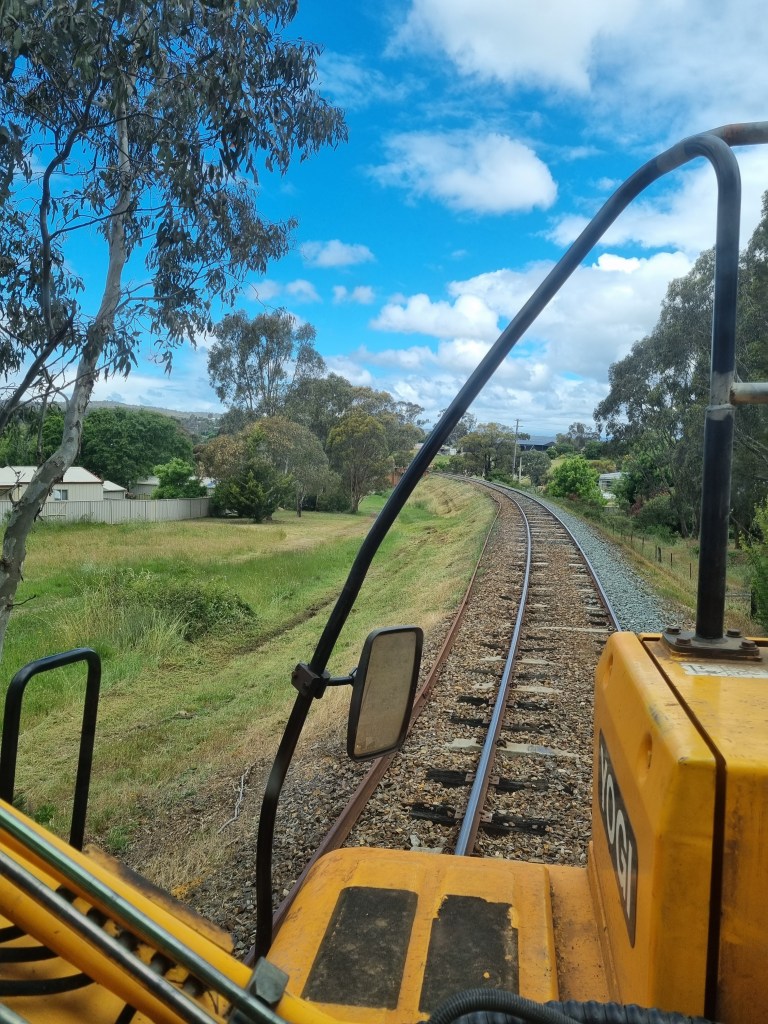
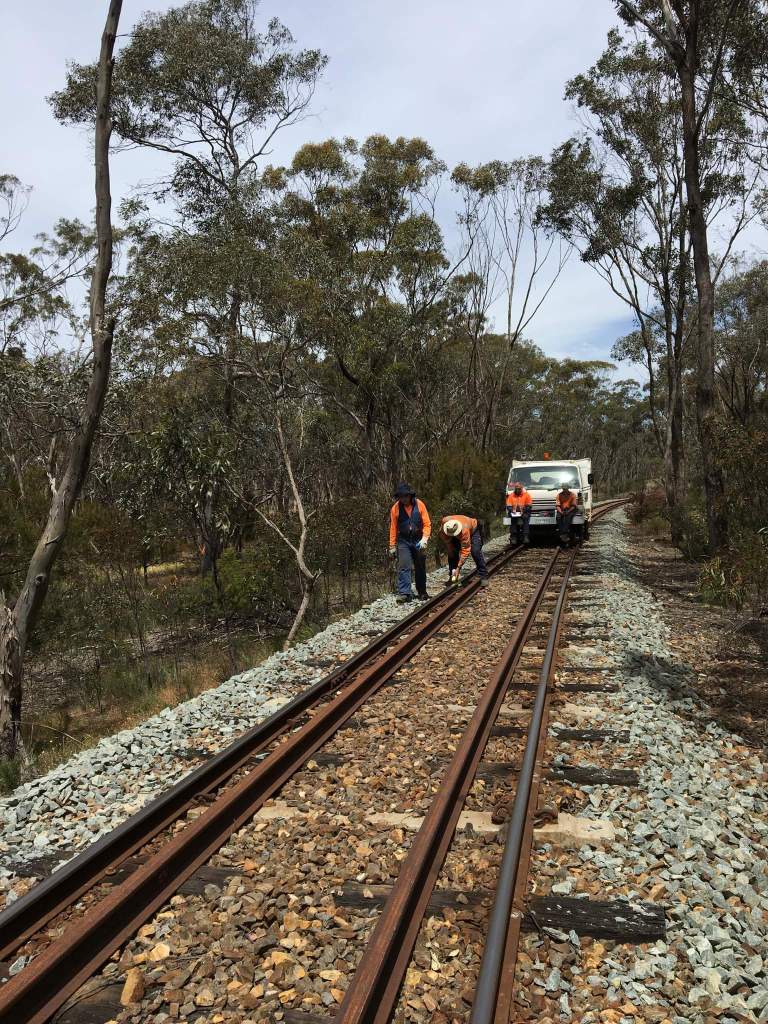
Mowing of the grass was yesterday’s activity, with a large portion of the mowing now completed (some for the 2nd time this year) around Castlemaine, a bit more around Muckleford and a start up at Maldon.

Unfortunately being an extremely good year for growth on the back of a few reasonable seasons, the grass is impressive to say the least, however it also means there’s an enormous amount to mow, and likely multiple times.

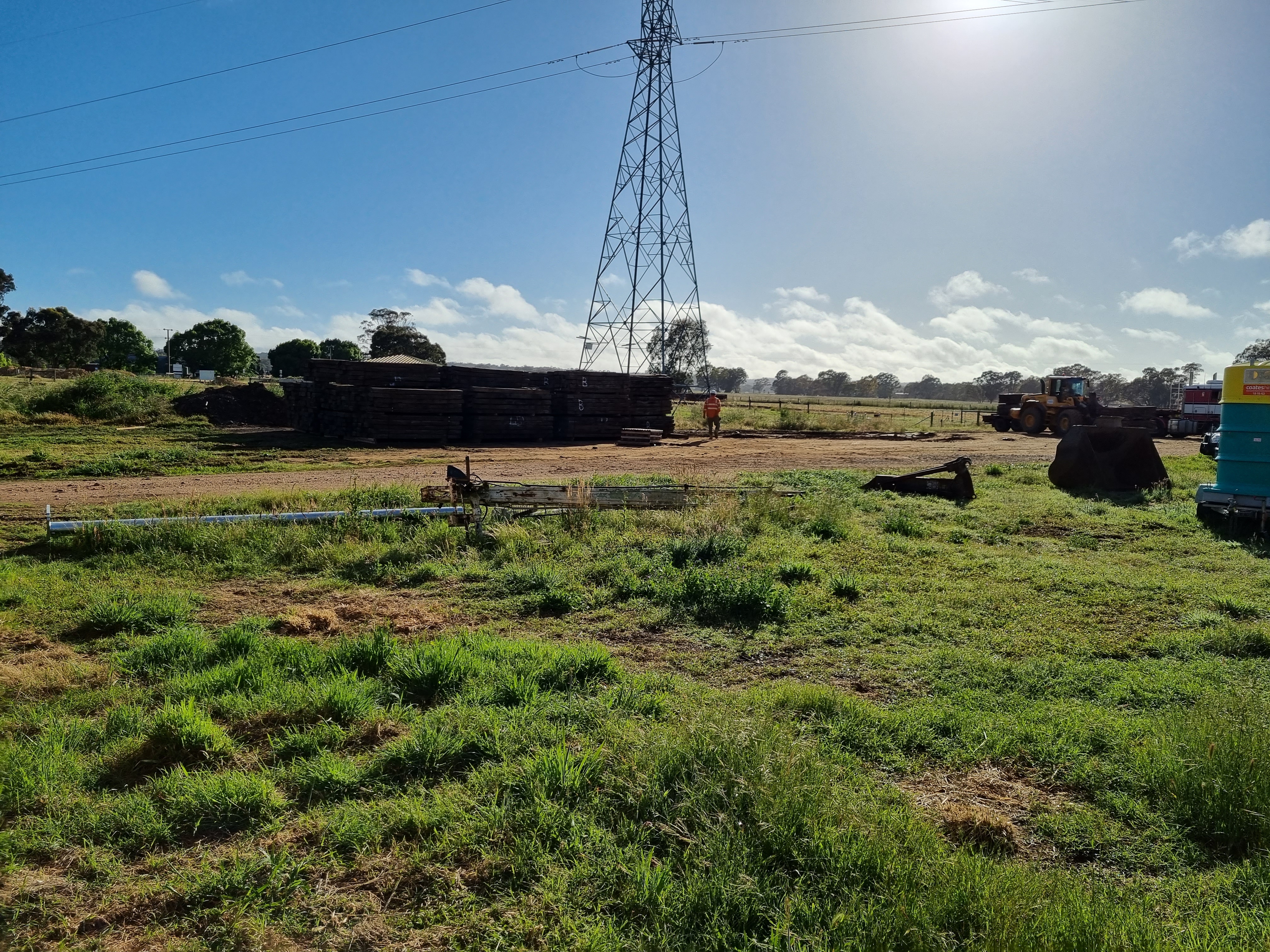
In general Tourist and Heritage Railway sector news, B grade timber sleepers have been released from the Echuca line upgrade and these are being delivered to Muckleford for use by the various groups around the state.

We’re not actually going to use any of these sleepers ourselves, as we’ve enough in stock for several years already, given they’re largely confined to our yards now.

So we’re doing our bit for the sector by offering some land to store them and providing a machine to load trucks with when the times comes to send them off to their new homes.

Thursday and Friday will see us mixing up our usual activities to tackle a good amount of the overgrown areas around Maldon and along the line. Meeting at Maldon from 8am.
Track Inspection

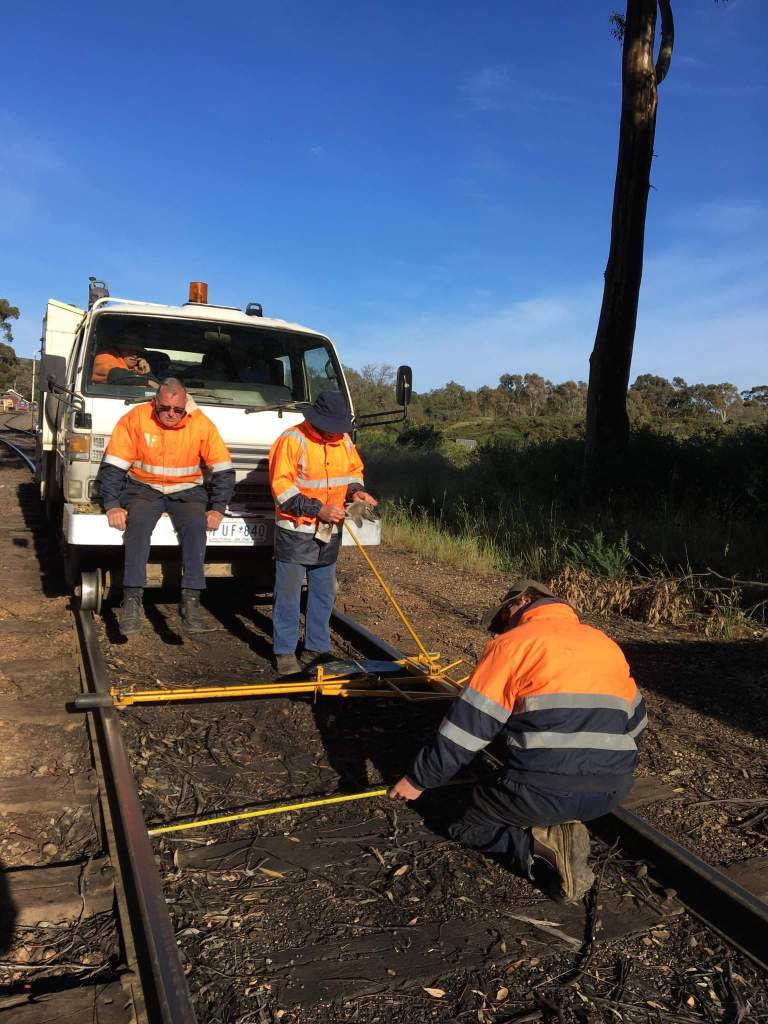
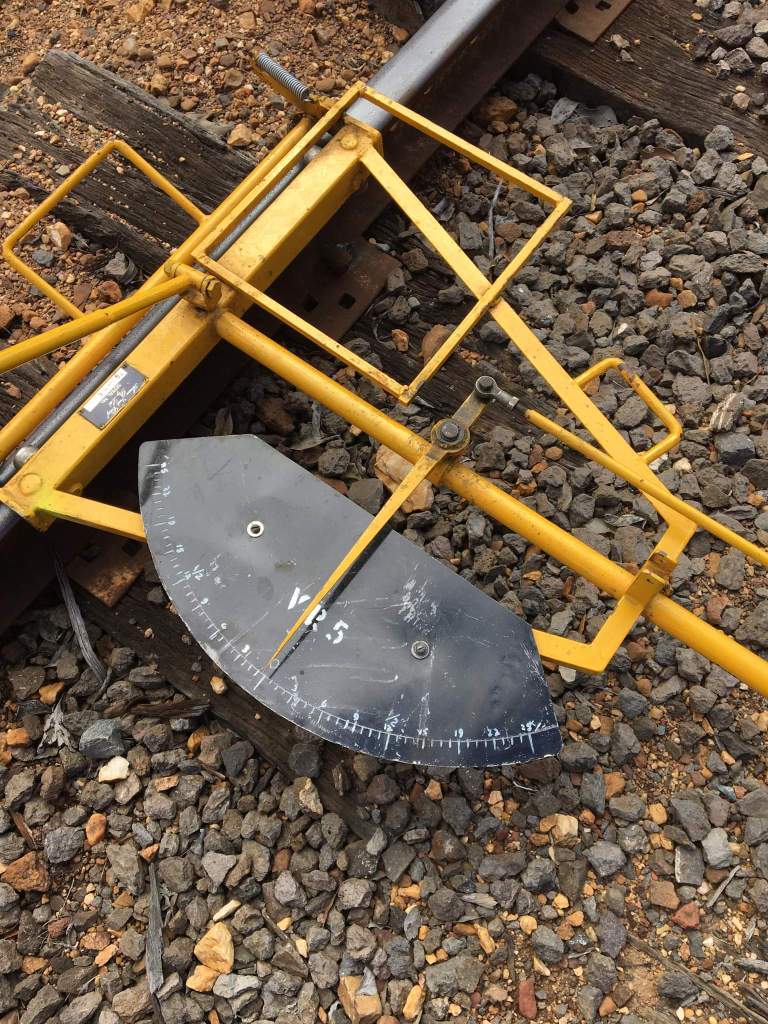
It’s that time of year again, walking the track and running the rolling track gauge over the full length to check for any deterioration.

We’ve still got a few kms to go, but generally we’re extremely happy with the results, with nothing found that exceeds any of the tolerances or poses any risk to safety. All that work is paying off!

We did find a couple of very freshly broken bolts, they were old non high tensile bolts and both did appear to have historical defects. We’re gradually upgrading all these old bolts to new ones as money allows. It was an easy fix, once we’d opened up the nearby gaps which had obviously stayed nicely closed after the bolts let go yesterday. That’s also why there’s four bolts per joint, as for a dangerous situation to arise, all 4 must break.

That was it really, nothing else has been found of any consequence. Fingers crossed when we complete it tomorrow we don’t find anything. The data collected will be used to help us prioritise the work over the next 12 months, but we only found a few areas that will need much attention, which is good as we’ve still got lots of re-railing and Castlemaine work to complete over the next year.

Earlier this week we said goodbye to the ballast hoppers, as SSR called in and collected them. It was all rather uneventful, as it should be.

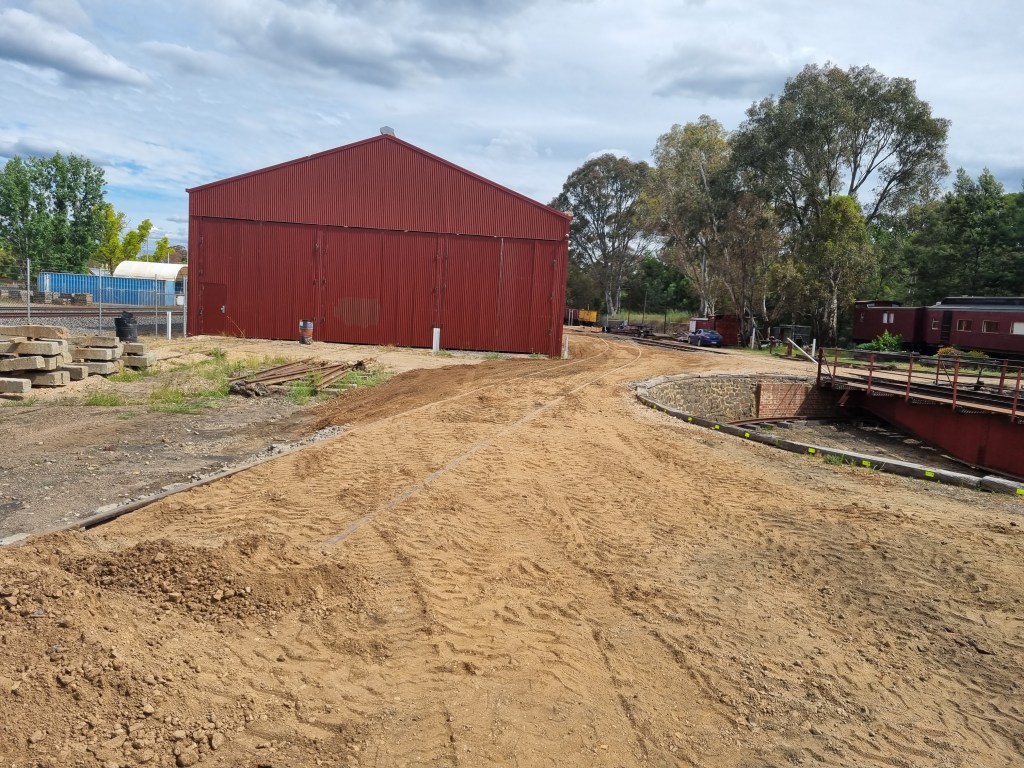
Our new track at Castlemaine is now part of the roadway once again, with the remainder of that trackwork to occur later in the year.

Tomorrow will see us complete the track inspection, weather permitting. We’ve only got a few kms to go, so hopefully between showers we’ll find the time to knock it over. Meeting Muckleford station from 8.15am.

Ballasting part 2

Not a lot in the way of pictures to show for today, but very successful.

We did run into some trouble with a couple of the wagons, one had doors which didn’t always want to close, good fun when you’re trying to be precise! And another that just didn’t work at all.

However some trackside mechanical repairs and we’d emptied one wagon and exchanged parts with the failed one to get it up and running like a new one.

All in all it went very well.

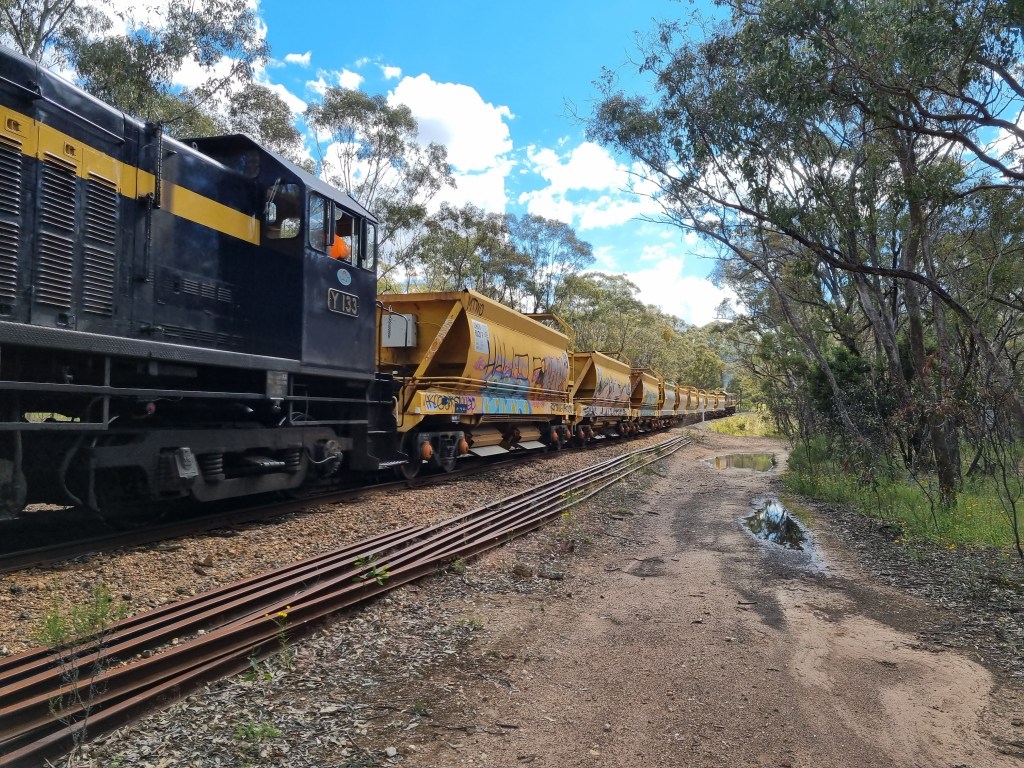
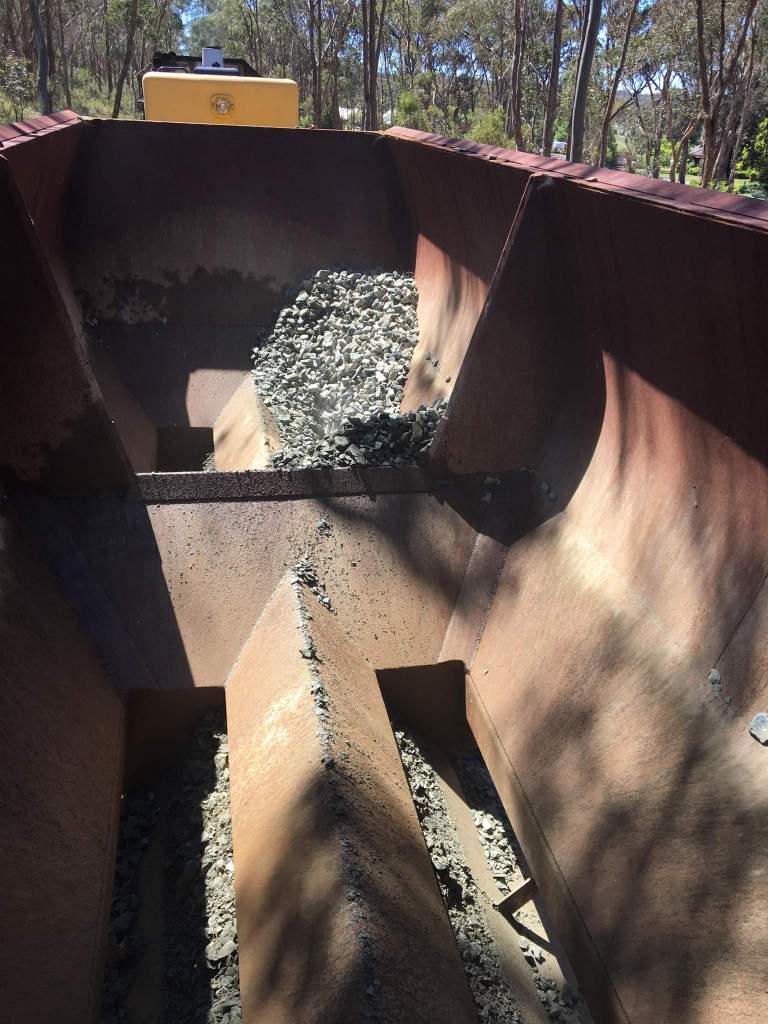
Most of the afternoon was spent trying to remove the last of the well stuck rock from inside the wagons, unlike the small wagons you can’t just lean over the edge and give the rock a poke, we found that a variety of speeds, up and down hills breaking and accelerating was the best method to free the stuck rock, hence the push pull train seen here.

It was very successful few days and we’re extremely grateful to Bendigo Rail Workshops, SSR, V/Line and ONRSR for allowing this movement to occur – a massive boost for our little railway.

Next week’s workdays will be announced Monday afternoon, once we’ve safely got these wagons back on the mainline and onwards to Bendigo.

Tamping and ballast

Well… you can’t have everything go right all the time. A flat tyre gave us grief, nicely followed by a flat battery! Thankfully we got those out of the way early on.

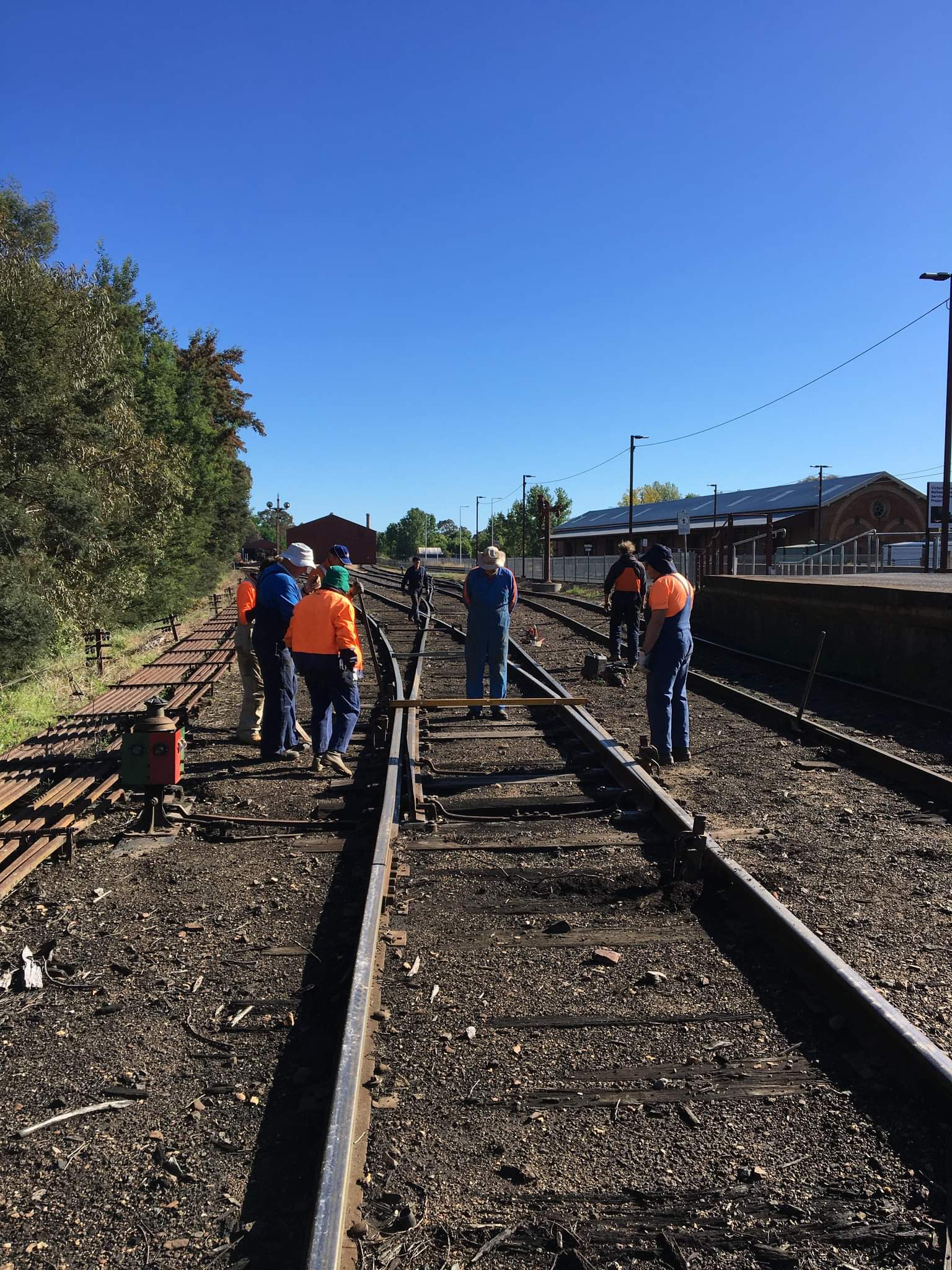
Then it was onto cross boring a turnout in Castlemaine Yard. The issue really being the timbers are still adequate, aging but adequate, however the dog screws that we’re used had bent over, leading to widening of gauge. So they were whipped out and good dog spikes installed in there place and just like that the gauge issue was resolved.

We also did an extensive lift of the creek side rail through the turnout and beyond to correct a bit of embankment settlement, even after 100+ years, we still get some settling of the formation.

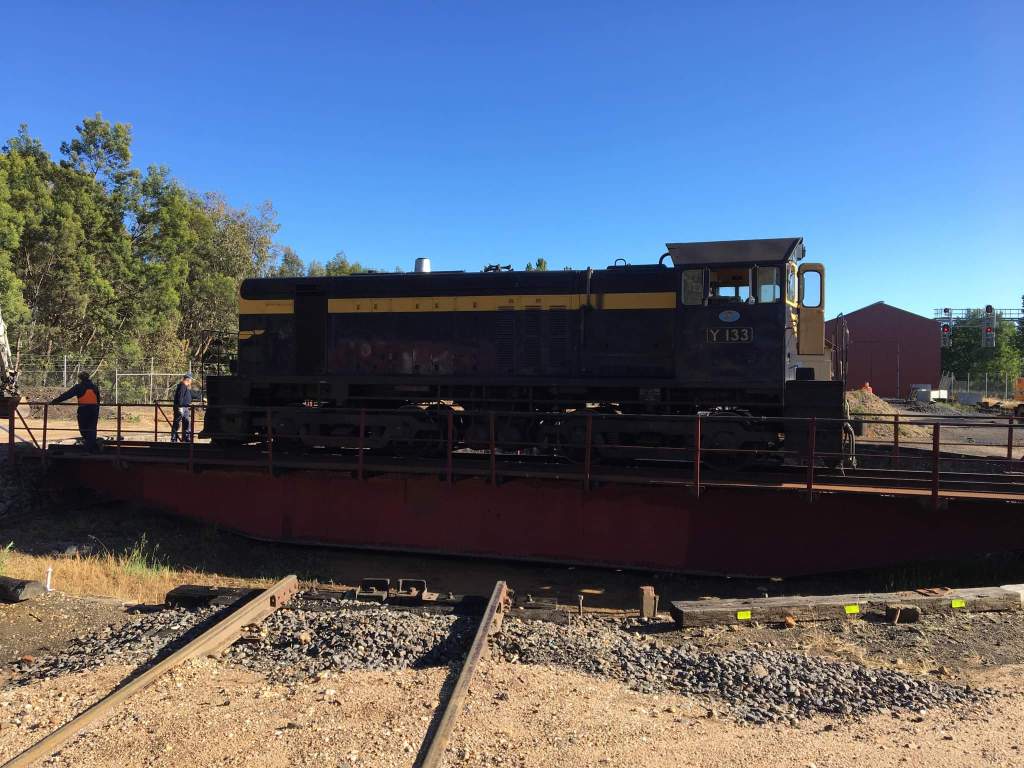
We even turned a Y class… just to help even up the wear and make the next job a little easier.

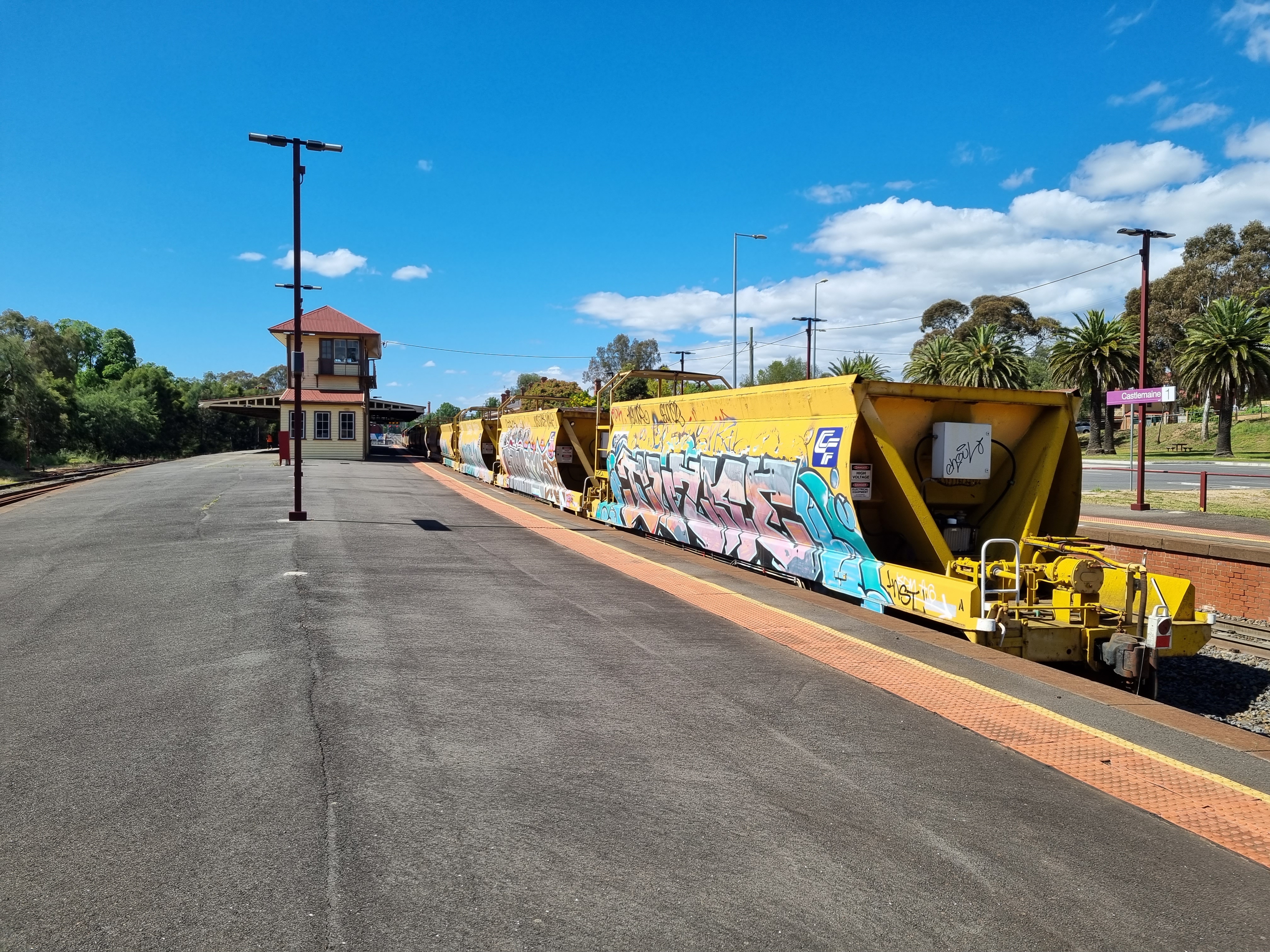
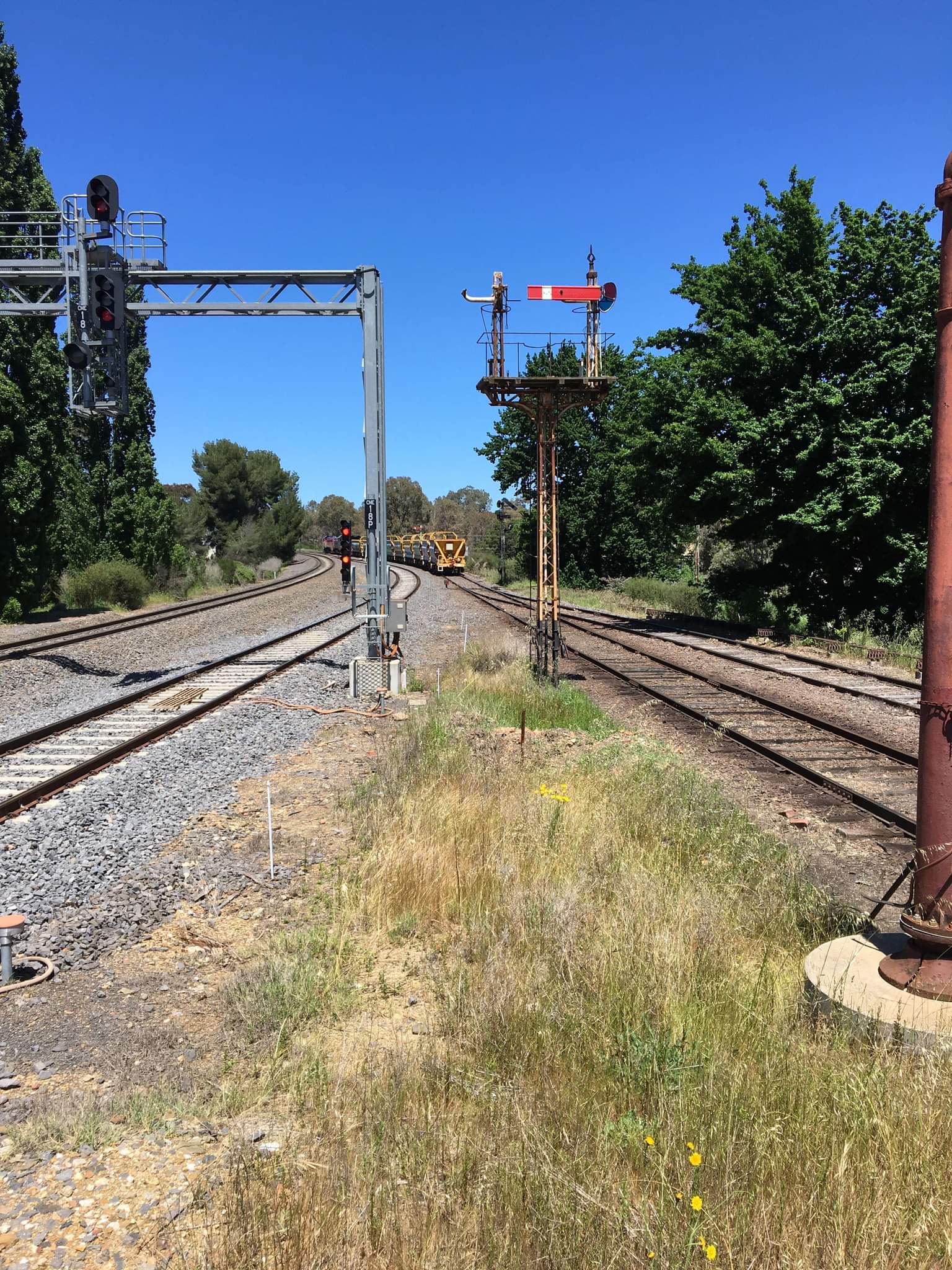
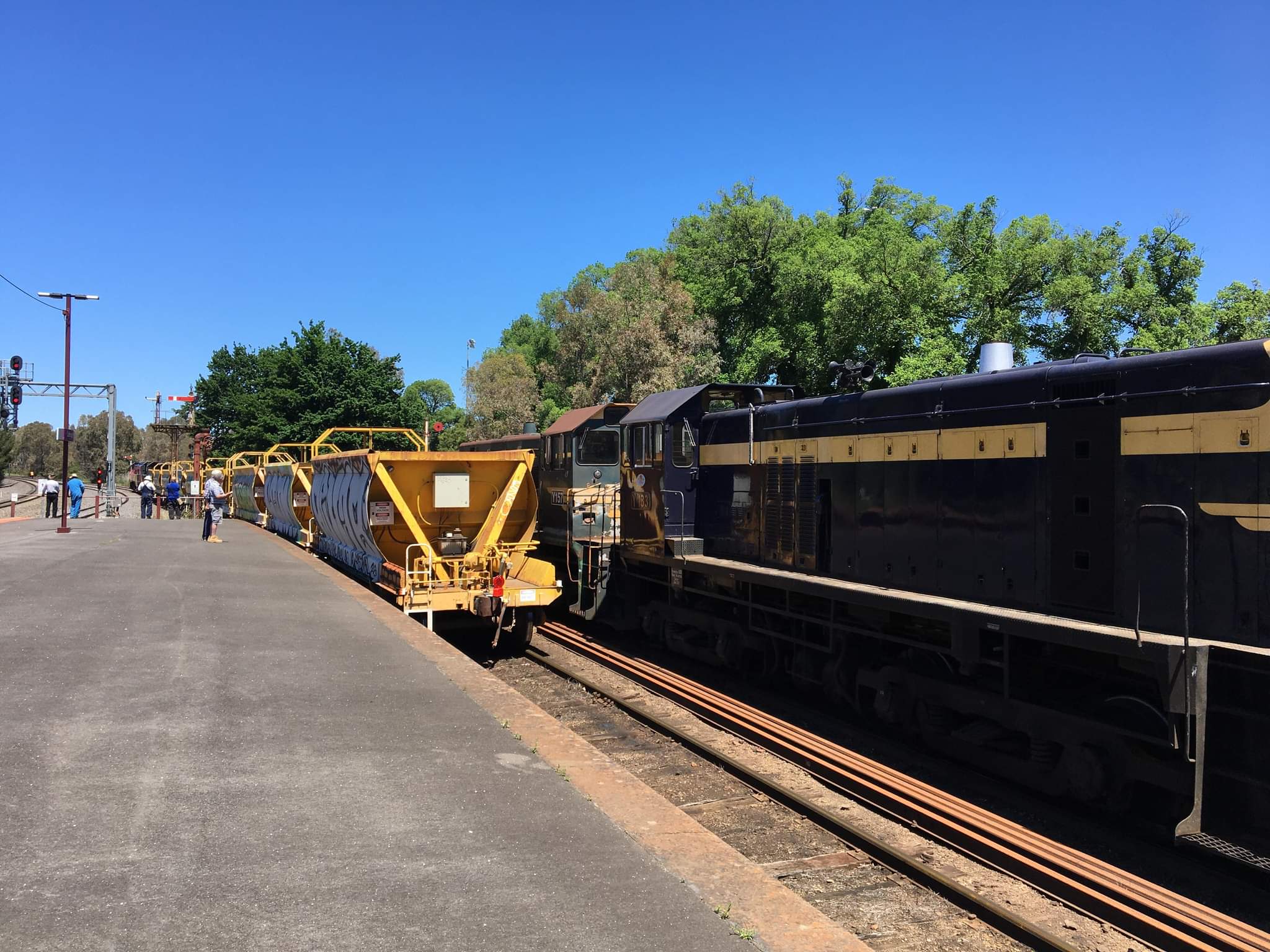
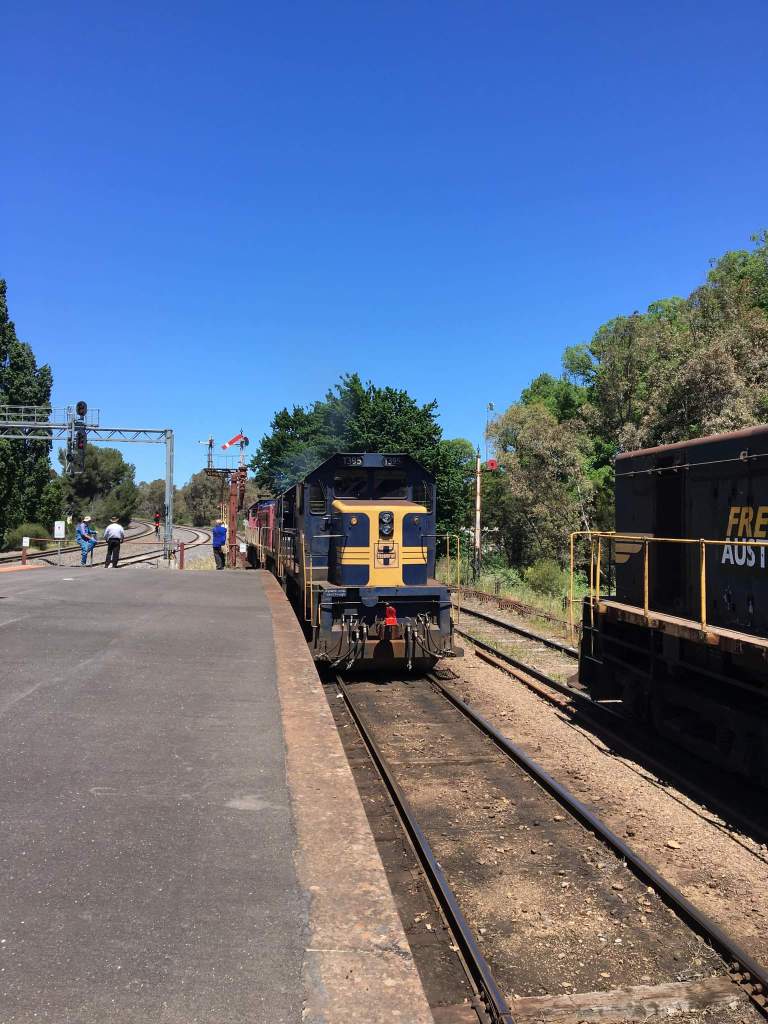
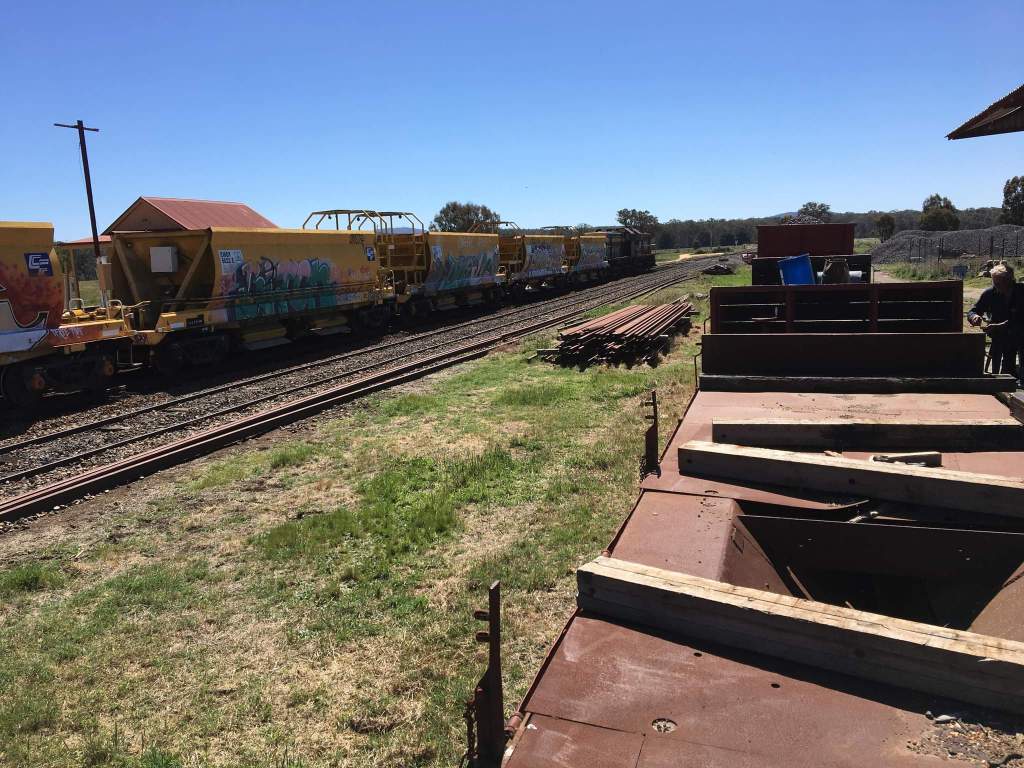
And the next job involved this lot, which appeared on Platform 2, a little after lunch.

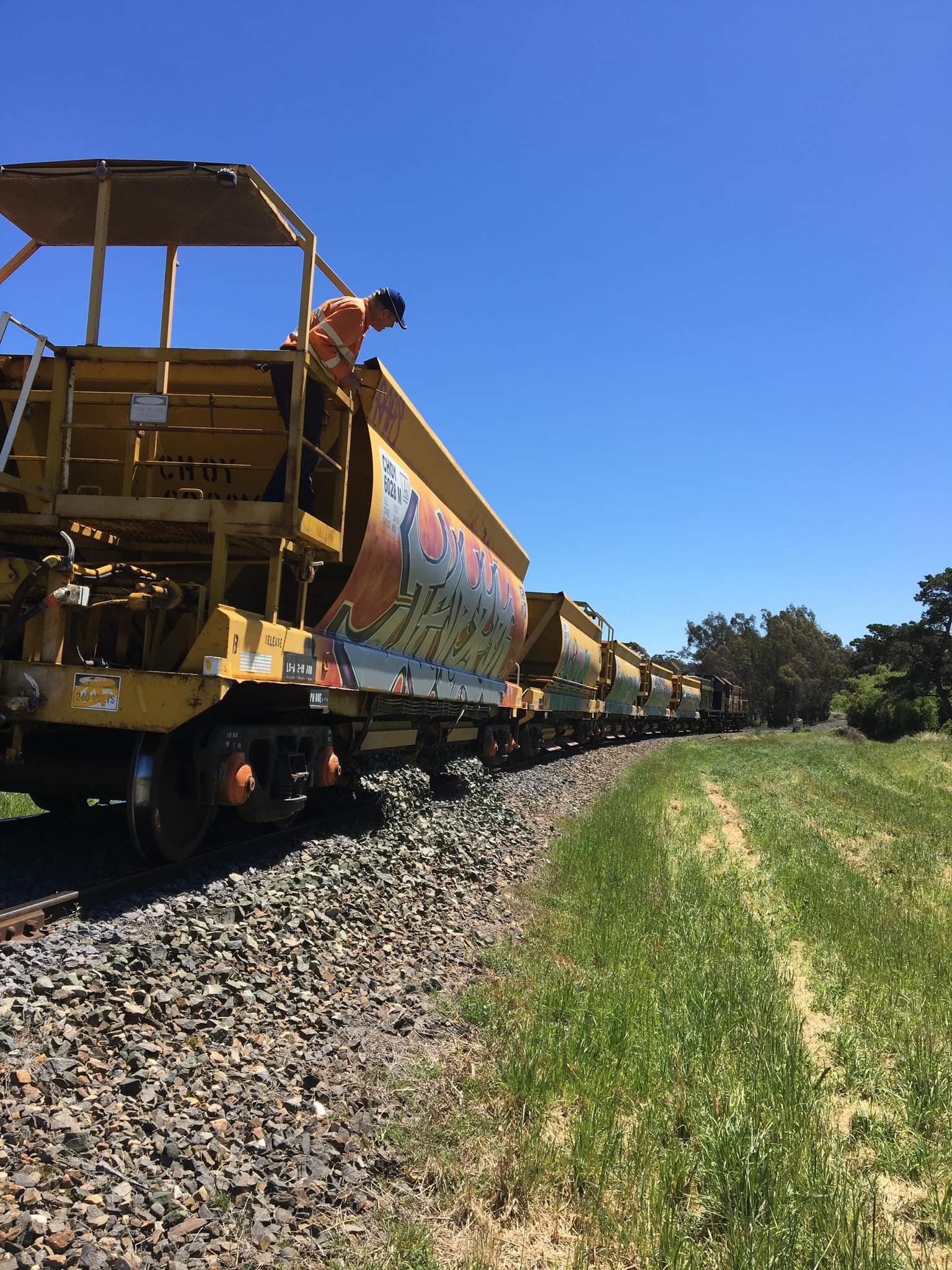
A rake of ballast wagons arrived, onto our track! The owner of the wagons inherited them loaded, which wasn’t ideal given they needed some maintenance before heading out on their next major assignment, so between SSR, Bendigo Rail Workshops and us, we devised a method of emptying the wagons that was beneficial to all parties.

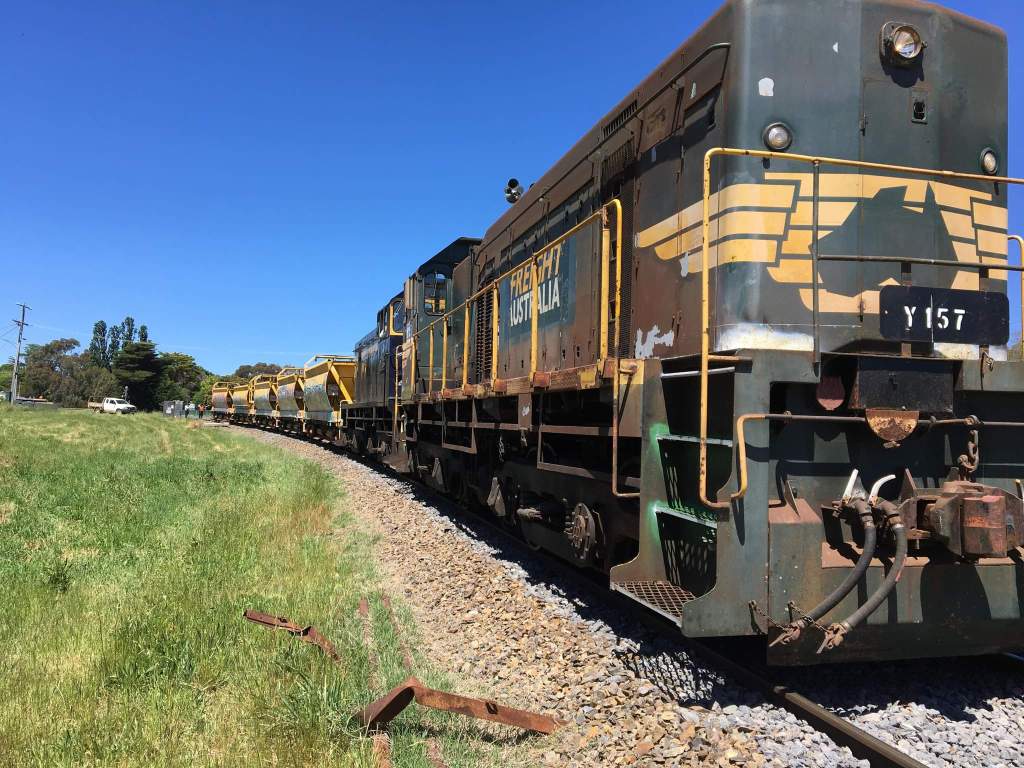
It was very much a drop and run job, once the wagons were on VGR metals, SSR’s train (just locos by now) were back out onto the mainline, heading to Melbourne.

So we moved them well clear of the platform to complete all of our checks.

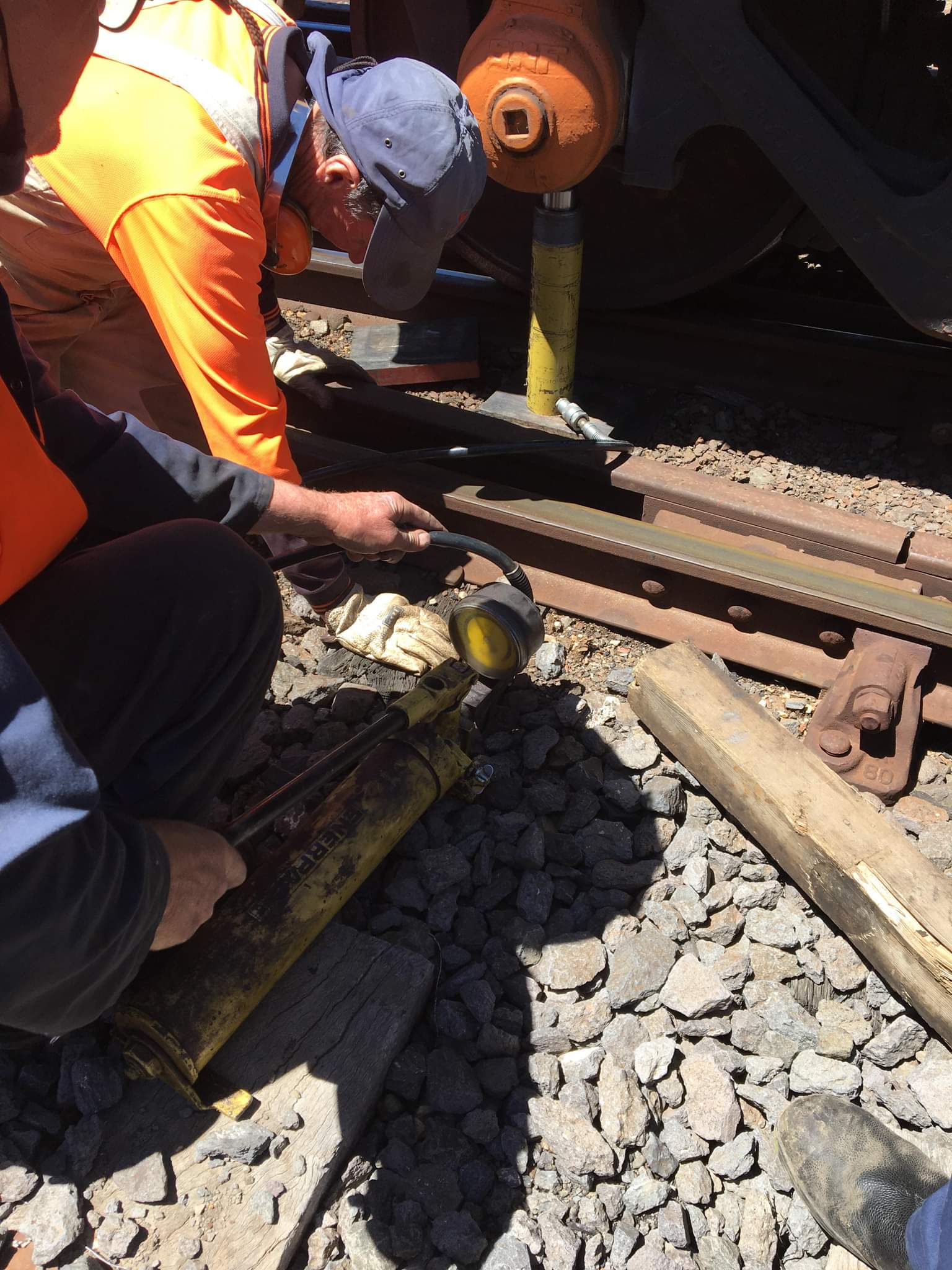
One of these tests being to ascertain the exact weight of the wagons, as short of being an psychic, it can be very hard to guess the actual load.

We use a hydraulic cylinder, with a gauge, which we tested on several know weights prior (the Y classes and known carriages etc…). This led us to believe very satisfactorily the wagons weren’t overloaded, which is always a good thing. However it did confirm they were too heavy to go over Pyrenees HWY Bridge, so as planned we were going to have to drop rock before Pyrenees hwy bridge, to reduce the weight.

So that’s exactly what we did! We infact did it before Winters Flat Bridge to really play it safe, although we had our Track and Bridge engineer on hand to ensure we did the right thing.

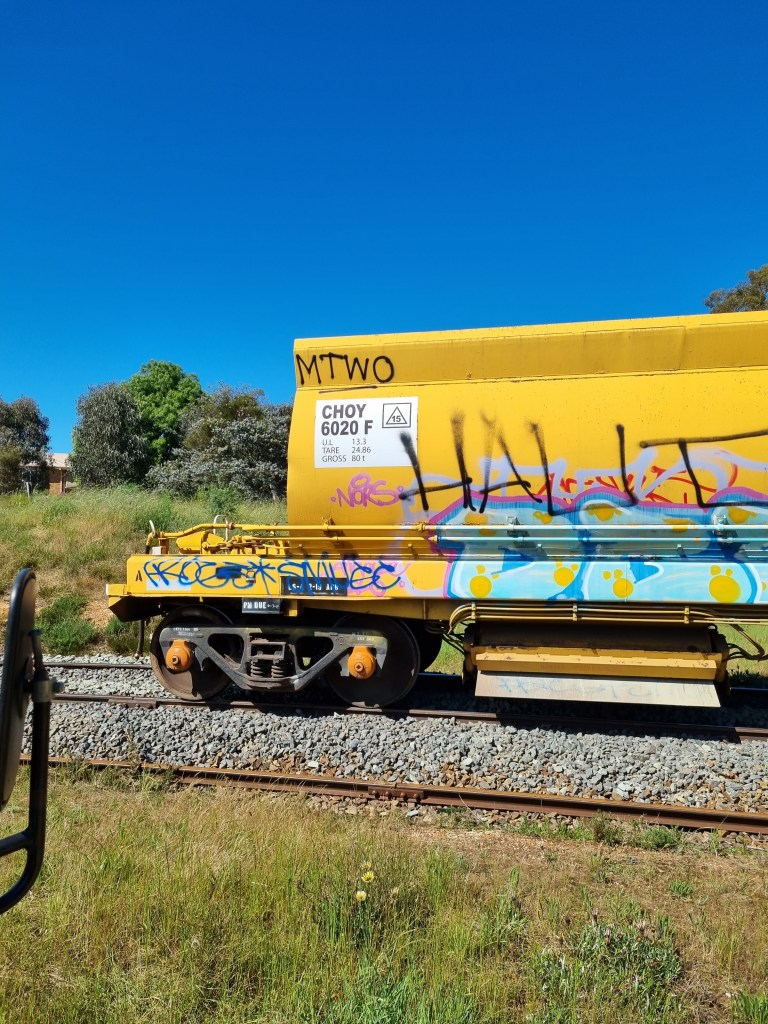
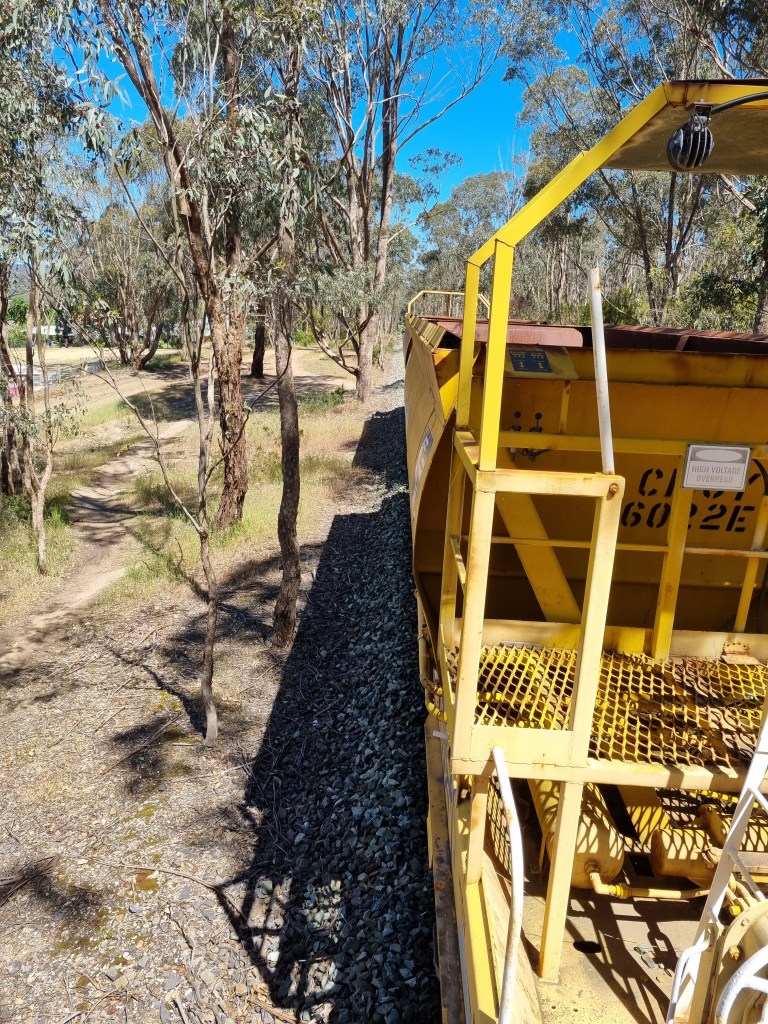
The wagons are fully pneumatic, meaning there aren’t any horrid wheels to control and they even provide a purpose build control platform!

Those little levers are all that’s needed to open and close the doors, pure heaven!

We only did side discharging, as this is a feature our wagons don’t have and something which can be quite tricky to achieve well, especially on curves.

The shape of the wagons certainly makes sure everything falls out!

It did take a bit of practice to get good at controlling the flow, but it is certainly the only way to go!

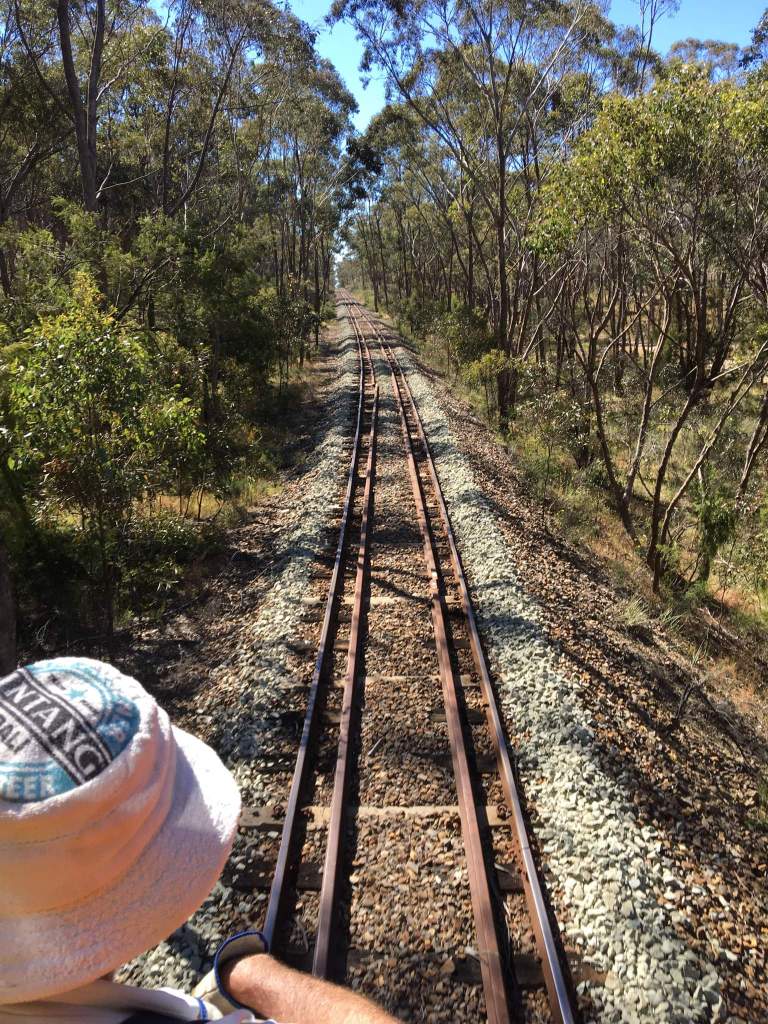
We’ve put enough on to replenish that lost when we completed the 2 inch lift to install the concretes and once we’ve completed the re-railing, we’ll no doubt wish to drop a bit more, but this is massive bonus.

So far we’ve only discharged the first 5 wagons, with 4 still to go tomorrow.

Any extra hands would be greatly appreciated, as each wagon needs two operators and its much more efficient to not have to stop after each load to move to the next wagon.

Meeting Castlemaine at 8.15 for an 8.30 departure tomorrow morning.