Castlemaine Works

Today, we took just about the whole civil fleet through to Castlemaine.

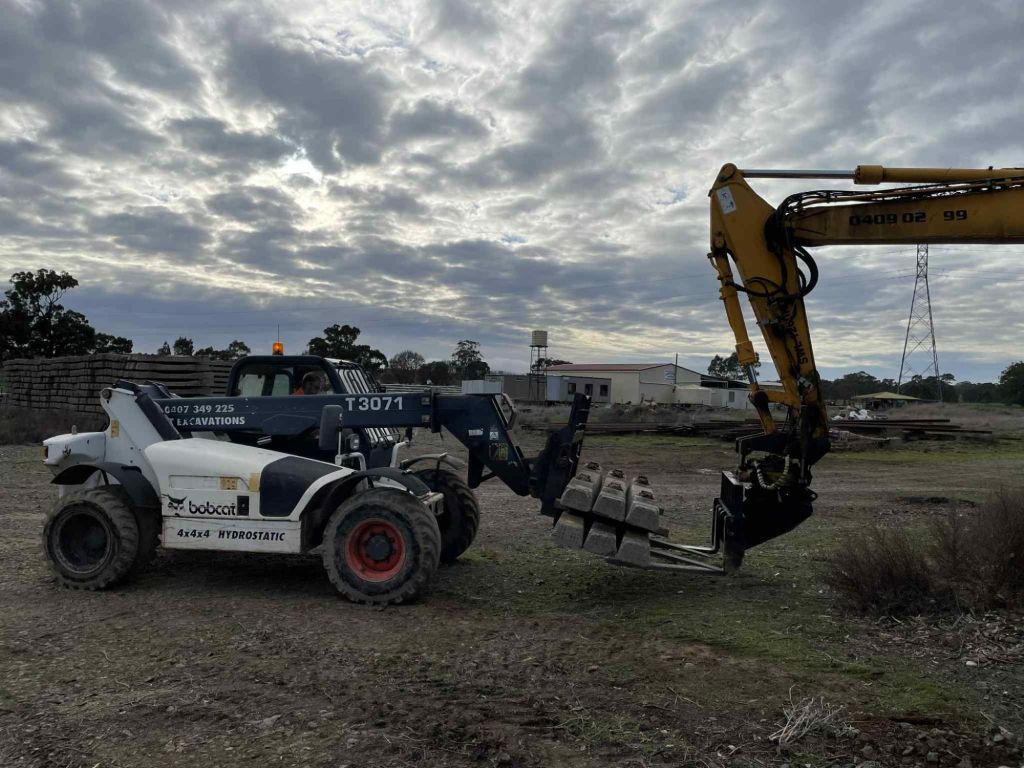
The purpose, amongst other things, was to attempt to correct an issue on Signal Post 10 – with one of the disc signals failing to operate. We had expected we might have needed a different lift machine to get close enough, however the telehander and cage proved ideal for the situation.

This image from below shows why the use of the ladder was out of the question… the timber is so rotten up there that the deck doesn’t exist. We’ve come to the conclusion that this deck is extremely old – quite possibly original – circa 1914 however it could have been renewed in the 50s but based on the lack of paint and inability to replace it due to a fairly major design flaw (if you remove the deck you haven’t got anything to stand on) it’s certainly not recent.

The issue was with one of these square rods – these rotate to translate the movement of the wire and other rods across to the correct location to operate the signal – it’s simple and works well… but only if the rod does rotate – for reasons that still aren’t too apparent that stopped happening – likely a lack of lube, which is hard to do given its underneath the deck.

Some relatively interesting observations were made when up there – the signal hasn’t been repainted since it was erected – or at least heavily modified – the rods are each labelled and written on – including the words Castlemaine Post 10 – which is most likely from when these parts were being prepared in the stores or depot – and given there’s bits behind other bits that you couldn’t access with having it dissembled – it’s safe to say it’s been a very long time since its last full repaint – we’re guessing bits have been touched up at times – but probably only the easy to access bits.

It’s a nice view from up there.

In a nutshell, however, once we’d removed and straightened the long rod, unstuck the square rod and given everything a good lube, it all now operates perfectly. Another win for the telehander.

We will, in due course, replace the deck on this signal – however, it’s not overly simple, so we’ll plan that one in a bit more depth.

The afternoon was spent sorting out some rubbish in one of the wagons and a start was made on cleaning out the big red shed’s gutters – which had the rain not beaten us, would have been completed.

Tomorrow we’ll start at Maldon at 8am but we’ll be working at Castlemaine, starting there around 8.45am.

Muckleford Platform Coping

Today’s task was something quite different, it was to begin replacing the failing platform coping at Muckleford.

We’d identify 7 lengths of coping that had reached the end of their life, about 30 years of service they’ve given.

We started at the Down end and progressively worked towards the UP end.

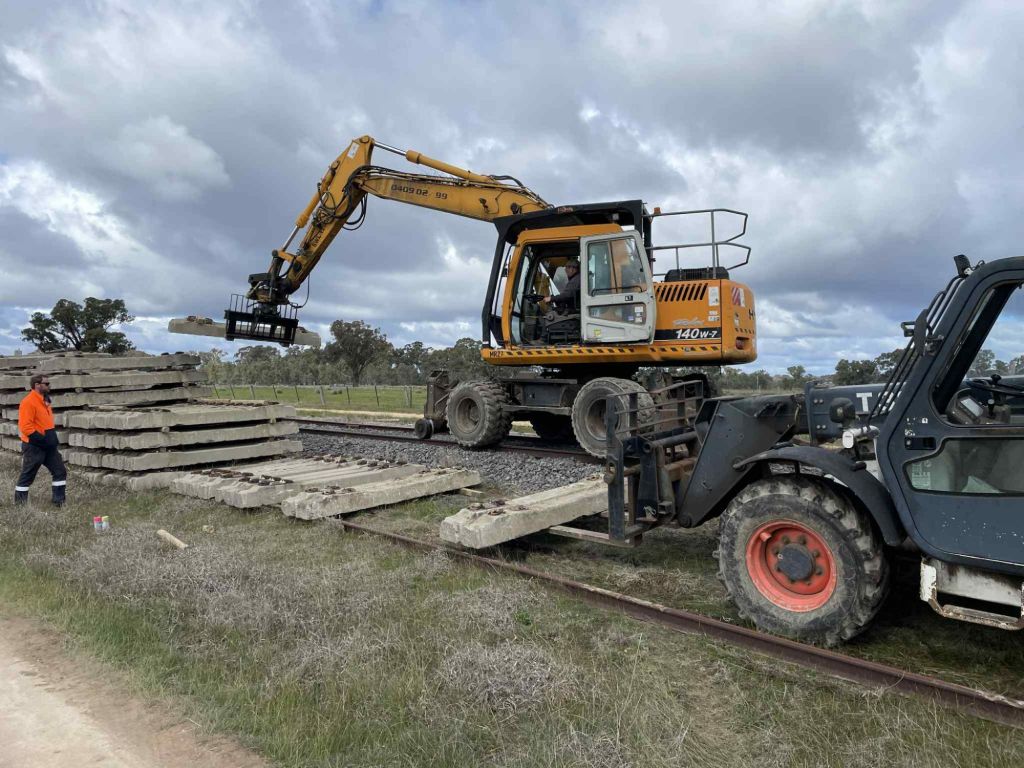
We had some digger action in handling the timbers, as they’re particularly heavy lumps of wood.

The hardest part of this was getting a decent grip on the head of the hold down bolts – which in the timbers that still had some meat did prove a bit of a battle but we managed.

To make it much easier for next time and to save having to drive the bolts hard into the surface, we have this time routered a countersink in, which proved to be a massive time saver – certainly now to be the standard way of doing this task.

We used a mix of new seasoned and second-hand seasoned timber – this will help stagger the replacements in the future. It is harder to work with than green timber, but not considerably so in this application.

The only very slightly tricky bit for the whole exercise was the very down end upright, which for some reason extends higher than all of the others. Anyhow, about 30 seconds of chainsaw art and a suitable cut out was made.

The process is quite simple, the timber is trimmed to length, then test fit on the uprights.

Once it’s in the correct position- which is dictated by the concrete facing and uprights and when it all looks right and measures up within tolerance, we run a pilot drill a few mm through the holes from underneath, then take the timber off, flip it over and drill through with an appropriate bit.

It’s after this that the countersink is carved out, then a really simple job of placing it back in the correct location and dropping the bolts through – tighten bolts, backfill and job done.

It comes up a treat once it’s done. It’d be pretty reasonable to assume they’ll last another 20 to 30 years.

The downside of using various timber is that no two pieces – even if delivered at the same time – were the same thickness. Wherever this was significant enough, a suitable bevel was installed to smooth the edges.

We’d allowed 2 days to knock over this task. However, we’re miles ahead of that, having completed all 7 pieces comfortably today, we’re very pleased with our efforts.

This does mean that next week’s work will be a bit different than first planned now – however, it’ll definitely be something based out of Maldon on Monday and Tuesday from 8am.

Clean up

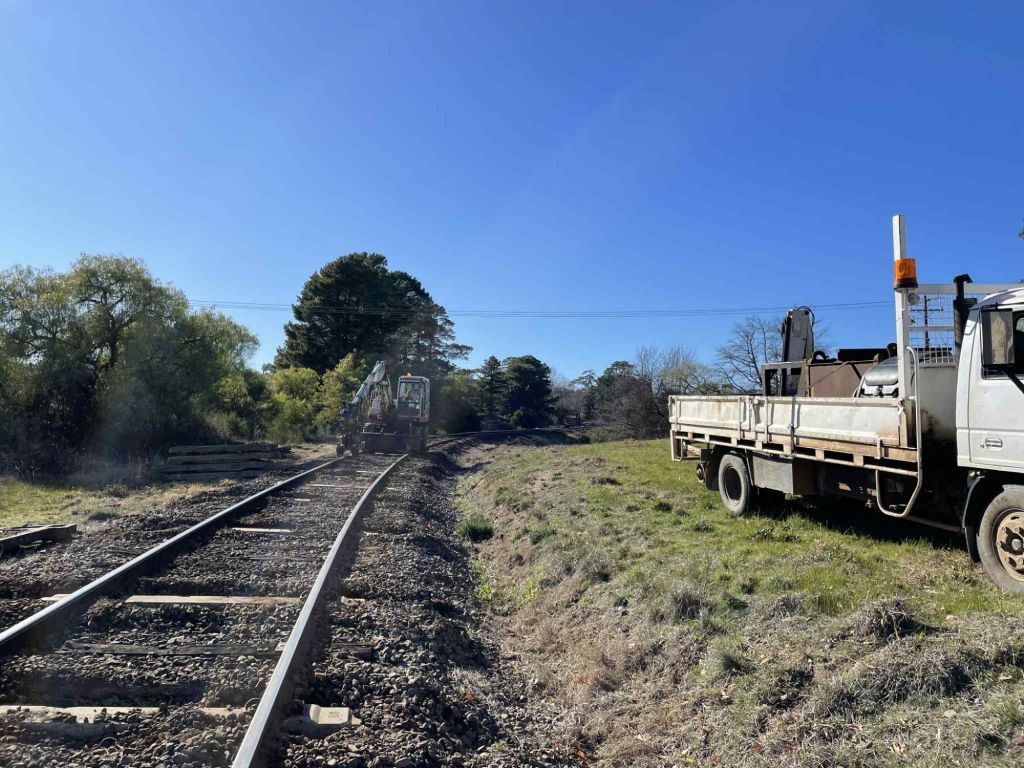
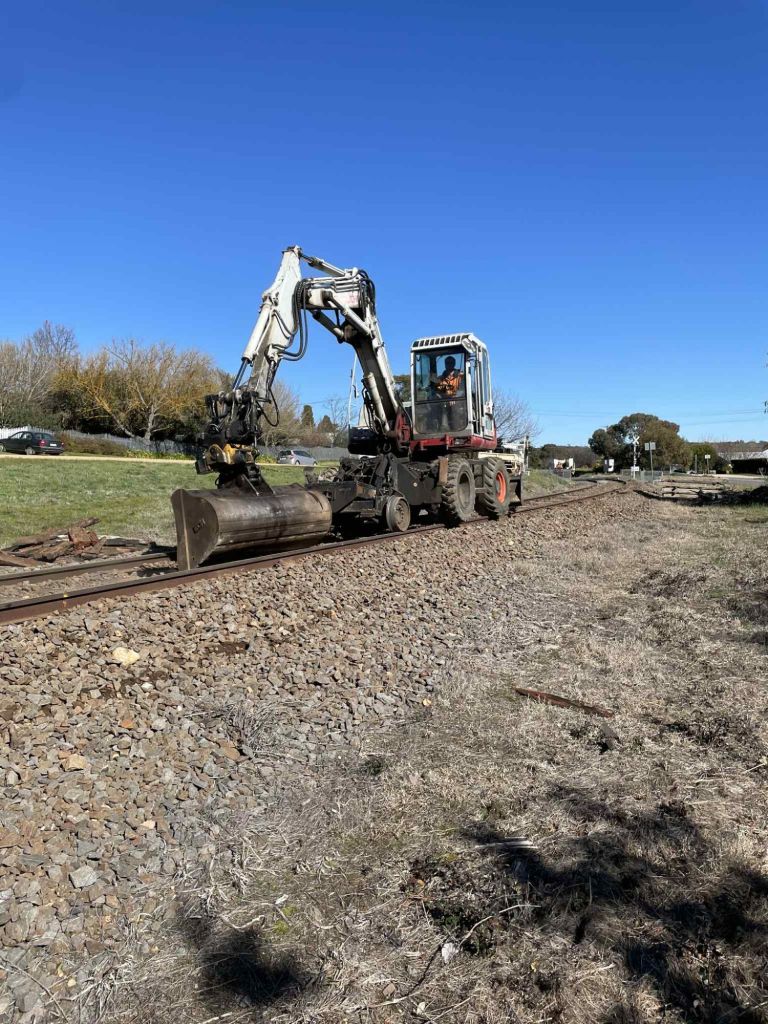
So far this week, we’ve spent our time cleaning various piles of tree trimmings from along the railway. This combination of machinery certainly makes easy work of this task.

Tomorrow’s workday (Thursday) will see a complete change of pace, where we’ll begin replacing life expired platform coping timbers at Muckleford. Meeting Maldon 8am or Muckleford from 8.45am

All Clipped Up

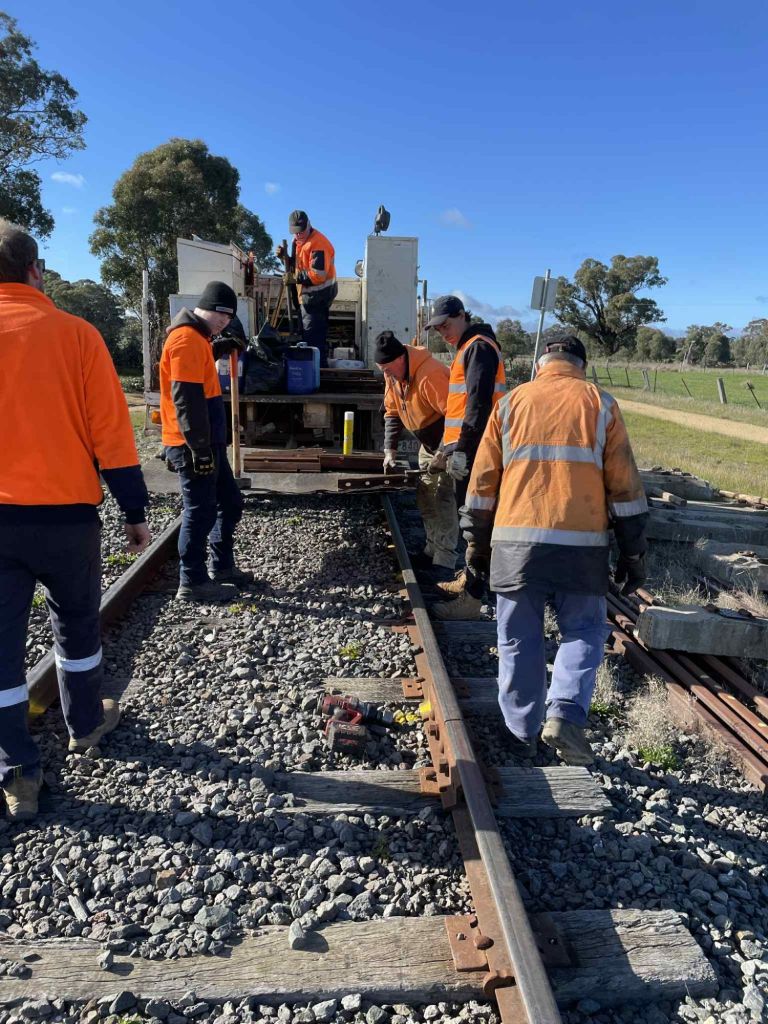
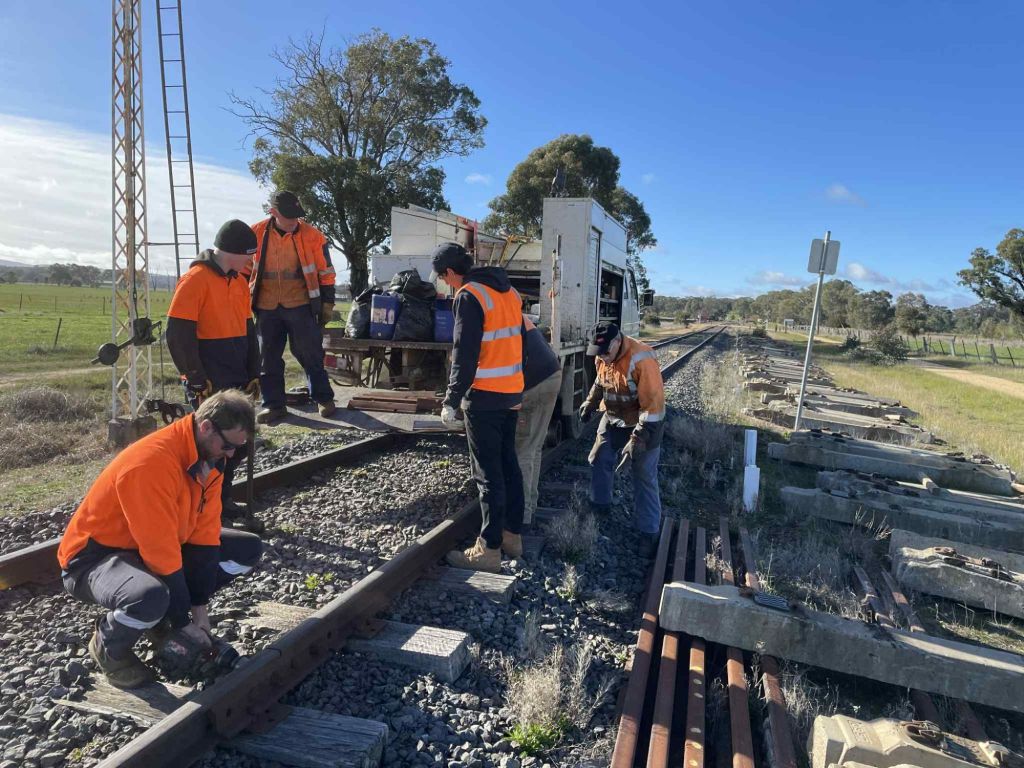
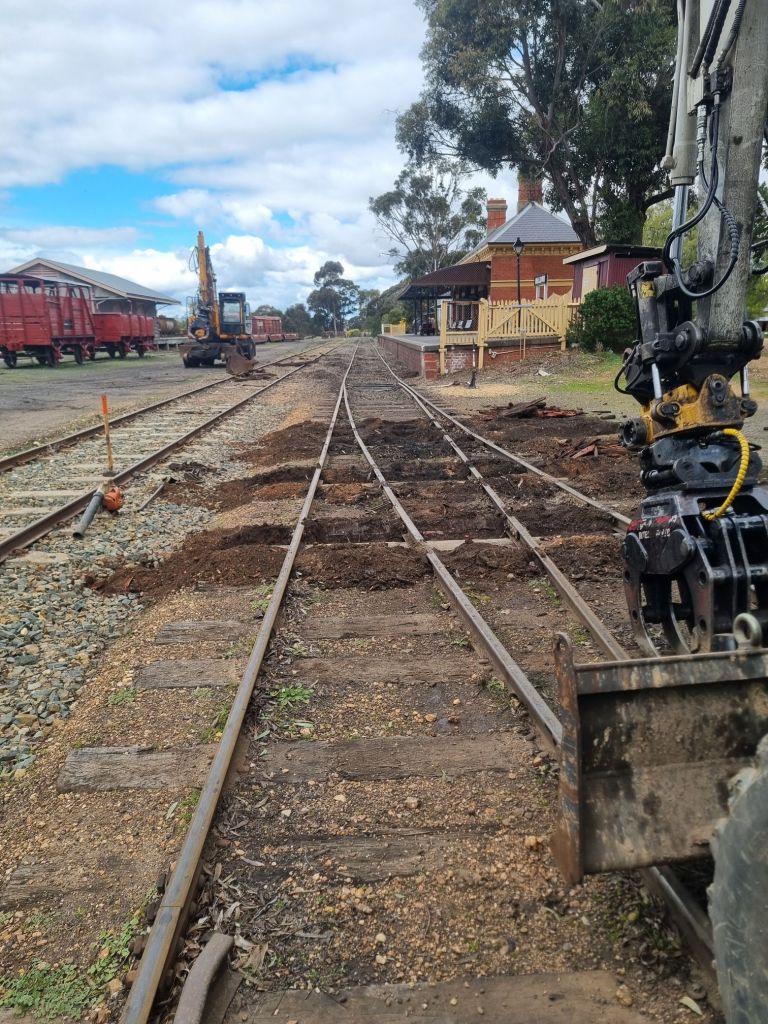
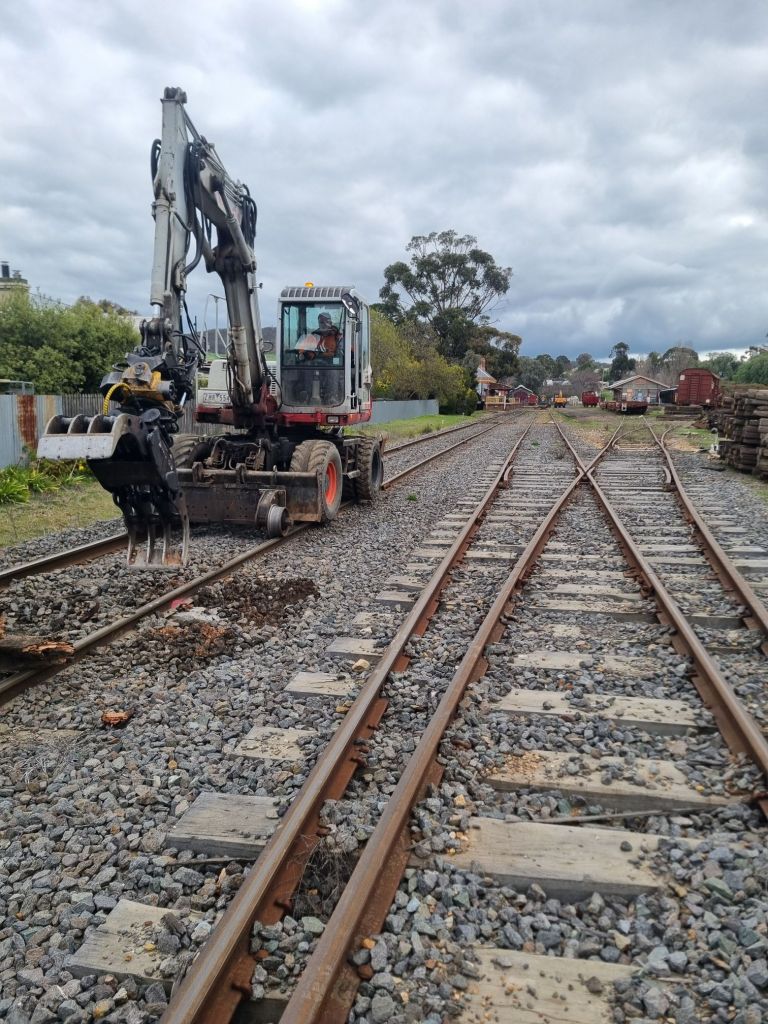
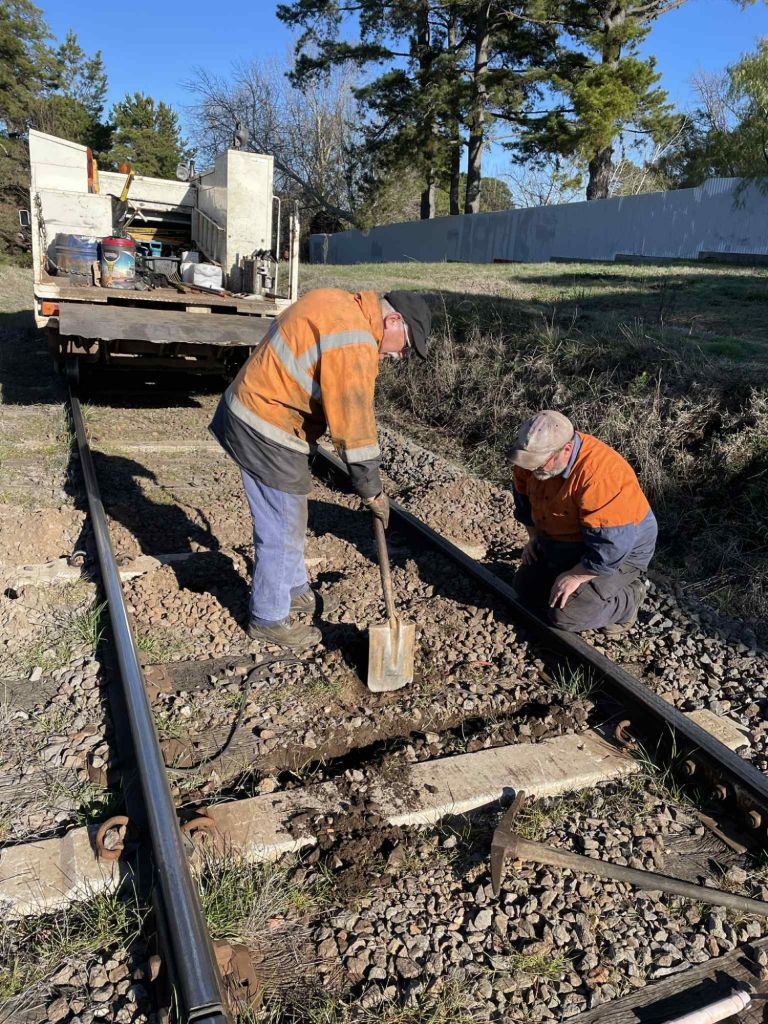
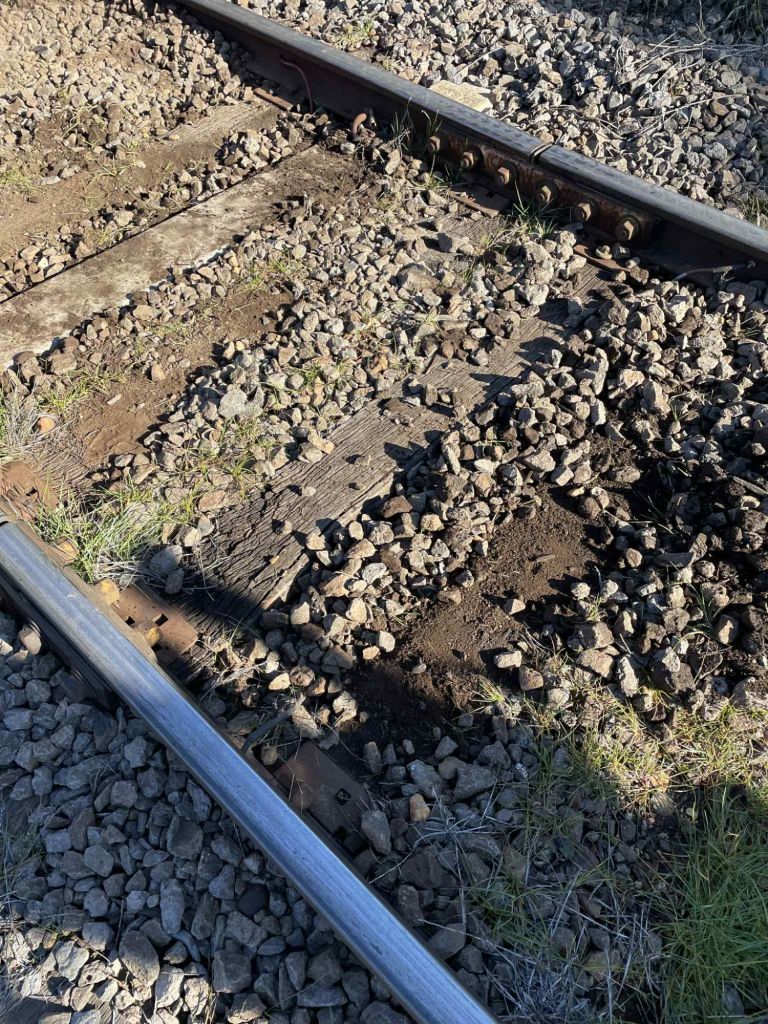
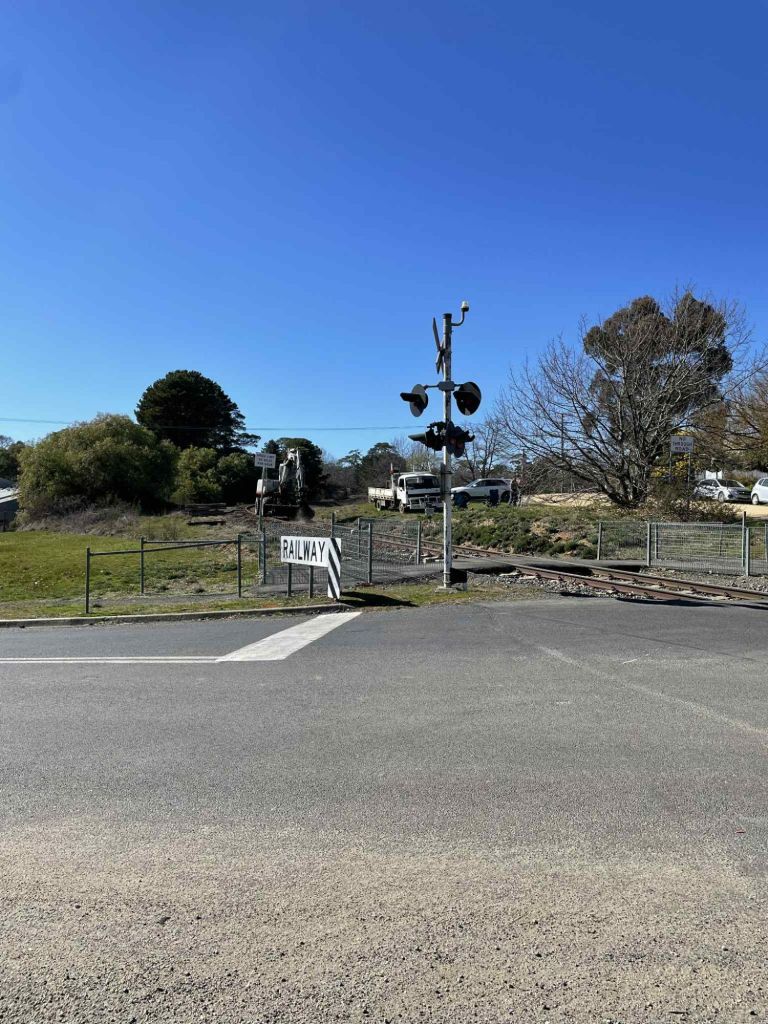
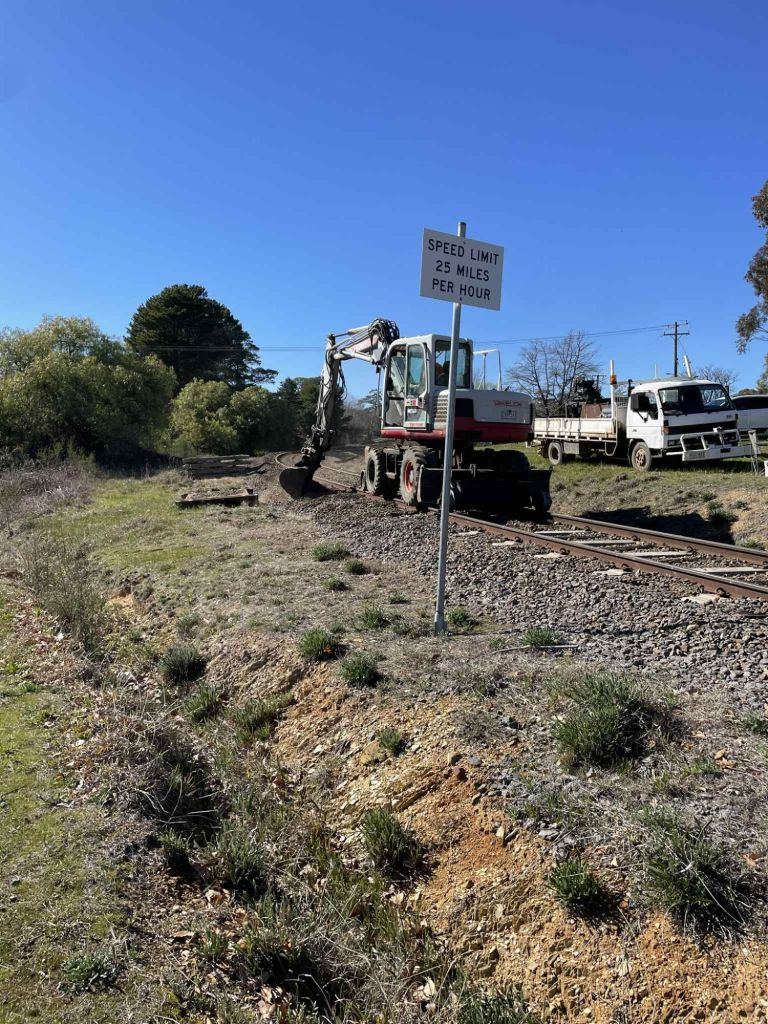
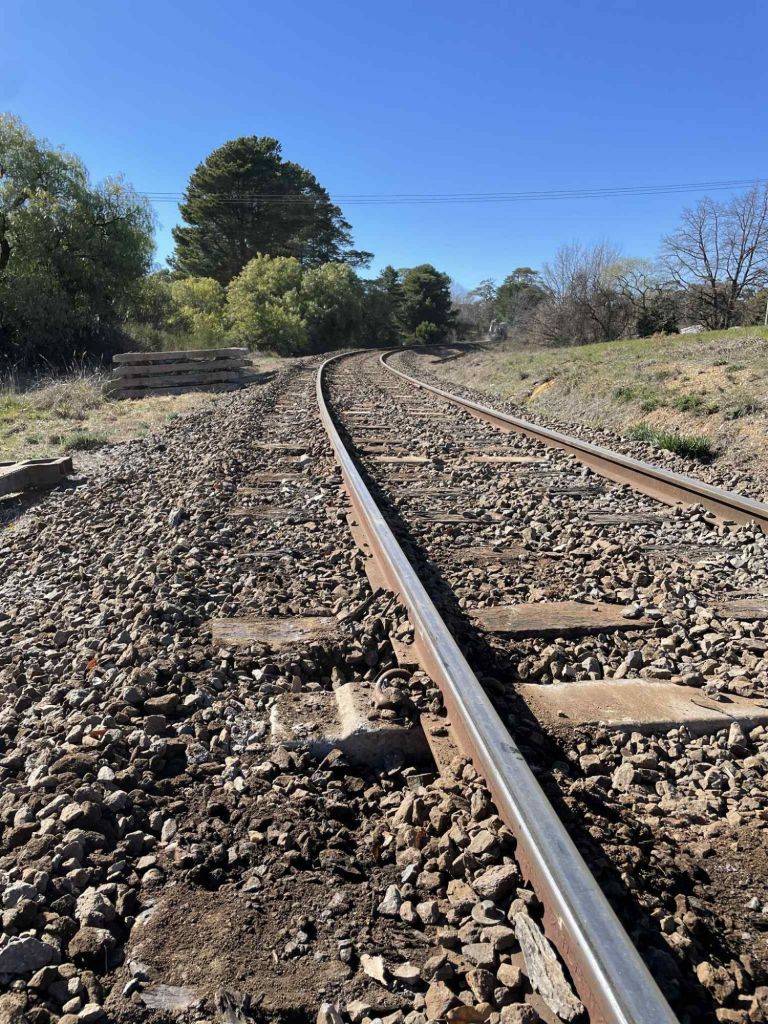
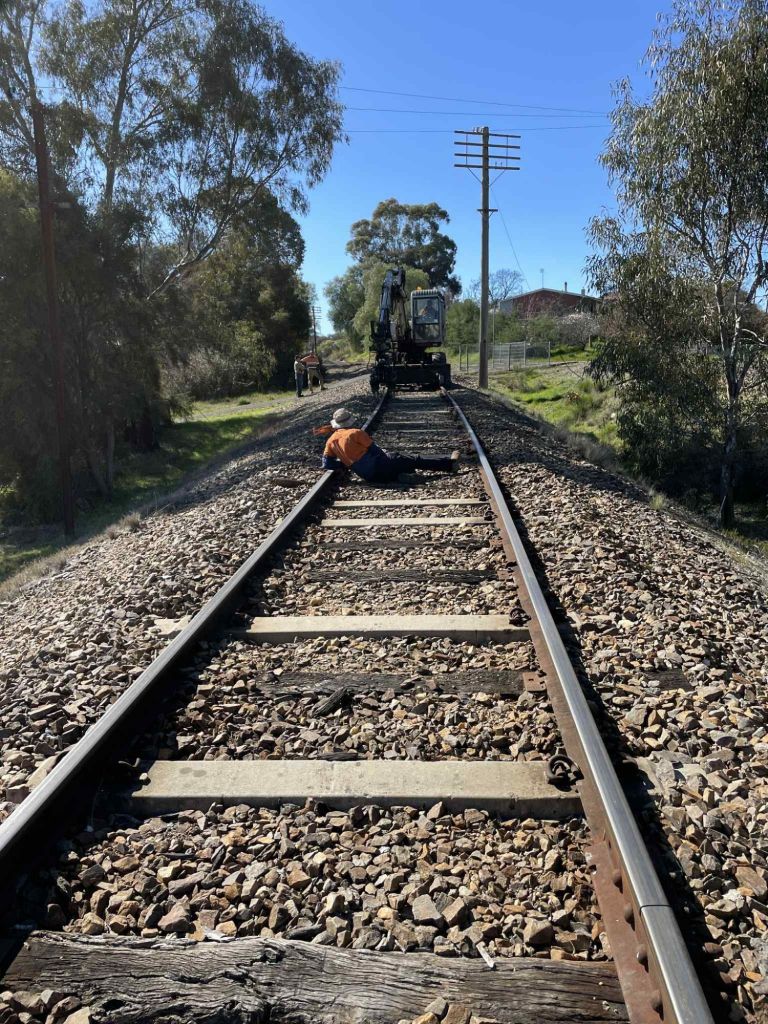
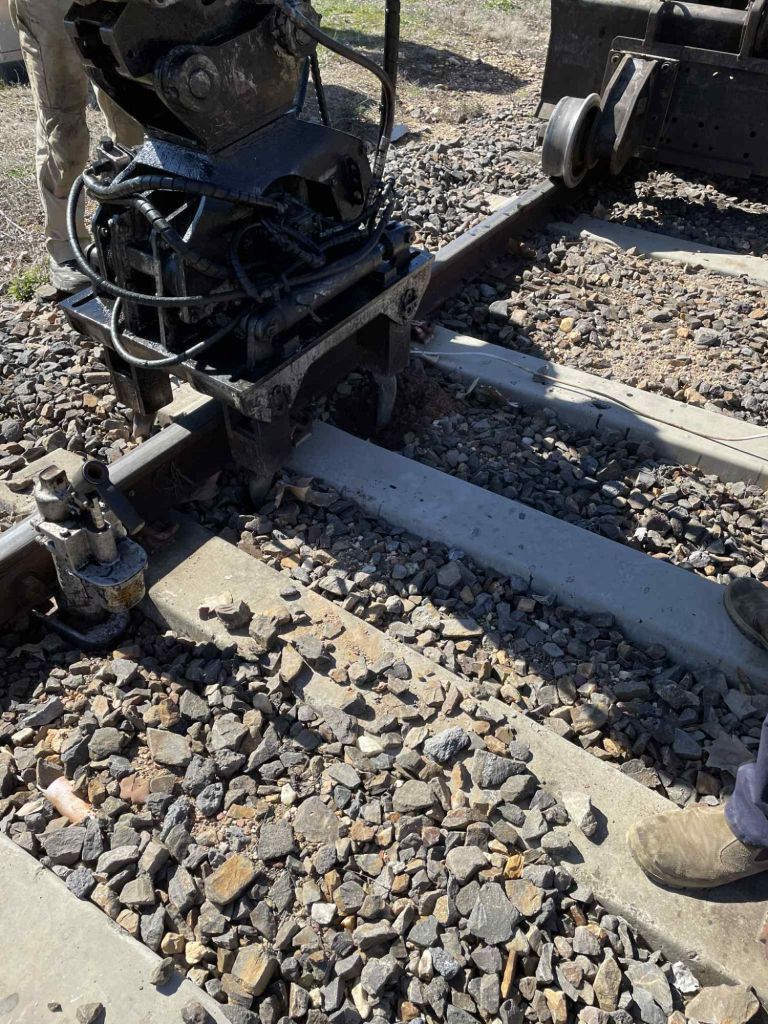
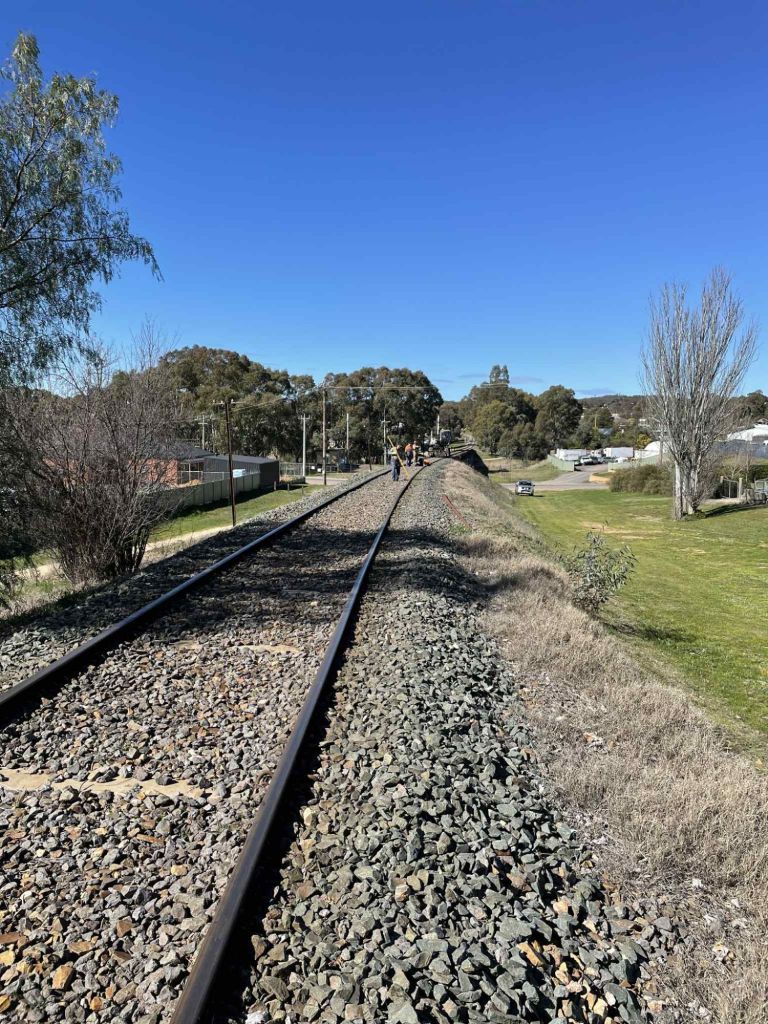
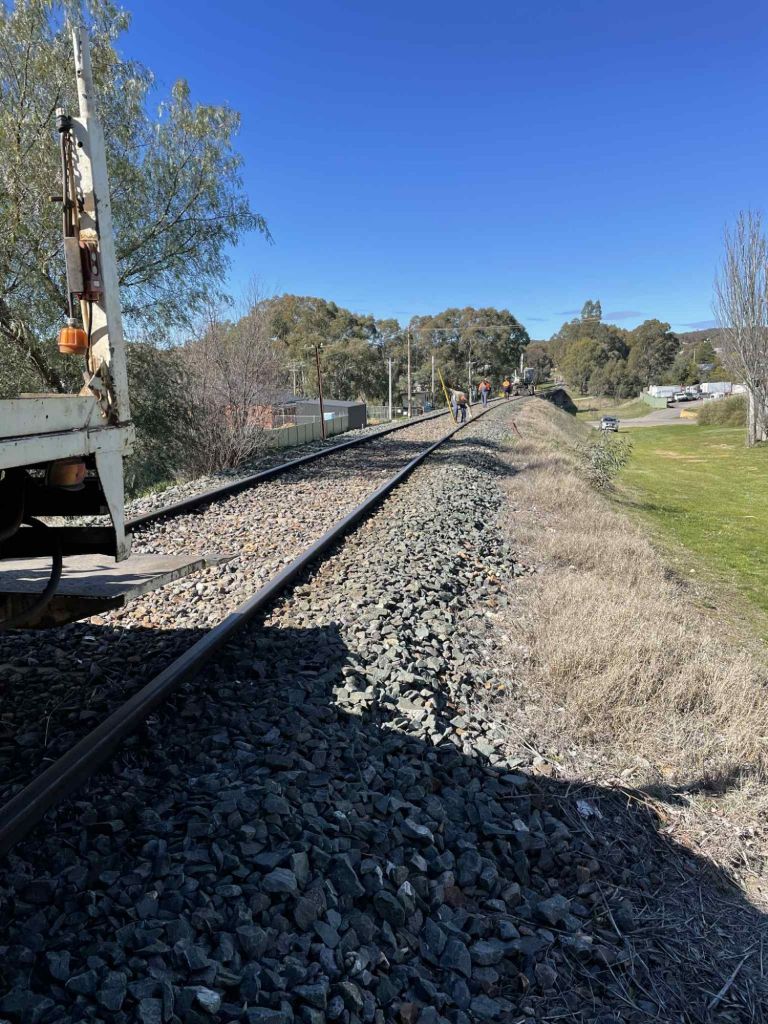
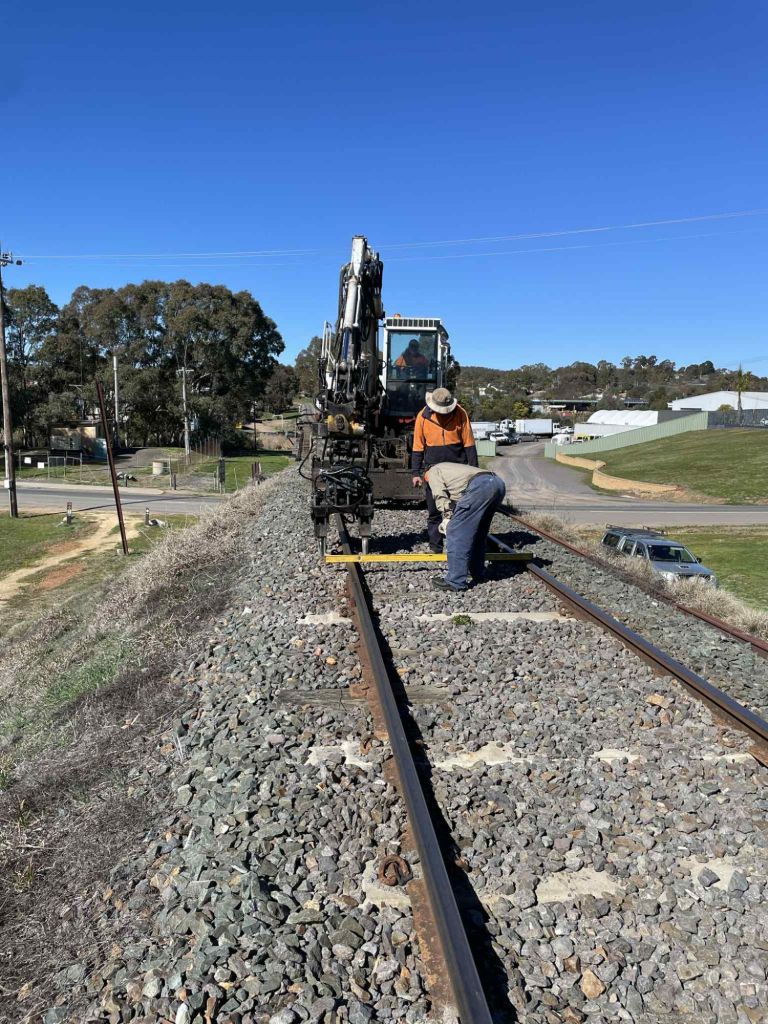
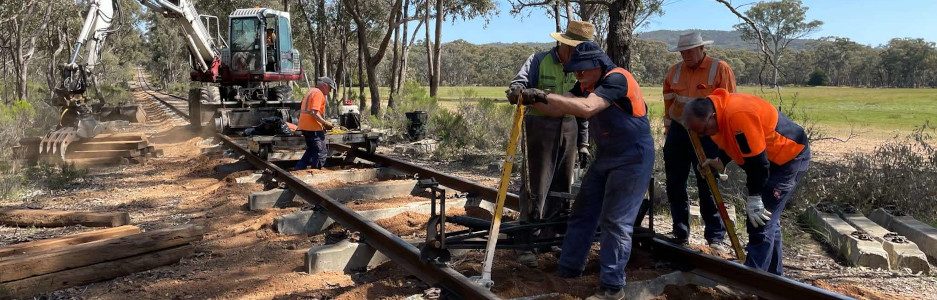
From Crossing to Crossing, we’re now all clipped up! In reality, by morning tea, we were all clipped up. This method did prove to be quite efficient – although we have discovered once everything is nicely squeezed up, the jaws of the digger are just as effective as the power pack – but for not very much money we got to give it a very good test drive.

The morning, however, was quite foggy and chilly, but we didn’t let that dampen our spirits too much.

Once done, we did need to do a follow up run to fix anything the machine didn’t get right or ones it could reach (which can happen in odd cases) – this was a very easy process that took very little time.

We’d completed bits of this yesterday so once we’d finished in the curve, it was job done and off to Donkey Farm Track we went.

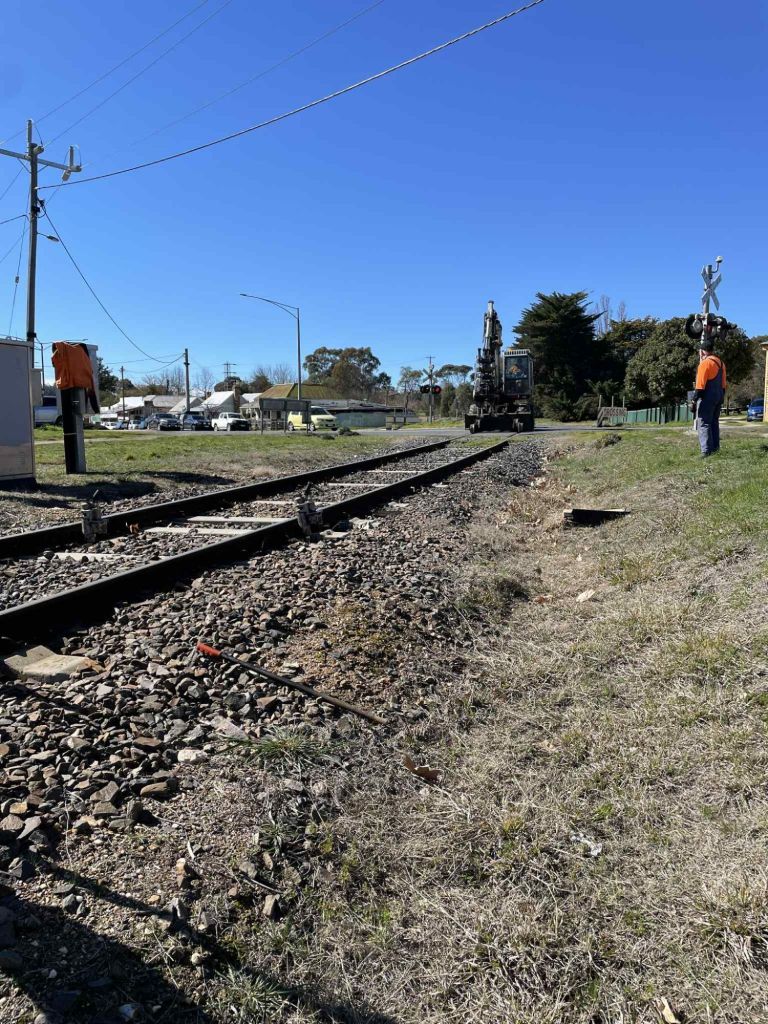
Once there, the temporary speed boards that were at pipeline crossing were cascaded to there new home and installed.

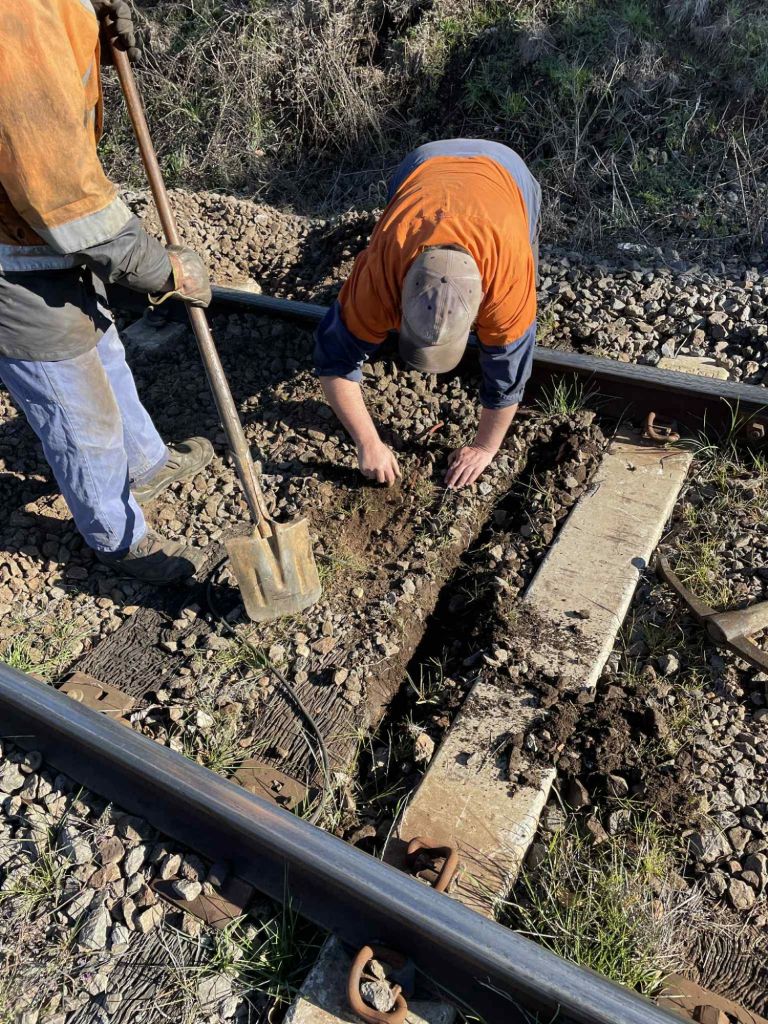
We spent some time breaking up the old timber – which makes its removal much easier.

We even found the time to give the drains the bit of a clean out at both crossings.

Given how successful we have been this week – we’re going to celebrate by calling off workdays on Wednesday and Thursday this week – we’ve got a few repairs to effect and some other odd jobs to catch up on.

We’ll be back in action next week, with everything running as Normal Monday through to Thursday – it’ll be a bit of an odd job week – as we’ve still got some tidying up to complete the job and some extra stuff up towards Castlemaine that we can’t ignore forever.